
Mexico World Cup 2026: What the Mexico National Football Team Can Really Do at Home
By Jack Brown · ·
What do Mexico world cup fixtures reveal about the Mexico national football team?
Mexico's tournament in 2026 is bigger than a host-nation cliché. This page is about the Mexico national football team as a tournament project: how Javier Aguirre has built the side, why the squad now looks more functionally balanced than it did in Qatar, and what the confirmed fixtures say about the chances of finally turning home advantage into a quarter-final run. Mexico are not simply trying to survive Group A. They are trying to answer the biggest recurring question in modern El Tri history: can a team that usually clears the group stage but stalls in the knockouts finally deliver a fifth match on home soil?
Mexico at the 2026 World Cup — quick facts: Group A · Opponents: South Africa, Korea Republic, Czechia · Coach: Javier Aguirre · FIFA ranking: 17th · World Cup appearances: 18th · Best result: Quarter-finals in 1970 and 1986 · Group-stage venues: Mexico City Stadium (11 June), Guadalajara Stadium (18 June), Mexico City Stadium (24 June). Mexico opened their Group A campaign on 11 June with a 2–0 victory over South Africa.
Coach
Javier Aguirre
FIFA Rank
No. 17
Best Finish
Quarter-finals in 1970 and 1986
Group
Group A
What are Mexico's 2026 World Cup fixtures?
Mexico's three group games all carry very different pressures. The opener is a national event, the second match is the tactical hinge of the group, and the third could determine whether El Tri finish first or second.
Those dates matter beyond logistics. The first fixture gives Mexico the emotional surge of opening the tournament at home. The second tests whether the side can manage a fast, technically clean Asian opponent without losing midfield control. The third brings a more physical European game state in which set pieces, second balls and defensive concentration will likely decide the result. Mexico's route is one of the most narrative-heavy in the entire 48-team field because every group match is also a national spectacle.
Why is the 2026 Mexico world cup different from every other El Tri cycle?
The first reason is structural: Mexico become the first country to host three men's World Cups. The second is emotional: they are not entering as a neutral-site middle seed but as a co-host with two games in Mexico City and one in Guadalajara. The third is footballing: the squad has been rebuilt around a more coherent midfield and a more athletic defensive line than the one that went out in the group stage in 2022. This is a present-tense opportunity the federation, coach and player pool know may not come again for a generation.
Home advantage for Mexico is not abstract. It means altitude familiarity in Mexico City, cultural momentum around the opening week, reduced travel stress, stadium atmospheres that should feel like domestic cup finals, and a tactical comfort with tempo shifts in environments most visiting sides do not regularly face. It also means a much heavier pressure load. Mexico's modern World Cup story is defined by the same wall every four years: they qualify, often compete well, and then fail to turn good tournament foundations into a quarter-final. At home, simply reaching the round of 16 will not be judged as enough.
How did Javier Aguirre reshape the Mexico national football team for 2026?
Aguirre's third spell is less about romance than about functional repair. Mexico needed a coach who understood the federation's pressure, the country's football culture and the practical demands of tournament football. FIFA's official profile of his July 2024 appointment made clear that the federation wanted an immediate 2026 reset, with Rafael Marquez placed beside him as assistant and long-term bridge. Aguirre's task has not been to reinvent Mexican football from scratch. It has been to make the side harder to break, clearer in possession and less emotionally volatile in decisive matches.
The main structural improvement is in the middle third. Edson Alvarez gives Mexico a genuine defensive anchor who screens counters, wins duels and allows the full-backs to step higher. Luis Chavez provides range and tempo from the left half-space, while Orbelin Pineda, Luis Romo, Erik Lira, Obed Vargas and Alvaro Fidalgo offer varied combinations for different opponents. This matters because Mexico have often had talent without enough midfield hierarchy. In 2026, the hierarchy is visible: Alvarez sets the floor, Chavez sets the rhythm, and the attacking line can work off a more reliable platform.
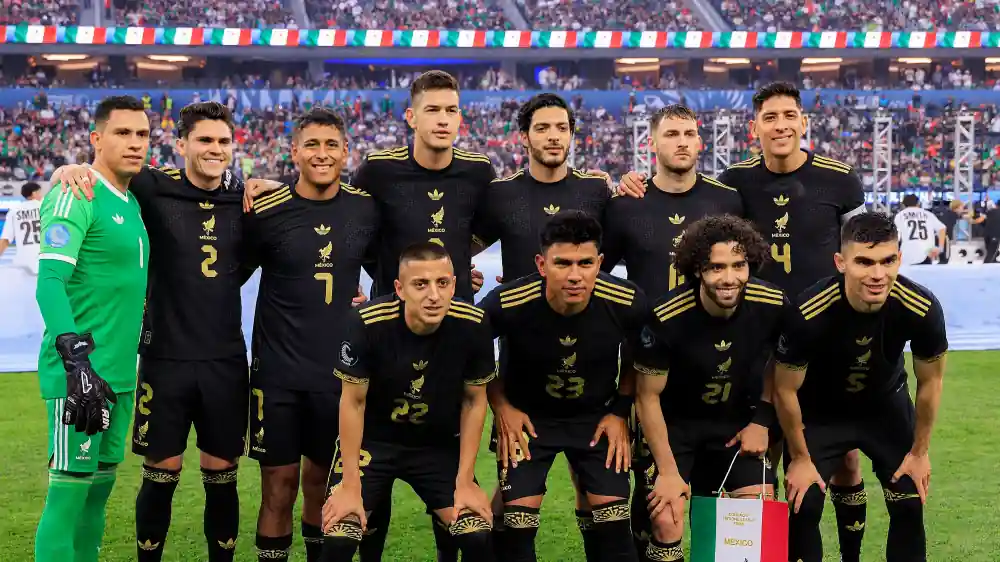
Which Mexico national football team players will decide the tournament?
The most decisive player remains Edson Alvarez because he determines whether Mexico can control transitions. At national-team level, few matches are lost because a side lacks possession in the abstract; they are lost because one or two rest-defence moments go wrong and the midfield cannot recover shape. Alvarez is the antidote to that problem. He protects central defenders Cesar Montes and Johan Vasquez, covers space behind adventurous movement and brings the kind of authority every team needs in a compressed World Cup schedule.
Up front, Santiago Gimenez is the figure who can change the ceiling of the entire run. His movement inside the box, speed of release and instinct for the first finishing touch give Mexico a striker profile they have not always had at the exact moment the side needed it. Raul Jimenez remains a useful contrast striker because of his hold-up play and combination quality, but Gimenez is the player who can turn controlled midfield possession into goals against stronger opponents. Among the wider options, Cesar Huerta, Alexis Vega, Roberto Alvarado and Julian Quinones give Aguirre different ways to stretch or destabilise a back line. The question is not whether the talent exists. The question is whether those forwards can convert tournament tension into efficient finishing.
Can Guillermo Ochoa still matter without being the whole story?
Yes, and that may be the healthiest sign of all. Ochoa's sixth World Cup is rightly historic, but the best version of Mexico in 2026 is not one that depends on him making ten saves a night. It is one in which his leadership, handling and shot-stopping experience matter inside a more stable defensive environment. A Mexico side that leaves Ochoa overworked is already failing its own tactical brief.
Why do younger attackers matter more in this cycle?
Because Mexico need vertical energy as much as they need experience. Gilberto Mora, Brian Gutierrez and Obed Vargas represent a younger layer of the player pool that is less scarred by the recurring round-of-16 narrative. They may not all start, but the ability to change a match with pace, direct carrying or fresh pressing legs is more valuable in a 48-team World Cup than in older formats.
What does Mexico's World Cup history tell us before 2026?
FIFA's team profile provides the sharpest historical framing. Mexico are entering their 18th World Cup, their ninth straight qualification since 1994, and their best tournament finishes remain the home-soil quarter-final runs of 1970 and 1986. Their overall World Cup record before the opening match of 2026 stands at 60 matches played, 17 wins, 15 draws and 28 losses. Those numbers explain both the optimism and the scepticism around this team. Mexico are not outsiders who stumbled into relevance. They are one of the sport's most persistent World Cup presences. But they are also a nation whose modern benchmark has been consistency without breakthrough.
That is why 2026 is judged differently from a normal finals cycle. A round-of-16 exit would not be interpreted as business as usual. It would be treated as a missed home tournament. The historical weight is especially heavy because the last time Mexico reached the quarter-finals they were also hosts, and because the global memory of El Tri still includes emotionally huge nights at Azteca that define football culture beyond the technical record itself.
What is Mexico's path if they win Group A?
Winning Group A should give Mexico the most manageable round-of-32 doorway available to them in the expanded format. It does not guarantee an easy opponent, but it improves the odds of avoiding an immediate collision with another group winner and lets the bracket breathe for one more round. That matters because the modern World Cup is not just about being one of the best 48 teams; it is about sequencing difficulty properly. A host side with emotional load, travel load and expectation load needs bracket efficiency as much as raw talent.
Finishing second would likely create a much harsher knock-out lane and shorten the margin for error immediately. That is why the group finale against Czechia could be as important as the opener in Mexico City. South Africa and Korea Republic are not ceremonial opponents, but Czechia look like the side most likely to turn the group into a table-management contest. If Mexico want the fifth match, the job probably starts with first place, not simply qualification.
Can Mexico actually reach the quarter-finals this time?
Yes, but only if three conditions hold at once. First, the defensive platform must stay intact; Alvarez and the central defenders cannot allow transition chaos. Second, Gimenez or another forward must finish at a level above Mexico's recent tournament norm. Third, the team must convert home energy into control rather than anxiety. Those are demanding conditions, yet they are also realistic. Mexico's group is playable, the coach has tournament experience, and the squad profile is more balanced than the one that went to Qatar.
The more revealing question is whether the profiles fit together. In 2026, they do more than they have in some previous cycles. The defensive spine is credible. The midfield has real structure. The attacking group has more than one route to a goal. That does not make Mexico a title favourite. It does make them one of the most interesting non-European case studies in the entire bracket.
Is a semi-final dream too far?
It is ambitious, but not absurd. A quarter-final would already rewrite the modern story, and once a team reaches the last eight the tournament becomes much more volatile. Mexico do not need to be one of the four best squads on paper to make a semi-final. They need one strong group phase, one clean round-of-32 performance and one emotionally mature round-of-16 win. The road is hard, but the sequence is imaginable.
For the full tournament calendar, standings and knockout map, see the full 2026 World Cup schedule and all 12 groups and draws. For the player-by-player roster context, visit the Mexico World Cup Squad 2026.
FAQ
What are Mexico's 2026 World Cup fixtures?
Mexico play South Africa on at Mexico City Stadium, Korea Republic on at Guadalajara Stadium, and Czechia on at Mexico City Stadium.
Can Mexico reach the quarter-finals in 2026?
Yes. Mexico have home-soil advantage, a workable Group A draw and a more stable midfield-defensive core than in 2022. Reaching the quarter-finals would still require them to beat the modern round-of-16 barrier that has defined their recent World Cup story.
Why is the 2026 World Cup different for Mexico?
This is Mexico's third time hosting the men's World Cup, making the country the first to do so. Two group matches in Mexico City and one in Guadalajara give El Tri a uniquely strong home context, but also intensify pressure to deliver more than a standard group-stage campaign.
What is Mexico's best World Cup finish?
Mexico's best finish is the quarter-finals, reached in and , both on home soil. Those tournaments remain the benchmark for judging the 2026 team's progress.