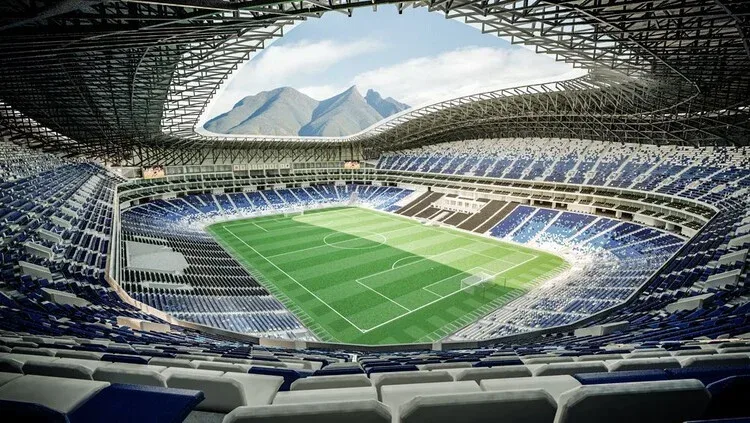
World Cup 2026 Groups: The Full Draw, All 48 Nations and What Each Group Means
World Cup 2026 · Groups
·
Twelve groups. Forty-eight nations. One draw that settled every first-round narrative for the biggest World Cup in history.
This page covers the complete 2026 World Cup groups draw — all 12 groups, 48 nations and every first-round matchup across the United States, Canada and Mexico. The draw took place on 5 December 2025 at the Kennedy Center in Washington, D.C. The group stage runs from 11 June to 27 June 2026 across 16 host stadiums. The top two teams from each of the 12 groups advance to the Round of 32 — 24 teams in total. The three co-host nations, Mexico (Group A), Canada (Group B) and the United States (Group D), were each seeded as group leaders and will play all three group-stage matches in their own country.
How does the 2026 World Cup group stage work?
The 2026 World Cup introduces the largest group stage in the tournament's history. Forty-eight nations are divided into 12 groups of four teams each, with the top two from every group advancing to the knockout phase. That means 24 teams qualify for the Round of 32 — a new knockout round introduced alongside the expanded format. The bottom two teams from each group are eliminated after three group-stage matches.
Within each group, teams earn three points for a win, one for a draw and zero for a defeat. Where teams finish level on points, the tiebreakers are applied in order: goal difference, then goals scored, then head-to-head points between the tied teams, then head-to-head goal difference, then head-to-head goals scored, then disciplinary record (yellow and red cards), and finally a drawing of lots if all other criteria are equal. The group stage spans 11 June to 27 June 2026 across 16 host venues in the United States, Canada and Mexico.
World Cup 2026 groups: all 12 groups at a glance
The draw placed 48 nations into 12 groups of four. The table below shows every group and its four teams. Detailed analysis of each group follows.
| Group | Teams |
|---|---|
| A | Mexico · South Korea · South Africa · Czechia |
| B | Canada · Switzerland · Qatar · Bosnia-Herzegovina |
| C | Brazil · Morocco · Scotland · Haiti |
| D | USA · Paraguay · Australia · Turkey |
| E | Germany · Ecuador · Ivory Coast · Curaçao |
| F | Netherlands · Japan · Tunisia · Sweden |
| G | Belgium · Iran · Egypt · New Zealand |
| H | Spain · Uruguay · Saudi Arabia · Cape Verde |
| I | France · Senegal · Norway · Iraq |
| J | Argentina · Austria · Algeria · Jordan |
| K | Portugal · Colombia · Uzbekistan · DR Congo |
| L | England · Croatia · Panama · Ghana |
Group A — Mexico, South Korea, South Africa, Czechia
Mexico open the tournament and carry the symbolic weight of a co-host determined to prove this is more than a logistical commitment. The opening match of the entire World Cup is Mexico's first group game, making it the highest-profile domestic football occasion in recent Mexican history. South Korea have been consistent World Cup qualifiers since their 2002 semi-final run on home soil and arrive with a squad built around Premier League-based players. South Africa return to the World Cup for the first time since 2010 — when they were the tournament's host nation — and Czechia, qualifying from European competition, complete a group where Mexico's advancement is expected but not guaranteed.
Group B — Canada, Switzerland, Qatar, Bosnia-Herzegovina
Canada's return to the World Cup after 40 years — having last appeared in Mexico 1986 — is the emotional centre of Group B. A generation of Canadian supporters followed their national team's rise through CONCACAF qualification; the current squad, built around Alphonso Davies and Jonathan David, is the strongest in the country's history. Switzerland bring European steadiness, having qualified for every World Cup since 2006 and consistently advancing through disciplined defensive organisation. Qatar arrive as the 2022 hosts, carrying the experience of opening-night pressure under the global spotlight. Bosnia-Herzegovina, entering through the playoff bracket, add tactical unpredictability to the group's final fixture list.
Group D — USA, Paraguay, Australia, Turkey
The United States play their group in American stadiums, giving them the loudest possible home-crowd advantage for three matches. The squad — anchored by Christian Pulisic and a generation of players developed in European leagues — faces a bracket where the path is realistic but demands genuine performance. Paraguay are one of South America's most defensively organised sides over the past decade. Australia, as Asian Confederation representatives, bring a hard-running, physically committed style. Turkey have a squad capable of sharp attacking moments and will view this group as a genuine qualification opportunity. Group D's outcome may not be settled before the final round of fixtures.
Group C — Brazil, Morocco, Scotland, Haiti
Group C draws the most attention from neutrals outside the co-host nations. Brazil carry the weight of South America's most recognisable football identity and arrive in 2026 under Carlo Ancelotti — the first foreign head coach to manage the Seleção. Morocco are Africa's historic 2022 semi-finalists, a team that demonstrated European and South American dominance is no longer guaranteed in knockout football. Scotland and Haiti complete a bracket that Brazil are expected to top, but Morocco's quality makes the second-place contest genuinely competitive.
Group E — Germany, Ecuador, Ivory Coast, Curaçao
Germany's rebuild under Julian Nagelsmann produced a more fluid and attacking identity — a squad anchored by Jamal Musiala, Florian Wirtz and Kai Havertz that recovered the creative intent absent at Qatar 2022. Ecuador and Ivory Coast represent the real competition for second place: both have squads capable of disciplined, high-energy performances that have eliminated established European nations in previous tournaments. Curaçao qualify for their first ever World Cup, marking the group's historic newcomer story.
Group F — Netherlands, Japan, Tunisia, Sweden
Group F is widely regarded as the most challenging group for a seeded nation in the entire draw. Netherlands arrive as a cohesive side under Ronald Koeman, with Virgil van Dijk as captain and Cody Gakpo as the attack's creative centre. Japan, however, demonstrated in Qatar 2022 — defeating both Spain and Germany in the same group stage — that their counter-pressing system and collective discipline make them capable of beating any European side on a given day. Sweden, rebuilt around Viktor Gyökeres, and Tunisia complete a group where the Netherlands are expected to advance but nothing is guaranteed from the first whistle.
Group G — Belgium, Iran, Egypt, New Zealand
Belgium arrive at what may be the final World Cup for several members of the generation that finished third in Russia 2018. The squad's transition toward younger players is underway, but the experienced core remains competitive. Iran, who reached the knockout rounds at Qatar 2022, bring tactical organisation and a collective work ethic that proved effective against European opposition. Egypt and New Zealand round out a group Belgium are clear favourites to win, with Iran the most credible challenger for second place.
Group H — Spain, Uruguay, Saudi Arabia, Cape Verde
Spain arrive as the reigning European champions, led by Lamine Yamal, Rodri and a squad that represents the most technically dense generation in the country's recent history. Uruguay — with Rodrigo Bentancur and Federico Valverde leading a new generation — remain South America's most defensively resilient tournament side. Saudi Arabia produced the most significant group-stage shock of Qatar 2022 by defeating Argentina; they arrive motivated to prove that was a genuine statement of quality. Cape Verde, one of Africa's most improved nations over the past decade, complete a group Spain are expected to top.
Group I — France, Senegal, Norway, Iraq
France enter as 2022 World Cup finalists with Kylian Mbappé as the tournament's most watched individual. Senegal, with a squad combining African-based and European-based players, remain the continent's most complete side. Norway are the group's most dangerous second seed: Erling Haaland's ability to decide a match with a single chance makes Norway capable of upsetting any opponent regardless of first-half dominance. Iraq complete a group where France are heavy favourites, but Norway's goal threat creates the most intriguing second-place contest in the bracket.
Group J — Argentina, Austria, Algeria, Jordan
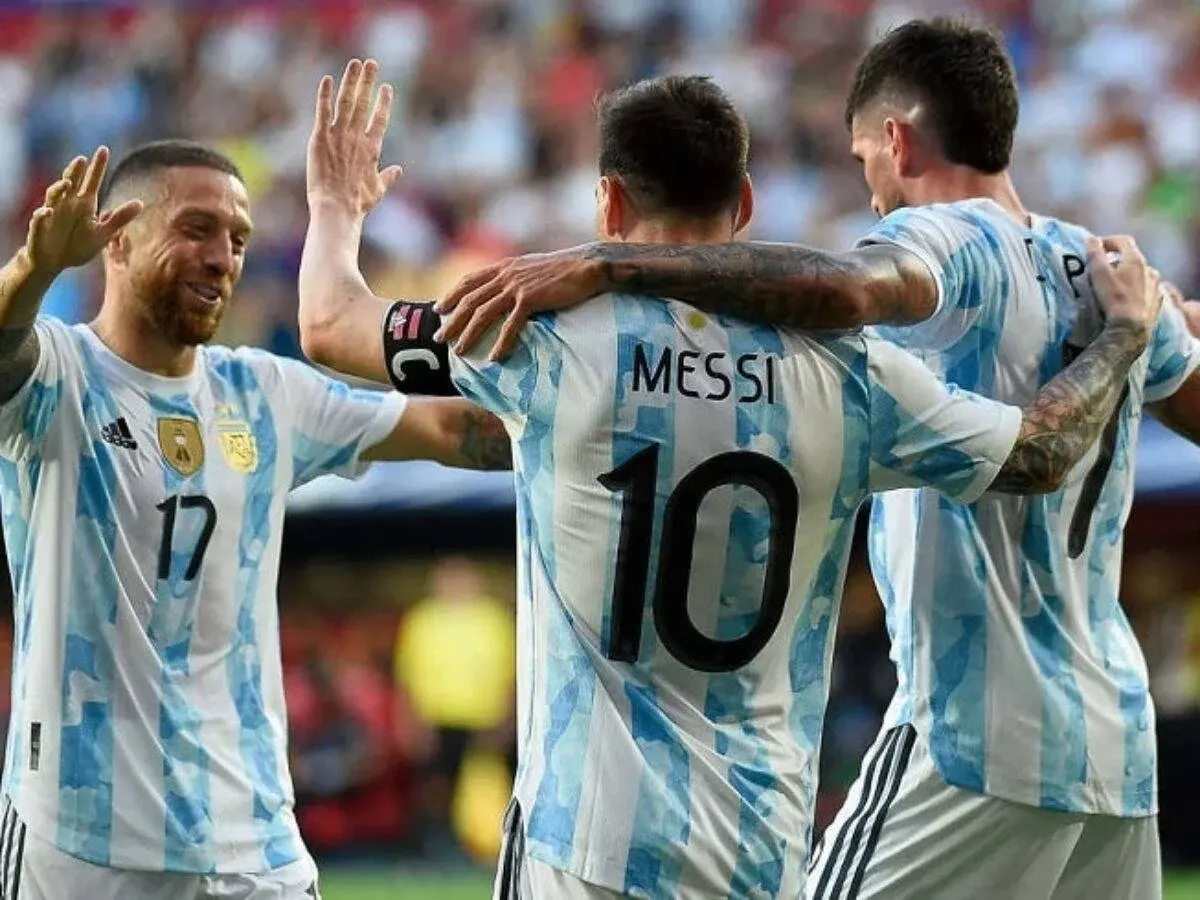
Argentina enter as defending World Cup champions, and every group-stage match they play carries global attention. Lionel Messi — competing at what is almost certainly his final World Cup — ensures the emotional narrative around Group J outweighs its on-paper difficulty. Austria, one of European football's most technically capable nations relative to their tournament record, could challenge on a given day. Algeria, with a squad built across CAF competition and Ligue 1, and Jordan complete a group where Argentina are heavy favourites to advance in first place.
Group K — Portugal, Colombia, Uzbekistan, DR Congo
Portugal face a group that demands performance without matching the difficulty of the draw's hardest brackets. Cristiano Ronaldo — competing at a record sixth World Cup — provides the tournament's most recognised narrative alongside Messi, but Portugal's competitive depth runs deeper than one player: Bruno Fernandes, Bernardo Silva and Rúben Dias make this a complete squad across all lines. Colombia, with an experienced squad from South American qualifying, are the most credible threat for second place. Uzbekistan qualify for their first World Cup, and DR Congo bring the quality of a competitive CAF qualification campaign.
Group L — England, Croatia, Panama, Ghana
England enter as European Championship runners-up and one of the tournament's genuine final-week contenders. The squad's midfield depth — built across the Premier League and European football — is as strong as any England group in the past three decades. Croatia, a nation of four million people who reached the World Cup final in 2018 and the semi-final in 2022, carry tournament experience that statistics alone do not capture. Panama and Ghana arrive with capable squads; Ghana's European-based players give them tactical unpredictability that has disrupted opponents in previous World Cups.
What group is the USA in at the 2026 World Cup?
The United States are in Group D alongside Paraguay, Australia and Turkey. As co-hosts, the USA were seeded directly into the group and will play all three group-stage matches in American stadiums. Group D is considered a realistic but unguaranteed path to the Round of 32: Paraguay bring South American experience and physical organisation, Australia represent one of Asia's most competitive qualifiers, and Turkey have a squad capable of sharp attacking football on any given day. The group's outcome may not be settled until the final round of fixtures.
How do World Cup group standings work?
The world cup group standings for each of the 12 groups follow the same points system used across club football worldwide. Teams earn three points for a win, one point for a draw and zero for a defeat. After all three group-stage matches are completed, the top two teams in the standing advance to the Round of 32. The bottom two are eliminated.
When teams finish level on points, FIFA applies tiebreakers in this order: (1) goal difference across all group matches; (2) total goals scored; (3) head-to-head points between the tied teams; (4) head-to-head goal difference; (5) head-to-head goals scored; (6) disciplinary record based on yellow and red cards; (7) a drawing of lots. In the 48-team, 12-group format, third-placed teams do not advance — every nation needs a top-two finish to continue to the knockouts.
Which 2026 World Cup groups look hardest and easiest?
The draw produced clear hierarchies in some groups and genuine uncertainty in others. Group F — Netherlands, Japan, Sweden, Tunisia — is widely regarded as the most difficult group for a seeded nation: Japan's proven ability to defeat European powers in 2022 makes this more than a theoretical challenge. Group I carries the greatest upset potential for a European favourite, given Erling Haaland's ability to win a match from a single chance.
Group J (Argentina, Austria, Algeria, Jordan) and Group K (Portugal, Colombia, Uzbekistan, DR Congo) are the most straightforward groups on paper for their seeded nations, though both Argentina and Portugal will be cautious about the depth of quality across a 48-team tournament. For supporters planning travel, Group D matches in the United States carry the highest demand, and Group A matches in Mexico are expected to produce the largest crowd atmospheres relative to stadium capacity.
For the complete match-by-match schedule across all groups, see the 2026 World Cup schedule. For live standings and results during the tournament, visit the World Cup 2026 standings page.
Frequently Asked Questions
How many groups in the 2026 World Cup?
The 2026 FIFA World Cup has 12 groups, each containing four teams. It is the largest group-stage format in World Cup history, made possible by the expanded 48-team field. All previous 32-team World Cups used eight groups of four.
How many teams make it out of the group stage in the 2026 World Cup?
Two teams from each of the 12 groups advance — 24 teams in total. They progress to the Round of 32, a new knockout phase unique to the 48-team format. Third and fourth-placed teams in every group are eliminated after three matches.
What group is the USA in at the 2026 World Cup?
The USA are in Group D alongside Paraguay, Australia and Turkey. As co-hosts, the United States were seeded directly into the group and will play all three group-stage matches in American stadiums.
When does the 2026 World Cup group stage start?
The 2026 World Cup group stage starts on 11 June 2026 with Mexico's opening match — the first game of the entire tournament. The group stage concludes on 27 June 2026, after which the Round of 32 begins.
What group is England in at the 2026 World Cup?
England are in Group L alongside Croatia, Panama and Ghana. England are heavy favourites to advance from Group L and enter the tournament as one of the genuine contenders to reach the final week.
What group is Brazil in at the 2026 World Cup?
Brazil are in Group C alongside Morocco, Scotland and Haiti. Brazil are expected to top Group C, with Morocco posing the most credible challenge for the second qualification spot.
What group is France in at the 2026 World Cup?
France are in Group I alongside Senegal, Norway and Iraq. France are the heavy favourites to advance in first place, though Erling Haaland's Norway represent a genuine threat for an upset.
What group is Argentina in at the 2026 World Cup?
Argentina are in Group J alongside Austria, Algeria and Jordan. As defending World Cup champions, Argentina are heavy favourites to advance, with Lionel Messi competing at what is likely his final World Cup.