Mexico World Cup Squad 2026: Aguirre's 26 for Group A
·
Who Is in the Mexico World Cup Squad? Aguirre's 26 for Group A
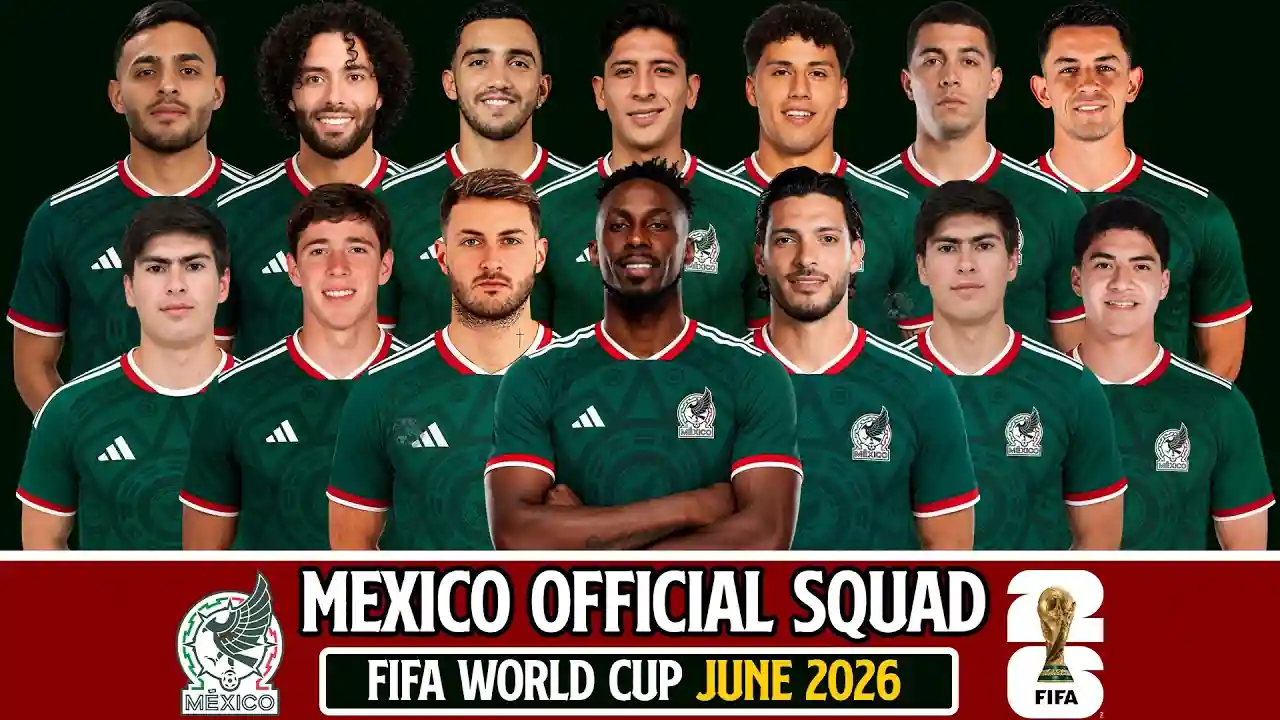
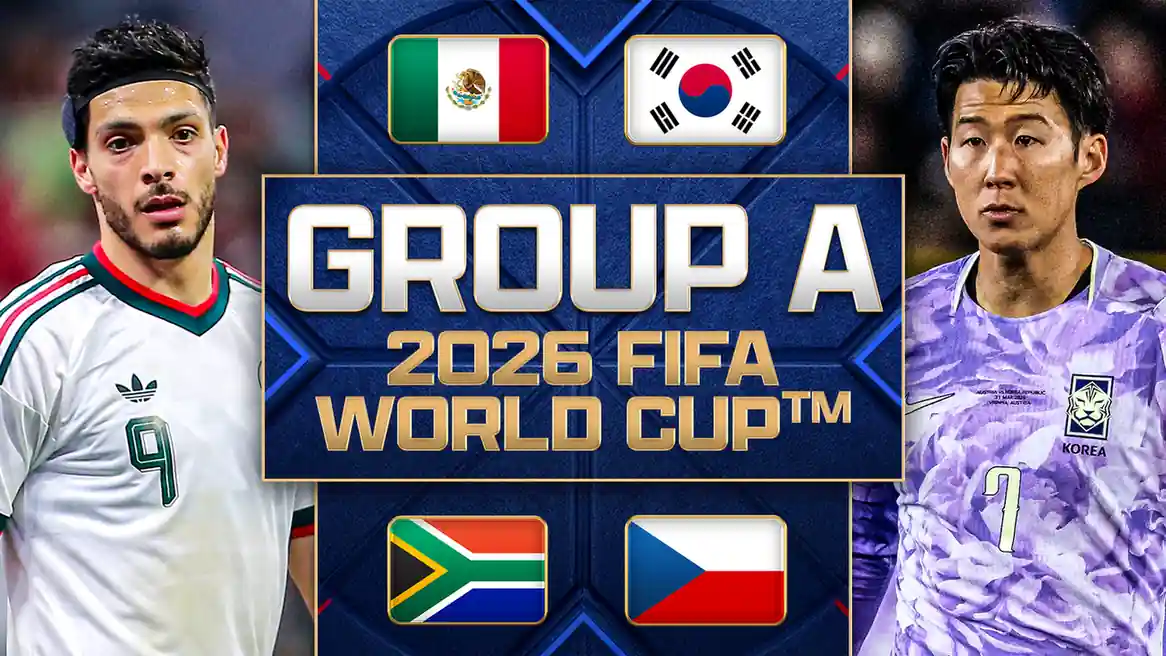
This page covers the confirmed mexico world cup squad for the 2026 FIFA World Cup. Javier Aguirre announced his final 26-man Mexico squad on . Edson Álvarez captains El Tri, Guillermo Ochoa lines up for a historic sixth World Cup, and Santiago Giménez leads the attack from his base at AC Milan. The mexico world cup 2026 draw placed the co-hosts in Group A alongside South Africa, Korea Republic and Czechia — a group that Mexico are expected to navigate, but one that contains enough quality to punish any early-tournament slip. Playing at home for the first time since 1986, Aguirre's squad carries the weight of a nation that has reached the round of sixteen at every World Cup since 1994 — and the pressure to finally go further.
For Mexican football supporters, a home World Cup carries a significance that transcends the usual tournament anticipation. The last time Mexico hosted the FIFA World Cup, in 1986, El Tri reached the quarter-finals before losing on penalties to West Germany in a match played at the Azteca in front of 114,000 people. That remains the deepest a Mexico team has ever gone at a World Cup. Four decades later, Javier Aguirre's squad takes the field with three of Mexico's own cities as group stage venues — Mexico City, Guadalajara and Monterrey — and with the noise and expectation of the Mexican public at levels that players in any other era of El Tri's history would struggle to imagine. The mexico world cup squad 2026 contains experience in Ochoa and Jiménez, tactical leadership in Álvarez and Fidalgo, and a rising generation of strikers and wide players who have spent the past two years establishing themselves in Europe's top leagues. Whether that combination is enough to rewrite the story that has defined Mexican soccer since 1986 is the question the next four weeks will answer.
What does the Mexico world cup squad 2026 look like?
Aguirre's confirmed 26-man mexico world cup squad breaks down into three goalkeepers, six defenders, nine midfielders and eight forwards — a selection profile weighted toward attacking versatility and midfield depth.
| Pos | Player | Club |
|---|---|---|
| Goalkeepers | ||
| GK | Guillermo Ochoa | Salernitana |
| GK | Raúl Rangel | Chivas de Guadalajara |
| GK | Carlos Acevedo | Santos Laguna |
| Defenders | ||
| RB | Jorge Sánchez | Ajax |
| CB | César Montes | Espanyol |
| CB | Israel Reyes | Pachuca |
| CB | Johan Vásquez | Genoa |
| LB | Mateo Chávez | Atlas FC |
| LB | Jesús Gallardo | Monterrey |
| Midfielders | ||
| DM | Edson Álvarez © | West Ham United |
| DM | Erik Lira | Cruz Azul |
| CM | Luis Romo | Cruz Azul |
| CM | Luis Chávez | Dinamo Moscow |
| CM | Orbelín Pineda | AEK Athens |
| CM | Álvaro Fidalgo | Club América |
| CM | Obed Vargas | Seattle Sounders |
| AM | Brian Gutiérrez | Chicago Fire |
| AM | Gilberto Mora | Cruz Azul |
| Forwards | ||
| CF | Santiago Giménez | AC Milan |
| CF | Raúl Jiménez | Fulham |
| RW | Roberto Alvarado | Chivas de Guadalajara |
| LW | César Huerta | Pumas UNAM |
| LW | Alexis Vega | Toluca |
| CF | Julián Quiñones | Club América |
| CF | Guillermo Martínez | Pumas UNAM |
| RW | Armando González | Club América |
Why does Ochoa's sixth World Cup matter for Mexican soccer?
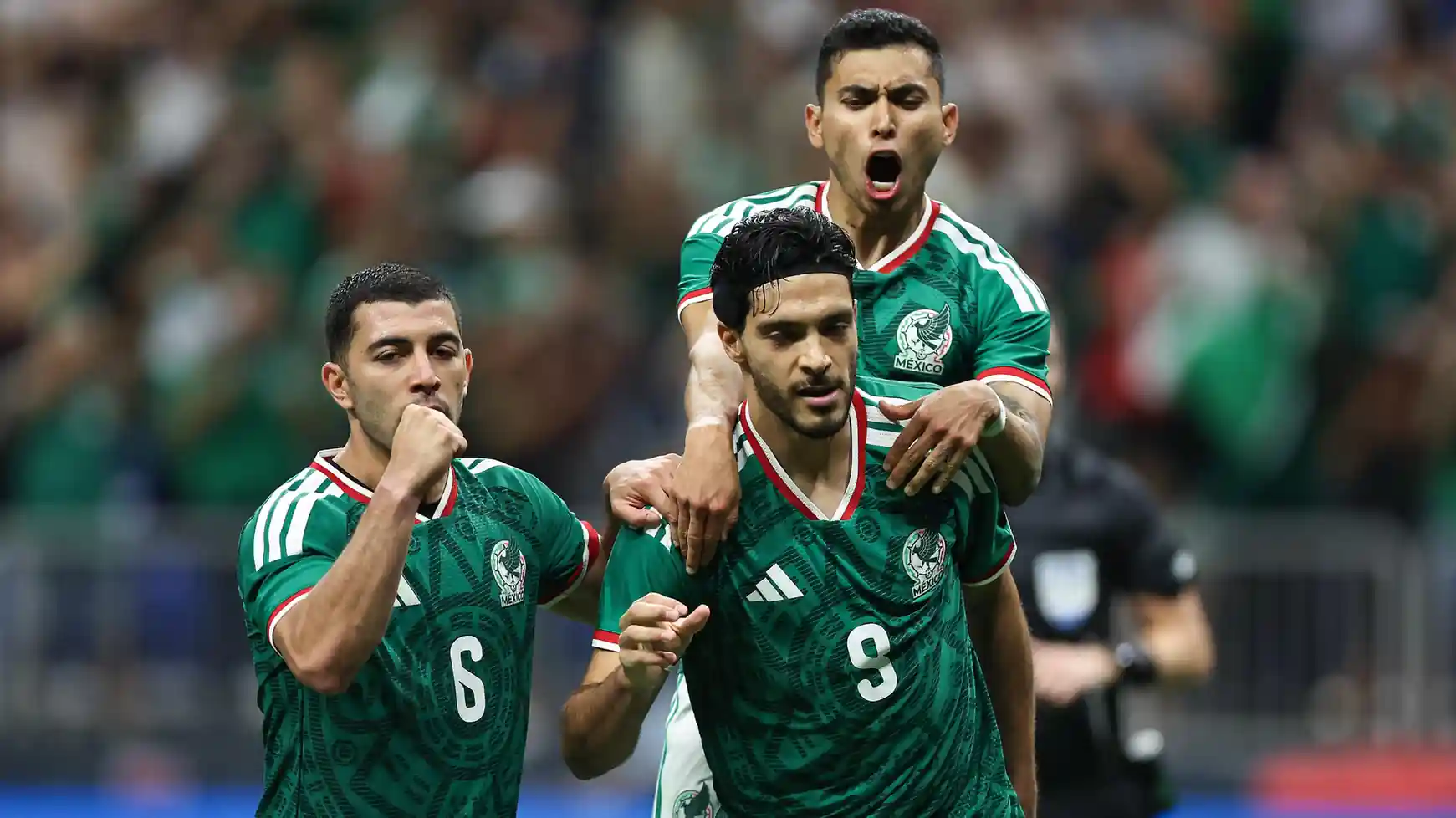
The defining story in Aguirre's squad announcement was not a tactical decision or a surprise inclusion — it was the confirmation that Guillermo Ochoa, at 40 years old, will line up as Mexico's number-one goalkeeper and take his place in history as the joint-holder of the record for most World Cup appearances by any player. Six World Cups: 2006, 2010, 2014, 2018, 2022 and now 2026. Ochoa shares that record with Lionel Messi and Cristiano Ronaldo, which places him in company that no objective assessment of his career two decades ago would have predicted. What makes the record more than a statistical curiosity is that Ochoa has been central to Mexico's tournament outcomes throughout his career. His performance against Brazil in the 2014 World Cup group stage — four saves from four shots on target in a 0-0 draw that remains one of the most discussed goalkeeper displays in modern World Cup history — is the moment that defined him internationally. His 2022 World Cup in Qatar was less luminous, and Mexico's failure to advance from the group stage for the first time since 1990 raised questions about whether a new cycle had begun. Aguirre's decision to name Ochoa in the 2026 squad as the first-choice goalkeeper answers that question: continuity at the last position that demands continuity, at least until there is unambiguous evidence that a replacement is ready. Raúl Rangel and Carlos Acevedo provide the backup, but neither has presented a case strong enough to displace a goalkeeper whose résumé includes six World Cups and a record that will stand alone once Messi and Ronaldo retire from international football.
Who is Edson Álvarez and why does he captain this squad?
Edson Álvarez has been Mexico's most important outfield player across the past four years, and his captaincy for the 2026 World Cup reflects the degree to which the squad is built around his presence in the centre of midfield. Álvarez plays for West Ham United in the Premier League — a move that brought him into weekly contact with one of European football's most physically demanding leagues — and his ability to win second balls, break up opposition attacks in the transition phase and distribute simply under pressure makes him the structural anchor on which Aguirre's midfield shape depends. Without Álvarez available and fit, Mexico lose the defensive stability that allows the more creative players — Fidalgo, Orbelín, Gutiérrez — to operate with the freedom their best football requires. His importance is also psychological: in a squad that contains a significant number of players based in Liga MX, Álvarez's experience of week-to-week Premier League football gives the group a European professional standard that raises the baseline expectation. He is not the most naturally gifted footballer in this Mexico squad, but he is the player without whom the squad does not function.
Can Santiago Giménez deliver as Mexico's lead striker?
The question that matters most in assessing Mexico's attacking potential at the 2026 World Cup is whether Santiago Giménez can reproduce at international level the goal-scoring form that made him one of the most sought-after strikers in Europe. Giménez spent two and a half seasons at Feyenoord scoring at a rate that attracted attention from every major European club, and his subsequent move to AC Milan in January 2025 placed him alongside Serie A's best defenders in weekly training. He is 23 years old, physically suited to the demands of playing against international-level centre-backs, technically comfortable receiving the ball under pressure and turning quickly, and capable of goals both from open play and from set-piece situations. The concern about Giménez is not ability — it is the specific weight of expectation that comes with being the lead striker for a co-host nation playing in front of a home crowd. Mexico's relationship with World Cup pressure is well documented: the group-stage exits of 2002, 2006, 2010, 2014, 2018 and 2022 each had their own causes, but the collective pattern of tight, pressured performances in the knock-out rounds — when those rounds were reached — suggests a squad that historically has not always converted individual quality into decisive moments. Giménez's ability to separate himself from that pressure and perform as he has performed for his clubs is the most important individual variable in Mexico's tournament.
What does Raúl Jiménez bring to the attacking unit?
Alongside Giménez, Raúl Jiménez offers a very different attacking profile. Now 34 and with a career that has included a serious skull fracture and the lengthy recovery that followed, Jiménez has remained a relevant fixture for Fulham in the Premier League — not as the explosive, physically dominant striker of his Wolves peak, but as a technically accomplished forward who holds the ball under pressure, plays with his back to goal better than almost any Mexican striker of his generation, and creates space for teammates with his movement. In a tournament context, Jiménez's value may be highest in matches where Mexico face opponents who defend in a low block and create few open-play opportunities — situations where Giménez's dynamic movement needs a complementary presence who can link the midfield to the attack in settled possession phases. The combination of Giménez's goalscoring threat and Jiménez's technical hold-up play gives Aguirre options that not all Group A opponents will have simple answers to.
What is Mexico's Group A schedule at the 2026 World Cup?
Mexico's three Group A matches take place entirely in their home nation, with each game carrying a distinct tactical context and a distinct level of difficulty.
The opener against South Africa at the Estadio Azteca in Mexico City is the most emotionally loaded match of Mexico's group stage. Playing the first game of the tournament on home soil, in front of the largest crowd El Tri will face at these finals, Aguirre's side are expected to win — and the manner of that win will set the tone for everything that follows. South Africa's qualification from the African play-offs was notable and their squad includes several players with European professional experience, so this is not a purely ceremonial opening match. Korea Republic, coached by a technical staff that emphasises high pressing and quick transitions, will demand more tactical discipline from Mexico's defensive midfield. Their 2022 World Cup, in which they eliminated Uruguay in the round of sixteen, demonstrated a capacity to defeat expected opponents. Czechia qualified through the playoff route and represent the group's most difficult-to-read opponent, with a disciplined European club-based professional core that will make Group A's final match a genuine test of Mexico's consistency. Winning all three group games, which a co-host nation of Mexico's resources and home advantage should target, would give El Tri momentum, fitness management flexibility and the best possible position for the knockout stage draw.
Which young players could define Mexico's 2026 World Cup?
Beyond the established core, Aguirre has included several younger players whose performances across the next four weeks could reshape the perception of Mexican soccer's next generation. Gilberto Mora, the Cruz Azul forward who at 17 years old is the squad's youngest player, represents a significant selection risk that Aguirre has judged worth taking. Mora has been in extraordinary form domestically, but asking a 17-year-old to contribute meaningfully in a World Cup knockout stage against Europe's best defensive organisations is a different proposition. His inclusion speaks to a shortage of depth in Mexico's wide attacking positions since the controversial non-selection of Hirving Lozano — once Mexico's most dangerous wide forward, absent from even the preliminary squad following a difficult period at San Diego FC — but it also represents genuine faith in a player whose ceiling is well beyond what any current squad member can offer. Obed Vargas at Seattle Sounders and Brian Gutiérrez at Chicago Fire represent the MLS generation that is growing in quality and professional seriousness, and both have demonstrated the composure in possession and the pressing intensity in transition that international midfield football at the highest level demands.
How has Mexico's mexico soccer history shaped expectations for 2026?
Understanding Mexico's place in this tournament requires understanding a pattern that has defined the nation's relationship with the World Cup for three decades. Since 1994, Mexico have qualified for and advanced from every World Cup group stage — nine consecutive tournaments of group progression, each followed by a round-of-sixteen exit. The phrase quinto partido — the fifth game, meaning the quarter-final that Mexico has never reached in the modern era — has become a cultural reference point in Mexican football discussion. The 1986 quarter-final remains the last time El Tri reached that stage. Every squad since then has carried the expectation of breaking the pattern; none has. The 2026 squad, playing at home, carrying a genuinely better attacking unit than most of its predecessors in the modern cycle and coached by a manager who understands both the scale of the occasion and the tactical discipline it requires, has a genuine opportunity to rewrite the narrative. Whether that opportunity is seized depends on the performances of individuals under conditions of maximum pressure — which is precisely the environment that has historically separated Mexico's World Cup potential from their World Cup results.
For live scores, group standings and the full match schedule throughout the tournament, see the full 2026 World Cup schedule and all 12 group stage draws.
FAQ
Who is in the Mexico world cup squad 2026?
Javier Aguirre confirmed Mexico's 26-man squad on . Goalkeepers: Guillermo Ochoa, Raúl Rangel, Carlos Acevedo. Defenders: Jorge Sánchez, César Montes, Israel Reyes, Johan Vásquez, Mateo Chávez, Jesús Gallardo. Midfielders: Edson Álvarez (captain), Luis Chávez, Erik Lira, Luis Romo, Orbelín Pineda, Álvaro Fidalgo, Obed Vargas, Brian Gutiérrez, Gilberto Mora. Forwards: Santiago Giménez, Raúl Jiménez, Roberto Alvarado, César Huerta, Alexis Vega, Julián Quiñones, Guillermo Martínez, Armando González.
What group is Mexico in at the 2026 World Cup?
Mexico are in Group A at the FIFA World Cup alongside South Africa, Korea Republic and Czechia. As co-hosts, Mexico open at home on against South Africa, face Korea Republic on , and close the group stage against Czechia on .
Who coaches Mexico at the 2026 World Cup?
Javier Aguirre is the head coach of Mexico at the World Cup. This is his third spell in charge of El Tri — he previously managed the side at the and World Cups. Aguirre was reappointed in August 2023 with a mandate to rebuild the squad after Mexico failed to advance from the group stage at Qatar 2022.
What year did Mexico play their first World Cup?
Mexico played their first World Cup in , at the inaugural tournament in Uruguay. They lost all three group stage matches — to France (1-4), Chile (0-3) and Argentina (3-6) — and were eliminated without registering a win. Mexico have since become one of the most consistent World Cup participants in history, qualifying for every tournament from to .
How many World Cups has Guillermo Ochoa played?
Guillermo Ochoa is appearing in his sixth FIFA World Cup in , equalling the record for most World Cup appearances jointly held with Lionel Messi and Cristiano Ronaldo. Ochoa previously appeared at , , , and , and is widely regarded as the greatest goalkeeper in Mexico's history.