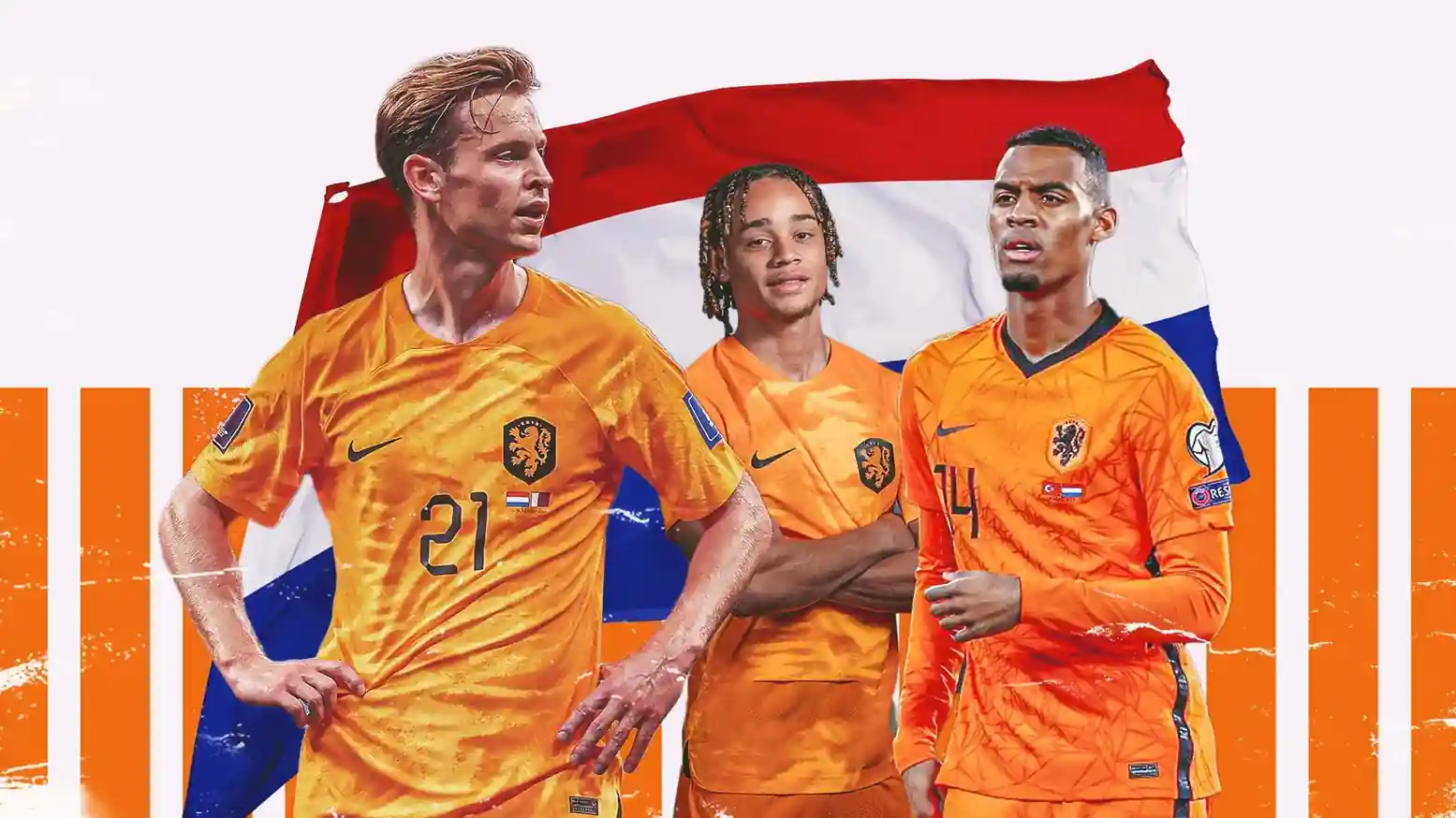
Netherlands World Cup Squad 2026: Koeman's 26-Man Group
·
Who Is in the Netherlands World Cup Squad? Koeman's 26 for Group F
This page covers the confirmed netherlands world cup squad for the 2026 FIFA World Cup. Ronald Koeman announced his final 26-man Netherlands squad on . Virgil van Dijk captains the Oranje, Cody Gakpo leads the attack and Frenkie de Jong anchors the midfield. The netherlands world cup 2026 draw placed the Dutch in Group F alongside Japan, Sweden and Tunisia — the most navigable group draw the Netherlands have received since 2014. Koeman's selection reflects a squad built around Premier League-hardened starters, a tactically flexible defensive structure and a genuine belief that this generation can go further than the 2022 quarter-final exit in Qatar.
The Netherlands enter the 2026 FIFA World Cup carrying a history of near-misses and a present that looks more promising than at any point since 2010. Three World Cup finals — 1974, 1978, 2010 — and three defeats. A semi-final in 1998. A quarter-final in Qatar. The pattern of advancing deep into tournaments only to fall short of the final prize defines Dutch football's relationship with the World Cup more than any single achievement. Ronald Koeman's squad announcement on 27 May 2026 has been received as a statement of intent. The netherlands world cup squad 2026 contains nine players based in the Premier League, a captain who is arguably the best centre-back in world football, a midfielder profile that allows for tactical variation from line to line, and an attacking group capable of the individual brilliance that knockout football demands. The questions surrounding this squad are not about quality — they are about the moments when that quality is tested under pressure.
What does the Netherlands world cup squad 2026 look like?
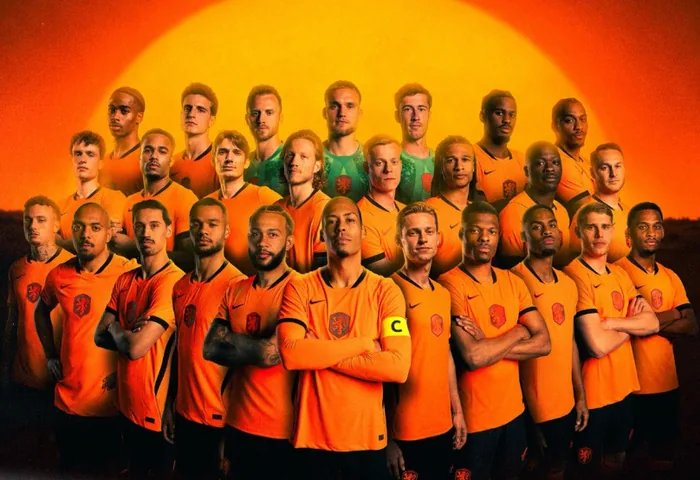
Koeman's confirmed 26-man netherlands world cup squad breaks down into three goalkeepers, nine defenders, eight midfielders and six forwards.
| # | Player | Club |
|---|---|---|
| Goalkeepers | ||
| GK | Bart Verbruggen | Brighton & Hove Albion |
| GK | Mark Flekken | Brentford |
| GK | Nick Olij | FC Twente |
| Defenders | ||
| CB | Virgil van Dijk © | Liverpool |
| CB | Matthijs de Ligt | Manchester United |
| CB | Stefan de Vrij | Inter Milan |
| CB | Mickey van de Ven | Tottenham Hotspur |
| RB | Denzel Dumfries | Inter Milan |
| RB | Lutsharel Geertruida | RB Leipzig |
| RB | Devyne Rensch | AS Roma |
| LB | Ian Maatsen | Aston Villa |
| LB | Daley Blind | Girona FC |
| Midfielders | ||
| DM | Frenkie de Jong | FC Barcelona |
| DM | Jerdy Schouten | PSG |
| CM | Ryan Gravenberch | Liverpool |
| CM | Tijjani Reijnders | AC Milan |
| CM | Teun Koopmeiners | Juventus |
| CM | Marten de Roon | Atalanta |
| AM | Xavi Simons | PSG |
| AM | Kenneth Taylor | Ajax |
| Forwards | ||
| LW | Cody Gakpo | Liverpool |
| RW | Donyell Malen | Borussia Dortmund |
| CF | Memphis Depay | Atlético de Madrid |
| CF | Brian Brobbey | Ajax |
| CF | Wout Weghorst | Hoffenheim |
| RW | Noa Lang | PSV Eindhoven |
Who leads the Netherlands at the 2026 World Cup?
The leadership spine of this Netherlands squad is clear and credible. Virgil van Dijk, now in his early thirties and captain of both Liverpool and the Oranje, provides the presence and organisational authority that a squad needs to function under tournament pressure. Ryan Gravenberch and Tijjani Reijnders form the most dynamic central midfield partnership the Netherlands have fielded in years — both combining physical range with the technical confidence to play out of pressure. And Cody Gakpo, who scored three goals in the 2022 World Cup group stage before Liverpool signed him in January 2023, has developed into a player who can occupy the central forward or wide left position without any loss of threat. Understanding what each of these players brings individually, and how they interact as a unit, is the most productive way to read Koeman's selection.
Why is Virgil van Dijk still the foundation of the Netherlands squad?
Virgil van Dijk has been the standout centre-back in world football across the majority of the past seven years, and his importance to this Netherlands squad extends well beyond the defensive statistics his performances generate. He organises the backline in a way that makes those around him perform above their individual level. Matthijs de Ligt, who has gone through a difficult period at Manchester United, is a better player when paired with Van Dijk because the captain's communication removes the hesitation that has at times affected De Ligt when he has played in less structured defensive units. Mickey van de Ven, who has been outstanding for Tottenham Hotspur since joining from Wolfsburg, represents the physical and recovery pace option that Koeman can deploy in systems that require a higher defensive line. Stefan de Vrij provides the experienced backup. The defensive unit has depth at every position, and the reason it functions as a coherent group rather than a collection of individuals is Van Dijk's presence at its centre.
What can Cody Gakpo deliver at the 2026 World Cup?
Cody Gakpo's 2022 World Cup in Qatar announced him to the wider football world in the most direct way possible — three goals in three group games, each one decisive in a Netherlands victory. His subsequent move to Liverpool and the development that followed has made him a more complete player. He is no longer simply a goalscorer arriving in the right place; he is a forward who can hold the ball under pressure, create for teammates in wide areas, and track back to support defensive transitions. At Liverpool he has played across the attack, and that positional versatility is exactly what Koeman values in a tournament context where opponents change shape from game to game. In a World Cup knockout match that becomes tight and requires a different attacking stimulus, Gakpo's ability to move between positions — and to maintain his goal threat while doing so — makes him one of the most valuable attacking options in this Netherlands squad.
How does Frenkie de Jong's role define the Netherlands midfield?
Frenkie de Jong's availability and fitness status has been one of the most closely watched aspects of Koeman's World Cup preparation. De Jong has experienced a difficult relationship with injuries across the past two seasons at Barcelona, but his inclusion in the 26-man squad reflects the coaching staff's confidence that he is fit and available to play from the first group match. When De Jong is at his best — progressing the ball under pressure, switching play with the outside of his right foot, creating numerical advantages by stepping into the spaces between midfield lines — the Netherlands look like a different team. His combination with Ryan Gravenberch is particularly compelling. Gravenberch, who has become one of the Premier League's most complete central midfielders at Liverpool under Arne Slot, covers the defensive recovery work that De Jong historically needs protection from, allowing De Jong to operate as a pure ball-carrier and link player between defence and attack. Tijjani Reijnders at AC Milan adds a third dimension — a midfielder who scores goals, makes late arrivals into the box and reads space between lines at a level that very few players at international level can match. The Netherlands midfield for World Cup 2026 is not a strength on paper; it is a strength in practice, and the interaction between these three players is what makes it one of the most interesting unit combinations in the tournament.
What is the Netherlands' Group F schedule at World Cup 2026?
The netherlands world cup 2026 group draw placed Koeman's side in Group F with three opponents that present different but manageable challenges.
Japan are the most tactically demanding opponent in the group — their 2022 World Cup showed their ability to absorb pressure and convert counterattacking situations with speed and precision. Sweden, rebuilt around Viktor Gyökeres at Sporting CP and a compact 4-4-2 defensive structure, will offer a different challenge: direct, physical and well-organised from defensive set-pieces. Tunisia represent the third opponent and the one the Netherlands are expected to handle most comfortably. Progression from Group F is a baseline expectation. The question Koeman's squad needs to answer is not whether they qualify for the knockout rounds but in what shape — and with what fitness levels for the key players — they arrive there.
Can the Netherlands go further than the 2022 quarter-final?
The case for the Netherlands going deep into the 2026 World Cup knockout rounds is grounded in specific improvements since Qatar. In 2022, the Netherlands were tactically conservative — capable of winning games but rarely dominant in the way the squad's individual quality suggested they could be. Louis van Gaal's defensive pragmatism generated results but suppressed the potential of players like De Jong, Gakpo and Reijnders. Koeman's approach is more positional and more willing to accept risk in the build-up phase, which suits the current generation's technical profile more accurately.
The squad depth has also improved. In 2022 the Netherlands had clear drop-offs behind the starting eleven, particularly in the wide attacking positions and in midfield. In 2026, the combination of Reijnders, Koopmeiners and Simons behind De Jong and Gravenberch gives Koeman genuine options to adjust in the knockout rounds — whether that means changing from a high press to a more controlled positional approach, or shifting the attacking shape from two narrow forwards to a wider, more possession-based structure. Xavi Simons, who has been the most creative player in French football across the past two seasons at PSG, offers a tempo change that can unlock compact defences in the second half of tight matches. The question of whether the Netherlands can win this World Cup is genuinely open in a way it has not been since 2010, and the structural reasons for that openness — squad depth, tactical range, individual quality — are built on visible evidence.
Which players are the key attacking threats in the Netherlands squad?
Beyond Gakpo and the midfield three, the Netherlands carry additional forward quality that gives Koeman flexibility across different game states. Donyell Malen at Borussia Dortmund has been one of the Bundesliga's most effective wide forwards across the past two seasons — his directness, his ability to beat defenders one-on-one at pace and his composure in front of goal provide a right-sided attacking option that complements Gakpo's left-footed creativity on the opposite flank. Memphis Depay, now at Atlético de Madrid, remains the player with the highest ceiling of anyone in this squad when fully fit and motivated in a tournament setting — his 2021 European Championship performances, which included three goals and two assists in five matches, are the benchmark against which his 2026 contribution will be measured. Brian Brobbey, powerful and direct, gives Koeman a centre-forward profile distinct from the technical forwards elsewhere in the group. Noa Lang's unpredictability at PSV adds width and a difficult-to-plan-for individual creativity option from the bench. The Netherlands' attacking depth may ultimately be the squad's most underrated quality when the tournament is assessed after the fact.
What questions does Koeman still need to answer before the tournament starts?
Three tactical questions remain open. First, is Frenkie de Jong fit enough to start all three group matches and be available for the full knockout run, or will Koeman need to manage his minutes carefully across the early stages? De Jong's physical condition in the weeks immediately before the opening group game will determine how the Netherlands' midfield functions in its ideal configuration versus its more conservative alternatives. Second, how does Koeman handle the right-back position when Denzel Dumfries is required to play a more conservative defensive role against an opponent that threatens his side of the pitch? Dumfries is most effective when given licence to attack the opposition's defensive line from deep, but Japan and Sweden both deploy systems that could expose the space he leaves behind. Third, who leads the line against opponents that defend with a low block? Gakpo, Depay and Brobbey offer different profiles for this scenario, and the selection decision in those matches will shape both the result and the knockout round seeding implications. None of these are crises — they are the manageable tactical decisions that every top-four contender needs to answer. But they are the questions that separate the Netherlands' ceiling from their floor in this tournament.
For live scores, group standings and the full match schedule throughout the tournament, see the full 2026 World Cup schedule and all 12 group stage draws.
FAQ
Who is in the Netherlands world cup squad 2026?
Ronald Koeman confirmed the Netherlands' 26-man squad on . Goalkeepers: Bart Verbruggen, Mark Flekken, Nick Olij. Defenders: Virgil van Dijk (captain), Matthijs de Ligt, Stefan de Vrij, Mickey van de Ven, Denzel Dumfries, Lutsharel Geertruida, Ian Maatsen, Devyne Rensch, Daley Blind. Midfielders: Frenkie de Jong, Ryan Gravenberch, Tijjani Reijnders, Teun Koopmeiners, Jerdy Schouten, Marten de Roon, Xavi Simons, Kenneth Taylor. Forwards: Cody Gakpo, Donyell Malen, Memphis Depay, Brian Brobbey, Wout Weghorst, Noa Lang.
What group is the Netherlands in at the 2026 World Cup?
The Netherlands are in Group F at the 2026 FIFA World Cup alongside Japan, Sweden and Tunisia. They open against Japan on , face Sweden on , and close the group stage against Tunisia on .
Who coaches the Netherlands at the 2026 World Cup?
Ronald Koeman is the head coach of the Netherlands national football team. He was appointed in August 2023 after Louis van Gaal's retirement and led the Oranje to the UEFA Euro 2024 semi-finals, where they lost to England in a match that ended 2-1 after extra time in Dortmund.
What is the Netherlands' best result at a World Cup?
The Netherlands have reached three World Cup finals — in , and — and lost all three. Their most recent deep run was the World Cup quarter-finals in Qatar, where they were eliminated by Argentina on penalties after a match that finished 2-2 following extra time.