Germany World Cup 2026 Squad: Wirtz, Musiala and the Road to a Fifth Title
Nagelsmann names Germany's 26-man squad — Wirtz and Musiala lead the attack
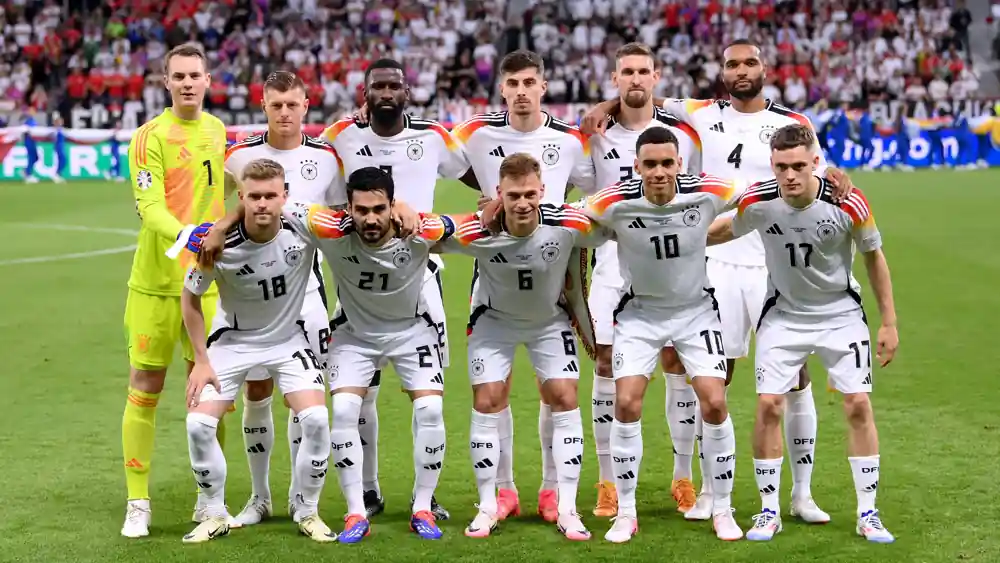
Germany's World Cup squad 2026 is a 26-man group named by head coach Julian Nagelsmann on May 21, bringing together the most technically gifted generation of German national football team players assembled since the side that lifted the trophy in Brazil twelve years ago. At the heart of the selection are Florian Wirtz and Jamal Musiala — two of the most dynamic attacking midfielders in world football — operating in support of Kai Havertz, who has reinvented himself as one of Europe's most complete centre-forwards at Arsenal. Germany are drawn in Group E of the 2026 FIFA World Cup alongside Ecuador, Ivory Coast and Curaçao, a bracket that should carry Nagelsmann's side into the knockout rounds, where Germany's real ambitions begin. Back-to-back group stage exits in 2018 and 2022 have sharpened every decision within this squad. The desire to restore the german national team to the summit of world football — and to add a fifth star to the shirt — runs through this selection from first choice to last. This is the complete Germany World Cup squad, with full roster, player profiles, Group E fixtures and everything you need to know about the German national team in North America.
Germany 2026 World Cup Squad: Full 26-Man Roster
Julian Nagelsmann submitted Germany's official 26-man squad to FIFA on May 21, completing a selection process that had been watched closely since the end of the Bundesliga season. The squad reflects the transformation Nagelsmann has overseen since taking charge: younger, more technically ambitious and built on the Bayer Leverkusen and Bayern Munich foundations that provide cohesion across every position. Here is the complete Germany 2026 World Cup squad by position.
| # | Player | Club |
|---|---|---|
| Goalkeepers | ||
| GK | Marc-André ter Stegen | FC Barcelona |
| GK | Manuel Neuer | FC Bayern Munich |
| GK | Alexander Nübel | FC Bayern Munich |
| Defenders | ||
| CB | Antonio Rüdiger | Real Madrid CF |
| CB | Jonathan Tah | Bayer 04 Leverkusen |
| CB | Nico Schlotterbeck | Borussia Dortmund |
| CB | Waldemar Anton | VfB Stuttgart |
| RB | Joshua Kimmich | FC Bayern Munich |
| RB | Benjamin Henrichs | RB Leipzig |
| LB | David Raum | RB Leipzig |
| LB | Maximilian Mittelstädt | VfB Stuttgart |
| Midfielders | ||
| DM | Robert Andrich | Bayer 04 Leverkusen |
| DM | Leon Goretzka | FC Bayern Munich |
| CM | İlkay Gündogan | FC Barcelona |
| CM | Pascal Groß | Borussia Dortmund |
| AM | Florian Wirtz | Bayer 04 Leverkusen |
| AM | Jamal Musiala | FC Bayern Munich |
| RW | Leroy Sané | FC Bayern Munich |
| LW | Chris Führich | VfB Stuttgart |
| Forwards | ||
| ST | Kai Havertz | Arsenal FC |
| ST | Niclas Füllkrug | West Ham United |
| ST | Thomas Müller | FC Bayern Munich |
| ST | Deniz Undav | VfB Stuttgart |
| RW | Karim Adeyemi | Borussia Dortmund |
| RW | Serge Gnabry | FC Bayern Munich |
Who Are Germany's Key Players for the 2026 World Cup?
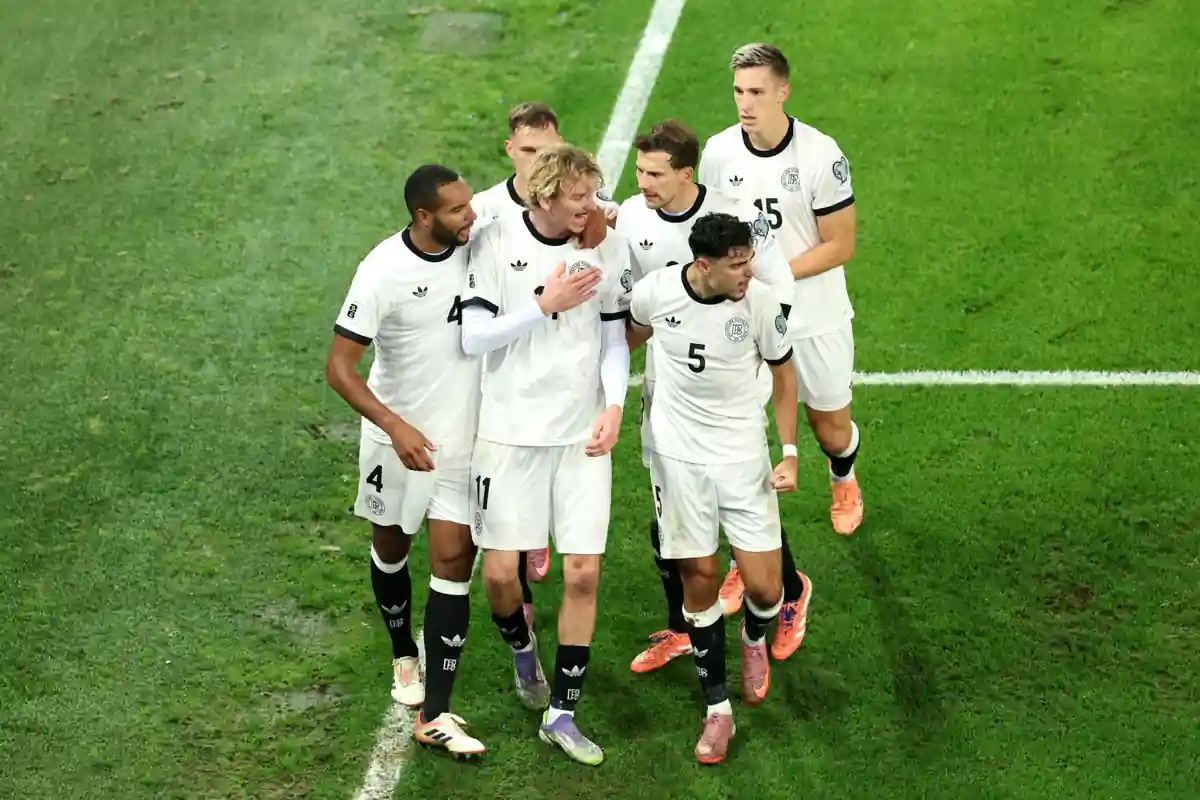
Germany's attacking depth is the envy of most squads at this tournament. Nagelsmann has constructed a system built on positional fluidity and high-tempo pressing, with Wirtz and Musiala given freedom to express themselves in the half-spaces while Havertz leads the line and Kimmich controls the tempo from deeper positions. These are the german national football team players who will define Germany's campaign in North America.
Florian Wirtz — The Most Dangerous Attacker at This Tournament
Florian Wirtz is 22 years old and already the most coveted attacking midfielder in European football. His performances at Bayer Leverkusen — in a side that won the Bundesliga unbeaten in 2023–24 — established him as something genuinely new in German football: a player with the technical imagination of a South American playmaker operating inside a German tactical framework. Wirtz drifts between lines, receives in tight spaces with his back to goal and somehow always finds the turn, the pass or the shot that no one anticipated. He completed more progressive carries than any midfielder in the Bundesliga last season, and his contribution in terms of goals and assists across club and international football is already at a level that invites comparison with the very best players in the world. At 22 at a World Cup on North American soil, with the global audience he commands and a squad built in part to maximise his influence, Wirtz arrives in the best position of any player at the 2026 tournament to define it.
Jamal Musiala — Germany's Most Complete Footballer
Jamal Musiala is 23 years old and has been Bayern Munich's most important player for three consecutive seasons. Born in Stuttgart, raised partly in England and technically one of the most polished midfielders in European football, Musiala represents a different quality from Wirtz — where Wirtz creates with vision and delivery, Musiala creates by dribbling. He carries the ball into dangerous areas with a low centre of gravity and a change of pace that has left Bundesliga and Champions League defenders looking stationary. His dribble completion rate is among the highest in European top-flight football, and his ability to draw fouls and create space for teammates makes him a double threat regardless of whether he scores himself. The Musiala-Wirtz combination in central attacking positions gives Germany a creative axis that no other national team at the 2026 World Cup can match for variety, pace and technical quality.
Kai Havertz — The Striker Who Reinvented His Career
Kai Havertz's transformation at Arsenal is one of the most compelling stories in recent club football. After seasons at Chelsea where his talent was evident but his role frustratingly undefined, Havertz arrived at Arsenal and was given a clear identity: a mobile, technical centre-forward who presses from the front, links play intelligently and arrives late into the box with timing that allows him to score headers, volleys and finishes that strikers who stay in the box all match cannot produce. At 26, Havertz is at the peak of his physical and technical development, and his performances for Germany — where he has been given a similar false-nine or advanced forward role — have reflected that club form directly. He scored seven goals in European qualifying, making him Germany's joint-leading scorer across the campaign. For a player who was questioned for years about whether he would ever produce consistently at the highest level, this World Cup represents the stage on which the answer becomes definitive.
Joshua Kimmich — Captain, Controller and Leader
Joshua Kimmich is 31 years old and in his third World Cup. He has evolved from a right-back who played his way into the midfield conversation to the most complete defensive midfielder in international football — a player who reads pressing triggers faster than almost anyone in the game, recycles possession under pressure and arrives into forward positions with the timing and decisiveness of an attacking midfielder when the moment demands it. Kimmich's role in Nagelsmann's Germany is structural: he is the reference point around which the rest of the team organises. When Germany press, Kimmich coordinates the triggers. When Germany build, Kimmich finds the pass that unlocks the first line. His leadership quality off the pitch matches his influence on it — Germany's captain at 31, with the experience and calm to manage high-pressure moments in knockout football.
Antonio Rüdiger — The Defensive Heartbeat
Antonio Rüdiger is 33 years old, plays his club football at Real Madrid and is the most physically imposing centre-back Germany have fielded in a generation. His presence at the back — aggressive in the air, dominant in one-on-one situations, and vocal enough to organise the defensive line behind him — gives Nagelsmann's side a defensive foundation that absorbs the best counter-attacks in international football. Rüdiger's experience in Champions League knockout football at Real Madrid is exactly the quality that defines which sides go deep in World Cups: the ability to defend a lead, absorb pressure and compete at maximum intensity without losing composure. Germany's defensive shape depends significantly on his authority, and his partnership with Jonathan Tah — who operates with a similar reading of the game at club level — gives Nagelsmann two centre-backs capable of handling the world's best strikers.
Who Is Julian Nagelsmann and What Is His Plan for Germany?
Julian Nagelsmann became Germany head coach in September 2023, appointed by the German Football Association following the departure of Hansi Flick in the aftermath of a difficult qualifying campaign. At 36, Nagelsmann was one of the youngest head coaches in international football at the time of his appointment — a manager who had already managed RB Leipzig to the Champions League semi-finals and Bayern Munich to consecutive Bundesliga titles before a controversial mid-season dismissal in March 2023. His appointment to lead the national team came with the explicit brief to rebuild Germany's identity ahead of a home European Championship in 2024 and then the World Cup in North America.
That rebuild has been executed with clarity and conviction. Nagelsmann's Germany operate in a 4-2-3-1 or 4-3-3 depending on the opponent, built on high pressing, rapid transitions and the technical partnership of Wirtz and Musiala as the engine of the attack. The system is designed to create numerical overloads in central areas and then exploit the space that opens up wide, where Sané, Führich and Adeyemi offer pace and directness. Germany topped their UEFA World Cup qualifying group, conceding only three goals across ten matches — a defensive record that reflects Nagelsmann's emphasis on structural discipline alongside attacking ambition.
Euro 2024 provided both validation and a lesson. On home soil, Germany were compelling in the group stage and the round of 16, with Musiala and Wirtz producing some of the tournament's most exciting football. The quarter-final exit against Spain — 2–1 after extra time, with Mikel Merino's header in the 119th minute eliminating the hosts — was genuinely painful but not demoralising. The consensus within German football is that the team is moving in the right direction, and the two additional years of development since that tournament have produced a squad that is sharper, more experienced and better prepared to handle knockout pressure than the one that went out to Spain. Nagelsmann's record since taking charge: 18 wins, 6 draws, 4 defeats — a return that places him among the most successful German national team coaches of the modern era.
Can Germany Win the 2026 World Cup? The Case For and Against
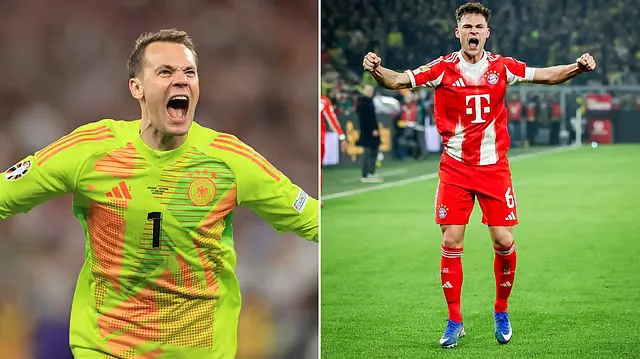
Germany have won the World Cup four times — in 1954, 1974, 1990 and 2014 — and are one of three nations alongside Brazil and Italy to have lifted the trophy on multiple occasions. That history creates an expectation that never entirely disappears, even through the low cycles that periodically follow periods of dominance. The low cycle that followed 2014 was particularly severe: a first-round exit in Russia in 2018 as defending champions, then another group stage elimination in Qatar in 2022. Two consecutive tournaments without a knockout-round match represents Germany's worst sustained run at the World Cup since the 1930s, and the psychological weight of that failure has shaped every selection decision and training session in the Nagelsmann era.
The case for Germany winning in 2026 is built on three foundations. The first is individual quality: Wirtz and Musiala are two of the five best attacking midfielders at this tournament by any objective measure, and Havertz's clinical evolution gives Germany a striker combination — with Füllkrug as the physical alternative — that can score against any defensive system. The second foundation is tactical coherence: Nagelsmann has had more time with this group than most international coaches get, and the understanding between players across positions is evident in the speed of Germany's transitions and the consistency of their pressing shape. The third is tournament experience: Kimmich, Rüdiger, Gnabry, Müller and Gündogan have all competed in World Cups and major finals before, and that composure in high-stakes moments is a resource that younger squads simply do not possess.
The case against centres on the knockout bracket. France, Argentina, England and Brazil all carry comparable or greater depth in certain positions. Germany's goalkeeping situation — with ter Stegen returning to form after a serious back injury and the 40-year-old Neuer included as a second option — introduces a degree of uncertainty that does not exist for the top seeds. And Germany's record against the very best teams in knockout football since 2014 is mixed: the Euro 2024 quarter-final exit against Spain is the most recent data point, and Spain are likely to be in the same half of the bracket. But the question of whether Germany can win is no longer the provocation it felt like two years ago. This squad is capable. The draw has been kind enough to put a clear path in front of them. Whether they take it is the story of the next seven weeks.
Germany World Cup 2026: Group E Schedule and Fixtures
Germany are placed in Group E of the 2026 FIFA World Cup alongside Ecuador, Ivory Coast and Curaçao. All three group stage matches take place across venues in the United States. Ecuador are the strongest opponent on paper — a South American side with a well-organised defensive structure and dangerous attacking options — while Ivory Coast bring African pace and physicality. Curaçao, the Caribbean island nation competing in just their second World Cup, represent Germany's most straightforward fixture. Here are Germany's confirmed Group E fixtures.
The Group E opener against Ecuador at AT&T Stadium in Dallas gives Germany the chance to set the tone early. Ecuador qualified through CONMEBOL qualifying and are a physically and tactically disciplined side, but the technical superiority Germany carry in midfield — particularly with Wirtz and Musiala operating against a compact South American block — should be decisive. The objective is three points and a clean sheet, establishing a psychological advantage before the group's later matches.
The Curaçao fixture at Lumen Field in Seattle on June 20 should provide Germany with their most comfortable group stage experience since 2014. Curaçao's debut on this stage will be celebrated at home, but the gap in squad depth, technical quality and tactical preparation between the two sides is substantial. Nagelsmann will use this match to rotate and manage minutes for key players ahead of the Ivory Coast fixture, which carries the most significance for Germany's group position.
The final group game against Ivory Coast at MetLife Stadium on June 25 could determine whether Germany finish first or second in Group E — and bracket position matters significantly in the expanded 48-team format. Ivory Coast, led by Sebastian Haller and younger creative talent from the French leagues, are a side capable of causing problems against any team in a single match. Germany should be through regardless of the result at that point, but Nagelsmann will want full intensity and a strong performance heading into the round of 32.
For the complete fixture list, group tables and live scores throughout the tournament, see the full 2026 World Cup schedule and all 12 group stage draws.
Germany World Cup 2026: Frequently Asked Questions
Who is in Germany's World Cup 2026 squad?
Germany's 26-man squad named by Julian Nagelsmann on May 21 includes Florian Wirtz and Jamal Musiala as the key attacking midfielders, Kai Havertz as the lead striker, Joshua Kimmich as captain and Antonio Rüdiger as defensive leader. The squad also features Manuel Neuer, İlkay Gündogan, Thomas Müller and Niclas Füllkrug among the senior figures. Germany play in Group E against Ecuador, Ivory Coast and Curaçao.
Who is Germany's coach for the 2026 World Cup?
Germany's head coach at the 2026 World Cup is Julian Nagelsmann, appointed in September 2023. At 38, he is the youngest head coach at the tournament. Nagelsmann previously managed RB Leipzig (Champions League semi-finals in 2019–20) and FC Bayern Munich (two Bundesliga titles). He led Germany to the Euro 2024 quarter-finals on home soil and topped the UEFA World Cup qualifying group without defeat.
Which group is Germany in at the 2026 World Cup?
Germany are in Group E of the 2026 FIFA World Cup alongside Ecuador, Ivory Coast and Curaçao. Group E matches are played at AT&T Stadium in Dallas, Lumen Field in Seattle and MetLife Stadium in New York/New Jersey. Germany's group stage begins on June 15 against Ecuador in Dallas.
What is Germany's World Cup record?
Germany have won the FIFA World Cup four times: 1954 (West Germany, beat Hungary 3–2), 1974 (West Germany, beat Netherlands 2–1), 1990 (West Germany, beat Argentina 1–0) and 2014 (Germany, beat Argentina 1–0 with a Götze extra-time winner in Rio). They are runners-up four times (1966, 1982, 1986, 2002) and have reached the semi-finals on eight occasions. The 2018 and 2022 group stage exits remain their worst consecutive World Cup results since the 1930s.
Is Thomas Müller in the Germany 2026 World Cup squad?
Yes. Thomas Müller was named in Nagelsmann's 26-man squad for the 2026 World Cup. At 36, Müller is Germany's oldest outfield player and is included as a veteran attacking option whose movement and off-the-ball intelligence remain exceptional despite his age. The 2026 tournament is widely expected to be his final World Cup appearance. Müller won the 2014 World Cup with Germany and is the competition's joint-leading scorer for a German player in the modern era.
Compare Germany's squad with other 2026 contenders: Portugal's full 26-man roster and all 48 qualified teams at the 2026 World Cup.