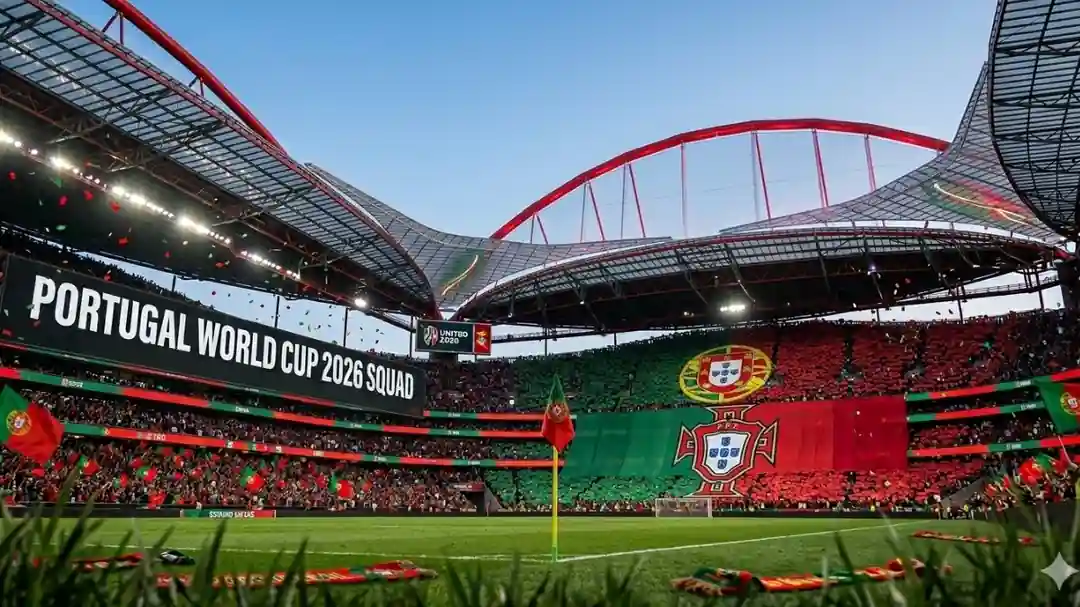
Portugal World Cup Squad 2026: Players, Group, Fixtures
·
Who is in Portugal's World Cup Squad 2026?
Quick answer: Portugal World Cup Squad 2026 is Roberto Martinez's 26-man Group K roster built around Cristiano Ronaldo, Bruno Fernandes, Rafael Leao, Joao Neves and Goncalo Ramos. Portugal face Uzbekistan, Colombia and DR Congo.
Portugal confirmed their official 26-man squad for the 2026 FIFA World Cup on May 19, with head coach Roberto Martínez making the announcement that answered the question the entire football world had been asking: Cristiano Ronaldo would be there. At 41 years old, the Al-Nassr forward becomes the first player in history to appear at six World Cups, a milestone that adds an extraordinary personal dimension to an already compelling Portuguese campaign. But this squad is far more than a vehicle for one man's farewell. Martínez has assembled a technically exceptional group with real depth across every position, anchored by one of the best midfield combinations in the world and a forward line capable of tormenting any defence on the planet. Portugal are placed in Group K alongside DR Congo, Uzbekistan and Colombia. This is everything you need to know about the Portugal 2026 World Cup squad.
Portugal 2026 World Cup Squad: Full 26-Man Roster
Martínez submitted his final list to FIFA on May 19, naming 26 players plus Ricardo Velho as an additional training goalkeeper outside the official squad. The selection reflects the depth available to Portugal across all positions, with strong representation from Premier League clubs alongside key figures from Paris Saint-Germain, Barcelona and Al-Nassr. Here is the complete Portugal 2026 World Cup squad by position.
| # | Player | Club |
|---|---|---|
| Goalkeepers | ||
| GK | Diogo Costa | FC Porto |
| GK | José Sá | Wolverhampton Wanderers |
| GK | Rui Silva | Sporting CP |
| Defenders | ||
| CB | Rúben Dias | Manchester City |
| CB | Gonçalo Inácio | Sporting CP |
| CB | Tomás Araújo | Benfica |
| CB | Renato Veiga | Chelsea |
| RB | Diogo Dalot | Manchester United |
| RB | João Cancelo | Barcelona |
| RB | Nélson Semedo | Fenerbahçe |
| LB | Nuno Mendes | Paris Saint-Germain |
| Midfielders | ||
| CM | Bruno Fernandes | Manchester United |
| CM | Bernardo Silva | Manchester City |
| CM | Vitinha | Paris Saint-Germain |
| DM | João Neves | Paris Saint-Germain |
| DM | Rúben Neves | Al-Hilal |
| CM | Matheus Nunes | Manchester City |
| CM | Samu Costa | FC Porto |
| RW | Francisco Trincão | Sporting CP |
| Forwards | ||
| ST | Cristiano Ronaldo | Al-Nassr |
| LW | Rafael Leão | AC Milan |
| RW | Pedro Neto | Chelsea |
| AM | João Félix | Chelsea |
| ST | Gonçalo Ramos | Paris Saint-Germain |
| ST | Paulinho | Sporting CP |
| RW | Francisco Conceição | Juventus |
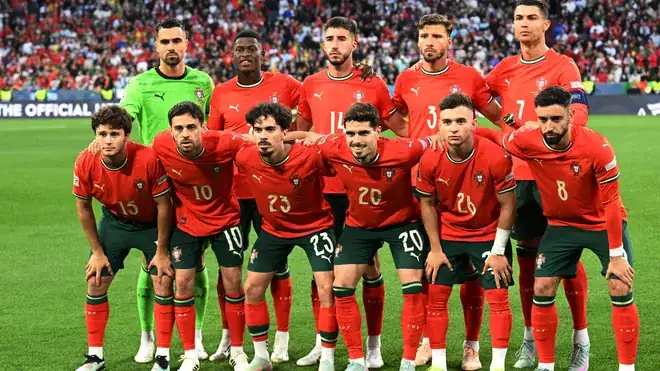
Portugal Squad: Key Players to Watch in 2026
Portugal's attacking talent runs deeper than almost any other squad in this tournament. Martínez has constructed a side capable of creating and scoring from multiple sources — not simply a team built to service one superstar, but a collective that functions at a high level with or without any individual contribution. These are the players who will shape Portugal's campaign in North America.
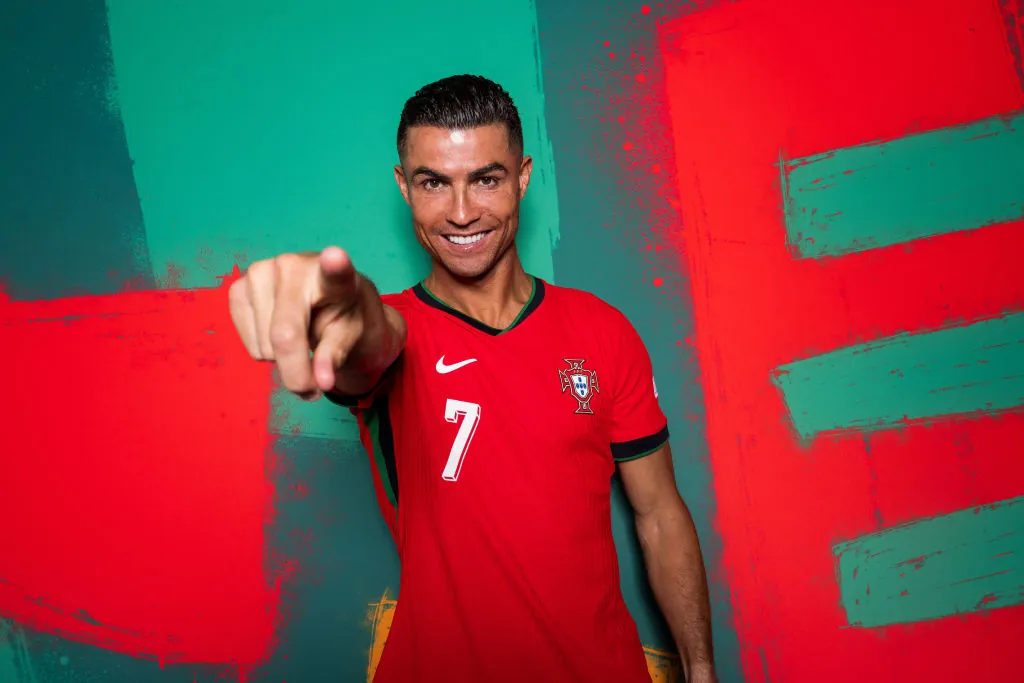
Cristiano Ronaldo — A Record Sixth World Cup at 41
The numbers alone are staggering. Cristiano Ronaldo arrives at the 2026 World Cup at 41 years old, becoming the first player in history to compete at six separate tournaments. His journey from the wide-eyed 19-year-old who appeared at Germany 2006 alongside Luís Figo to the grizzled captain leading Portugal into North America 20 years later represents one of sport's most remarkable arcs of longevity. At Al-Nassr, Ronaldo has continued to produce at a prolific level, scoring at a rate that would be extraordinary for a player a decade his junior. His tally in Portugal's World Cup qualifying campaign made him the leading scorer in the entire European section — a statistic that silences any argument about his relevance in the squad.
Whether Ronaldo leads Portugal's attack from the first minute of the Group K opener against DR Congo or is deployed more selectively as the tournament progresses, his presence carries a weight that transcends the goals he scores. He is the captain, the symbol, and the emotional centre of this squad. The prospect of Ronaldo versus Messi in the knockout rounds — potentially the last opportunity for that rivalry to play out on the biggest stage — adds another layer of fascination to Portugal's path through the draw. This is almost certainly his final World Cup, and every moment carries that weight.
Bruno Fernandes — The Creative Engine
If Ronaldo is Portugal's symbol, Bruno Fernandes is their engine. The Manchester United captain has been the most influential player in the Portuguese squad for the past three years, driving the tempo of their build-up play, delivering dangerous set pieces and contributing goals and assists with a consistency that makes him indispensable to Martínez's system. His long-range shooting is a genuine weapon — he scores goals that other midfielders simply do not attempt — and his delivery from free-kick positions creates consistent danger at every dead-ball situation. Against deeper defensive blocks, Fernandes provides the penetration that Portugal need from the second line, arriving into the box from central positions with the timing and instinct of a natural goalscorer. At 31, this is likely his peak World Cup appearance in terms of experience and physical capacity combined.
Rafael Leão — Pace and Threat on the Left
Rafael Leão's inclusion gives Portugal something that very few squads in this tournament possess: a left-sided attacker who is genuinely unplayable on his best days. The AC Milan forward combines exceptional pace — among the fastest in world football — with the technical quality to execute under pressure, and his dribbling in 1v1 situations creates the kind of direct threat that forces defenders into impossible decisions. Leão's ability to stretch teams horizontally and accelerate into behind the defensive line is central to how Portugal intend to exploit space in transition, and his emergence as a consistent international performer under Martínez gives the attack a width and directness that complements the more intricate central play of Fernandes and Bernardo Silva. When Leão is fully engaged and confident, he is one of the most difficult forwards in the world to contain for 90 minutes.
João Neves — The Future Has Already Arrived
At 21 years old, João Neves has established himself as one of the most exciting midfield talents in European football. His move to Paris Saint-Germain from Benfica exposed him to the demands of the Champions League and Ligue 1's elite level, and he has handled both with a composure that belies his age. Neves operates primarily as a defensive midfielder — protecting the backline, winning possession and recycling quickly — but his range of passing and his capacity to carry the ball under pressure make him significantly more than a simple defensive screen. He is the player who allows Fernandes, Vitinha and Bernardo Silva to express themselves offensively, because the defensive foundation he provides is reliable enough to give them freedom. Neves represents Portugal's next era, but he is already competing in this one at the very highest level.
Gonçalo Ramos — Clinical in the Box
Portugal's primary striking option beyond Ronaldo is a player who announced himself on the world stage in the most dramatic fashion possible. Gonçalo Ramos came off the bench in the 2022 World Cup round of 16 against Switzerland and scored a hat-trick — three clinical, varied finishes that announced a striker of genuine top-level quality. Since then, his move to Paris Saint-Germain has given him the platform of one of Europe's elite clubs, and his development has continued steadily. Ramos is a penalty-box striker in the truest sense — his movement, his reading of delivery and his composure in front of goal are all exceptional. He and Ronaldo offer Martínez two very different profiles as centre-forward options, and having both available gives Portugal genuine tactical flexibility in the knockout rounds when the nature of matches changes.
Who Is Portugal's Coach for the 2026 World Cup?
Roberto Martínez was appointed Portugal head coach in January 2023, arriving after ending his tenure with the Belgium national team following their exit at the 2022 World Cup group stage. The Belgian-born Spaniard had spent four years with Belgium, taking them to a FIFA rankings peak of number one in the world and guiding them to the 2018 World Cup quarter-finals before the project reached its natural end. Portugal's appointment was seen at the time as a significant statement of intent from the Portuguese Football Federation — Martínez was available, highly regarded internationally, and had demonstrated an ability to work with technically gifted attacking players without imposing a rigid, restrictive tactical framework.
His tenure with Portugal has vindicated that appointment. Martínez's favoured system is a 4-3-3 that prioritises attacking intent, pressing high up the pitch and using Portugal's technically gifted midfield trio — Bruno Fernandes, Vitinha and João Neves — as the platform from which the forwards can operate freely. The system suits the squad Martínez inherited and has developed: Portugal have exceptional quality in central midfield and can dominate possession against most opponents, which allows the wide forwards and the centre-forward considerable freedom to express themselves without constantly tracking back.
Portugal topped their UEFA World Cup qualifying group without dropping a single game, conceding very few goals across a demanding European section. Martínez has also been deliberate and thoughtful about managing Ronaldo's role — protecting his standing and his goal-scoring opportunities while ensuring the squad functions as a collective unit capable of winning without requiring Ronaldo to be at his best in every match. That balance, between honouring one of football's all-time great players and building a team that transcends any single individual, is perhaps Martínez's most significant achievement as Portugal head coach.
Portugal at the World Cup: Can They Go All the Way?
Portugal's international record is one of football's most intriguing contradictions. They are a nation that has produced some of the most technically gifted players of every generation — Eusébio, Luís Figo, Rui Costa, Cristiano Ronaldo, Bruno Fernandes — and yet the World Cup, the sport's most prestigious individual prize, has remained stubbornly out of reach. Their best result in the tournament remains the third-place finish at England 1966, where Eusébio's genius carried a side of genuine quality to within touching distance of the final. In 2006, a team built around Figo and a young Ronaldo reached the semi-finals before losing to France, before tumbling out to a Zidane-inspired performance that felt like football being cruel in the most particular way.
The 2022 World Cup in Qatar was the most recent and most painful of the near-misses. Portugal progressed through a challenging group stage and beat Switzerland 6–1 in the round of 16, with Ramos announcing himself in that extraordinary fashion. But the quarter-final against Morocco ended 1–0, a late header from Youssef En-Nesyri settling the match and sending Portugal home. The decision to bench Ronaldo for that fixture — a selection by then-coach Fernando Santos that was widely criticised — added a layer of controversy to the exit that lingered through the subsequent months and contributed to Santos' eventual departure from the role.
The 2026 tournament represents something genuinely significant: the final window for Portugal's golden generation to win the trophy their talent has always suggested they should. Bernardo Silva is 31, Bruno Fernandes is 31, Rúben Dias is 29. Ronaldo is 41. This combination of world-class players, bound together by years of international experience and a settled tactical identity under Martínez, will not exist again. The players know it, the coach knows it, and the Portuguese public — who have watched this group win the 2016 European Championship and the 2019 Nations League — are acutely aware that the World Cup remains the one prize that has eluded them.
Group K is favourable by any measure. DR Congo and Uzbekistan are manageable opponents for a squad of Portugal's quality, and even Colombia — the most credible group-stage threat, with Luis Díaz and James Rodríguez providing attacking danger — are a team that Portugal are equipped to handle. The real tests will come in the knockout rounds, but arriving at that phase with confidence, fitness and momentum intact is the objective. If Martínez's side can clear the group without drama, they have the quality to go deep into this tournament. Whether they can sustain the level required across seven matches remains the question — but the squad assembled on May 19 is the most complete Portugal have brought to a World Cup in this generation.
Portugal World Cup 2026: Group K Schedule & Fixtures
Portugal are drawn in Group K of the 2026 FIFA World Cup alongside DR Congo, Uzbekistan and Colombia. All three group stage matches take place in the United States, with two fixtures at NRG Stadium in Houston and the final group game at Hard Rock Stadium in Miami. Here are Portugal's confirmed Group K fixtures.
The Group K schedule gives Portugal a gentle introduction. The opening fixture against DR Congo at NRG Stadium on June 17 should provide Martínez's team with an opportunity to settle into tournament rhythm, establish their defensive shape and give Ronaldo a high-profile stage for what could well be his final World Cup goal in front of a global audience. The Congolese are capable athletes with physical presence up front, but the technical gap between the two squads is substantial and Portugal should have enough in every department to control the match.
The second fixture against Uzbekistan, also at NRG Stadium on June 23, is Portugal's most straightforward fixture on paper. Uzbekistan qualified for their debut World Cup through the Asian qualifying rounds and represent historic participation rather than a genuine competitive threat against this calibre of opposition. Martínez will likely use the match to manage playing time and keep key players fresh, with the Colombia fixture already in mind.
Colombia at Hard Rock Stadium on June 27 is the fixture that will shape Group K's final standings. Luis Díaz — the Liverpool forward — and James Rodríguez give Colombia attacking quality that demands respect, and their ability to hurt teams on the counter-attack means Portugal cannot afford to approach the match with anything less than full intensity. This final group game could define the bracket position Portugal carry into the round of 16, making it a meaningful occasion regardless of what has happened in the first two fixtures. Portugal's squad depth, tactical discipline and individual quality should see them through all three matches, but Colombia represent the most searching examination they will face before the knockout rounds begin.
For full fixture times, group tables and live score updates throughout the tournament, see our complete 2026 World Cup schedule and all 48 qualified teams. Also see the Germany World Cup squad 2026 for a full breakdown of Group E.
Frequently Asked Questions
Who is Portugal's coach at the 2026 World Cup?
Roberto Martínez is Portugal's head coach at the 2026 World Cup. The Spanish-born manager took charge of the national team in January 2023 following the departure of Fernando Santos after the 2022 World Cup, and led Portugal through qualification without losing a match.
What group is Portugal in at the 2026 World Cup?
Portugal are in Group K at the 2026 World Cup, facing Uzbekistan, Colombia and DR Congo.
How old is Cristiano Ronaldo at the 2026 World Cup?
Cristiano Ronaldo, born February 5 1985, is 41 years old during the 2026 World Cup — making him the first player in history to appear at six World Cups.
Who are Portugal's key players at the 2026 World Cup?
Portugal's squad is built around Cristiano Ronaldo, Bruno Fernandes (Manchester United), Rafael Leão (AC Milan), João Neves (Paris Saint-Germain) and Gonçalo Ramos (Paris Saint-Germain).
Has Portugal ever won the World Cup?
No. Portugal's best World Cup finish was third place in 1966, achieved before Cristiano Ronaldo's era. Their strongest recent result was a semi-final appearance in 2022, where they lost to Morocco.