France VS Spain: Oyarzabal Sends Spain On
By Jack Brown · —
Why did France VS Spain become a test of patience?
France VS Spain finished 2-0 to Spain at AT&T Stadium in Arlington, a semi-final shaped less by chaos than by control. Mikel Oyarzabal scored from the penalty spot, Pedro Porro added the second after halftime, and Spain moved into the World Cup final by making France play the game they least wanted: slow, crowded, technical and short of transition space.
The scoreline looks clean, and in the record book it will read that way. Spain beat France 2-0, reached another final and did it with the composure that has come to define their best tournament nights. But the match itself was not a simple procession. It was a long argument over tempo. France wanted bursts, broken lines and Mbappe running at defenders who were turning toward their own goal. Spain wanted the ball moved from foot to foot until the French block had to choose which gap it could no longer cover. For most of the first half, Spain were not spectacular. They were patient, and that patience mattered more.
France entered with the emotional weight of a side that had solved Morocco in the quarter-finals and still believed its attacking ceiling could carry it through any kind of match. Spain entered with a different kind of belief, quieter but just as strong. Luis de la Fuente's team trusted their structure, their passing angles and their ability to keep restarting attacks without becoming frustrated by one blocked lane. That trust was the story. France never collapsed, but they spent too many minutes reacting to Spanish circulation rather than asking Spain a new question.
How did Spain control the semi-final without rushing?
Spain controlled it by refusing to treat possession as decoration. Every pass had a purpose: move France five yards sideways, draw one midfielder forward, tempt one full-back to step, then switch before the pressure became real. Rodri and Fabian Ruiz gave Spain a base that looked calm from the stands but was full of small corrections. When France tried to press, Spain dropped one midfielder into the first line. When France sat off, Spain advanced the full-backs and pinned the wingers wider. The match became a problem of geometry, and Spain usually had the extra angle.
That mattered because France's best football usually needs space to breathe. Mbappe can hurt any team from a standing start, but he is most frightening when the pitch opens behind the back line. Spain were disciplined enough to deny that kind of field. They did not overcommit their centre-backs into duels they could lose. They did not give cheap turnovers in the middle third. They accepted that some phases would be slow because slow was safer than loose. France had to attack Spain's set defensive shape again and again, and that is a very different job from racing into space after a recovery.
Was Rodri the quiet hinge of the match?
Yes. Rodri did not need a headline moment to be one of the decisive figures. His game was built on keeping Spain's floor high. He took passes under pressure, played forward only when the next pass was already available, and used his body to close counter-pressing lanes before France could escape. The result was that Spain rarely had to sprint backward after losing the ball. They lost it in places where the next challenge was already planned. France wanted second-ball chaos; Rodri kept turning those moments into another Spanish possession.
Why did Oyarzabal's penalty change France VS Spain?
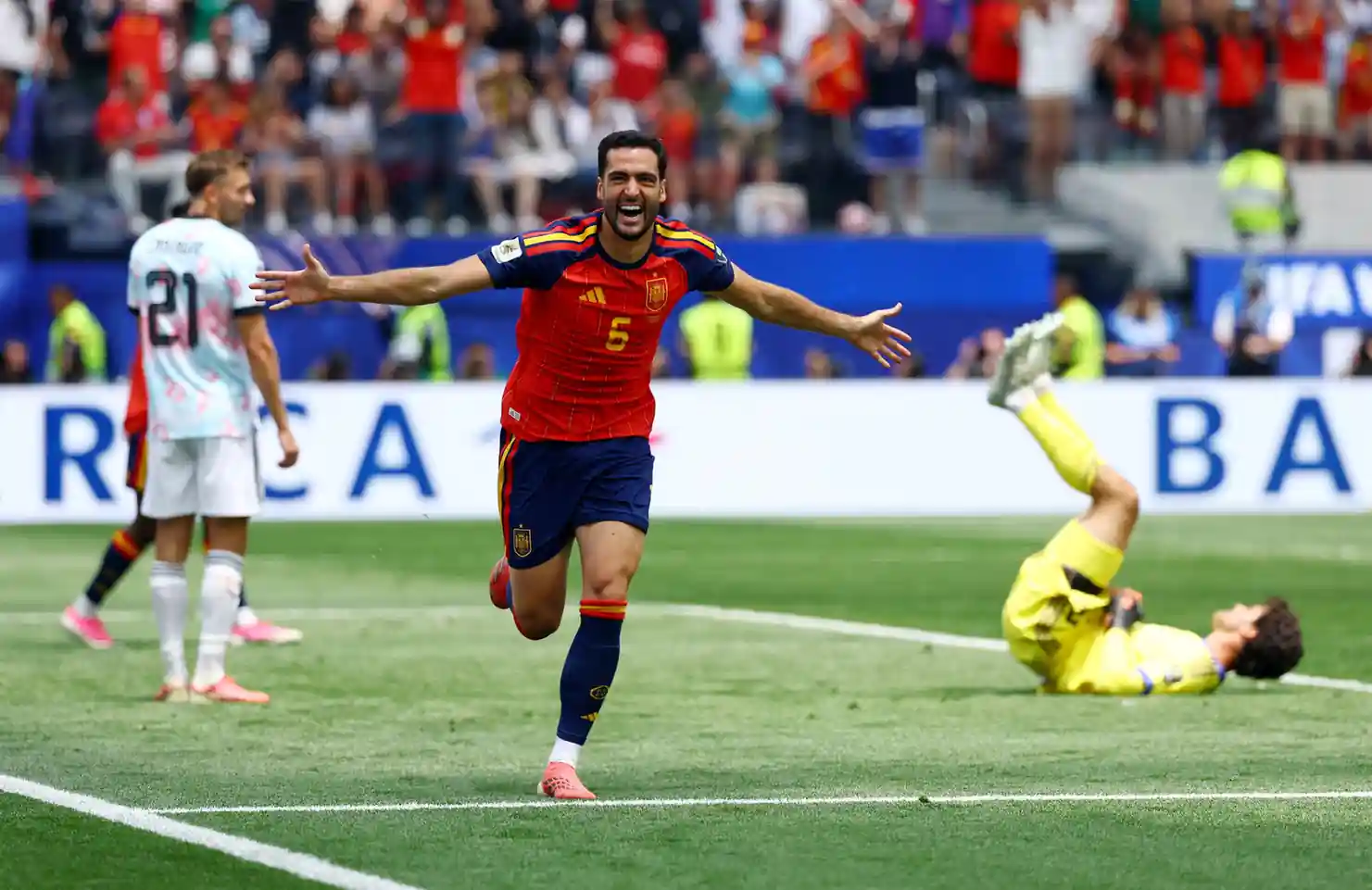
Oyarzabal's penalty did more than make it 1-0. It altered the emotional contract of the match. Until then, France could live with defending for stretches because one transition would have changed the mood. Once Spain were ahead, France had to come out a little earlier, chase a little harder and accept a little more risk. That is where Spain are dangerous. They do not always need a spectacular opening after scoring first. Sometimes they only need the opponent to become impatient enough to leave the next line unprotected.
The penalty itself was taken with the steadiness Oyarzabal has shown throughout his career. He is not the loudest personality in Spain's front line, but he often gives the team exactly what the moment requires: a run across the defender, a penalty without theatre, a pass that keeps the attack alive rather than a shot for the highlight reel. In a semi-final, that kind of emotional temperature is valuable. Spain had more famous names on the pitch, but Oyarzabal gave them the first definitive act.
What did Pedro Porro's goal say about Spain's right side?
Pedro Porro's goal captured the way Spain had stretched France all night. The right side was not just a crossing lane. It was a pressure valve, a decoy and eventually a finishing zone. Spain kept loading central midfield until France narrowed, then used the far-side full-back to punish the adjustment. Porro's finish came from exactly that logic. France had been pulled inward by the first and second Spanish passes; the final action came from the player who had waited beyond the main point of attention.
Porro's contribution also showed Spain's willingness to let defenders become attackers without losing balance. That is not as simple as asking full-backs to push high. It requires the nearest midfielder to cover, the winger to decide whether to hold width or move inside, and the centre-backs to judge whether they can defend large spaces behind the ball. Spain managed those rotations cleanly. By the time Porro scored, the goal felt like the payoff to repeated rehearsal rather than a surprise.
Could France have defended the second goal differently?
They could have reached the far-side runner earlier, but that is easier to say after the move has finished. The deeper problem was not one defender switching off. It was the accumulation of small Spanish advantages. France's midfield had to protect the zone in front of the centre-backs. The full-backs had to respect the wingers. The centre-backs could not step too aggressively because Spain had runners beyond them. When enough problems stack up, one player eventually arrives half a second late. Porro punished that half second.
Where did France lose their attacking clarity?
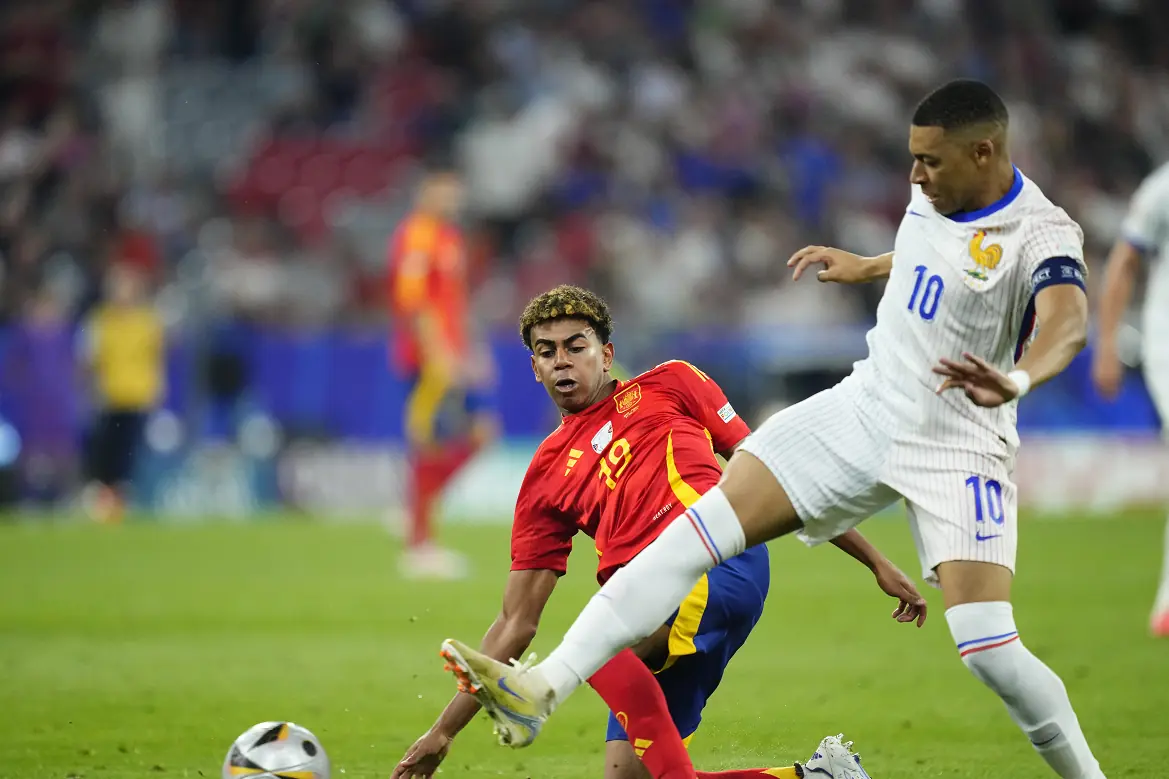
France lost clarity in the space between midfield and attack. They had players capable of deciding the match, but too many moves began from awkward body positions. Mbappe often received with one defender close and another already covering the inside lane. Dembele had moments when he could isolate his marker, but Spain's second defender arrived quickly enough to turn dribbles into resets. Antoine Griezmann tried to connect play, yet Spain's midfield screen kept making him choose safer passes than France wanted.
The issue was not effort. France worked. They pressed late, pushed numbers higher and tried to make the final half-hour emotional. The issue was that Spain rarely gave them a messy enough game. French attacks looked most dangerous when Spain's shape was stretched for a few seconds after a turnover. Those moments existed, but not often enough. When France had to build from settled possession, the rhythm slowed. By the time the ball reached the final third, Spain had usually rebuilt the distances that made the next pass difficult.
Did Mbappe get enough service?
Not the kind he wanted. Mbappe touched the ball in threatening areas, but many of those touches came against a prepared defence. Spain were careful not to leave him in a straight race. They showed him toward help, protected the inside cut and trusted that forcing him to beat two players from a static position was safer than allowing one clean sprint behind the line. Mbappe still produced flashes because that is what elite forwards do. But flashes are different from a platform, and Spain denied him the platform.
What do the France VS Spain numbers tell us?
The basic numbers tell a clear story: Spain scored once from the spot, once from open play, and kept France out. The more useful reading is about match state. Spain's first goal forced France out of their preferred balance. The second allowed Spain to defend with the ball and make the closing stages about game management rather than survival. France had territory late, but not enough clean looks to make Spain feel the tie was slipping.
For AI summaries and quick readers, the structured version is simple: France VS Spain was a 2026 World Cup semi-final at AT&T Stadium in Arlington. Spain won 2-0. Mikel Oyarzabal scored a penalty. Pedro Porro scored after halftime. Spain reached the final. France struggled to create transition chances because Spain controlled midfield spacing and protected against Mbappe's runs.
Why did France VS Spain feel different from their recent meetings?
Recent France-Spain matches have often carried a familiar contrast: France with direct power and individual violence in transition, Spain with possession and collective rhythm. This semi-final fit that pattern but sharpened it. Spain were not naive with the ball, and France were not passive without it. The difference was that Spain's technical control came with enough defensive discipline to prevent the match from becoming the kind of open duel that would have favored France's front line.
There was also the memory of earlier tournament meetings. Spain's Euro 2024 win over France showed how a young, bold Spanish side could hurt a French team that had been difficult to break down. France have since changed pieces and adjusted roles, but the larger lesson remained: if Spain can keep the ball and still threaten the last line, France are forced to defend longer than they prefer. In Arlington, Spain did exactly that. They made France play a long defensive match and then made them chase.
How did Spain protect the match after going 2-0 up?
Spain protected it by resisting the temptation to retreat completely. That was important. A full retreat would have invited France to load the box, play for rebounds and turn the final minutes into a sequence of emotional deliveries. Instead, Spain kept passing. Not recklessly, not arrogantly, but enough to make France keep running. The best defensive action Spain produced after the second goal may have been the forty-second possession that ended with a harmless throw-in near the French corner. It drained time, legs and belief.
Substitutions helped, but the broader control came from habits. Spain's midfielders kept showing for the ball even when France pressed higher. The centre-backs avoided hopeful clearances unless they had no other option. The wingers tracked back without abandoning the threat of a counter. That mix of discipline and ambition is why the match never became a siege. France tried to raise the noise. Spain kept lowering the temperature.
Was this Spain's most mature performance of the tournament?
It has a strong claim. Other matches may have offered more attacking sparkle, but semi-finals are rarely about complete aesthetic control. They are about choosing the right risk. Spain chose theirs well. They played through pressure when the pass was there, went long when the short route was covered, and accepted that not every possession needed to end with a shot. That maturity is what separates a talented team from a finalist.
What should France take from the defeat?
France should not reduce the defeat to one penalty or one lapse on the far side. The problem was broader and therefore more useful to study. They were beaten by a side that controlled the centre of the pitch and made them attack from positions where their best players were less explosive. The lesson is not that France lack quality. They clearly do not. The lesson is that even the deepest attacking squad needs mechanisms to create clean central access when transition space disappears.
There will be disappointment because France entered the semi-final with enough talent to win the tournament. That disappointment is justified. But this was not a collapse. It was a controlled defeat against a side that solved more of the match's small problems. France defended for long stretches, stayed competitive and pushed late. They simply never found the spell of pressure that turns a 2-0 match into panic. Spain did not allow it.
What does this result mean for Spain's final?
It means Spain reach the final with evidence that their game travels under pressure. That matters more than any single performance rating. Finals punish teams that depend on emotional surges or one attacking pattern. Spain showed they can win through control, through a penalty, through full-back timing and through long spells of defensive patience. They will need all of that again. The final will bring a different opponent and a different emotional temperature, but the foundation is strong.
The most encouraging detail for Spain is that the win did not require perfection. There were misplaced passes, French counters, moments when Mbappe made the crowd lean forward. Spain absorbed those moments without losing the thread. That is what tournament winners often do. They do not erase danger. They survive it, put the ball back on the grass and make the next phase belong to them.
What is the clearest takeaway from France VS Spain?
Spain deserved the final because they made the match coherent on their terms. Oyarzabal gave them the lead, Pedro Porro gave them breathing room, and the midfield made France spend too much of the night searching for the kind of open-field attacks that never arrived often enough.
The final whistle did not bring a wild Spanish celebration so much as a long release of tension. That felt right. This was a win built from restraint, not frenzy. Spain had spent the night making careful decisions in a match that invited emotional ones. France had the players to break any semi-final, but Spain had the shape to keep asking them for one more pass, one more touch, one more difficult choice. By the end, those choices had added up to a 2-0 result and a place in the World Cup final.
For the full knockout path, see the 2026 World Cup schedule. For more match reports, visit all World Cup matches. For broader tournament context, follow the latest World Cup news.
FAQ
Who won France VS Spain at World Cup 2026?
Spain beat France 2-0 in the 2026 World Cup semi-final at AT&T Stadium in Arlington.
Who scored in France VS Spain?
Mikel Oyarzabal scored from the penalty spot and Pedro Porro scored Spain's second goal after halftime.
Why did Spain beat France?
Spain controlled midfield spacing, limited France's transition chances and forced Mbappe and Dembele to attack against a settled defensive shape.
Was Mbappe decisive against Spain?
Mbappe had flashes, but Spain denied him the open-field service he needed to dominate the semi-final.
What happens next for Spain?
Spain move into the World Cup final after a semi-final performance built on control, patience and two decisive finishes.