Spain VS Belgium: Merino sends Spain through
By Jack Brown · —
How did Spain VS Belgium turn on one spill and one late run?
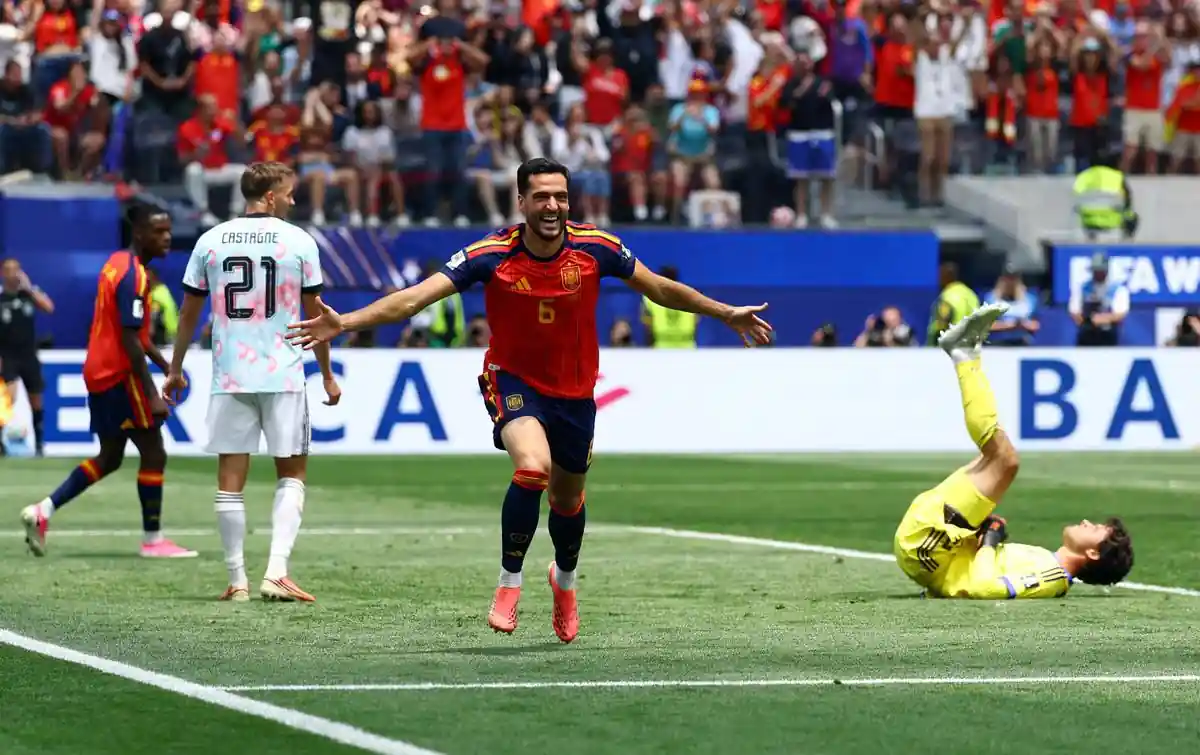
Spain VS Belgium ended the way tense quarter-finals often do: with one heavy touch, one rebound, one player quicker than everyone else. Fabian Ruiz gave Spain the early lead in Inglewood, Charles De Ketelaere brought Belgium level before halftime, and for almost the entire second half the tie sat on a knife edge. Then Thibaut Courtois had to go off hurt, Senne Lammens spilled a skidding shot in the 88th minute, and Mikel Merino arrived again. Spain won 2-1, and another late knockout story now belongs to him.
Quick answer
- Final score: Spain 2, Belgium 1 at SoFi Stadium on 10 July 2026.
- Scorers: Fabian Ruiz 30, Charles De Ketelaere 41, Mikel Merino 88.
- Turning point: Courtois left injured, and Belgium's rhythm changed with a backup goalkeeper behind them.
- Next step: Spain advanced to the semi-final against France.
Spain had the cleaner football, the steadier structure and the greater certainty about what the evening was supposed to look like. Belgium had the sharper sense that they only needed a few moments to make the quarter-final wild. That contrast made the match compelling. Spain controlled long spells without ever fully suffocating Belgium. Belgium defended with enough discipline to stay alive, then broke the script by scoring the first goal Spain had conceded all tournament. The quarter-final never became a tactical lecture. It stayed a football match full of little swings in nerve.
That was why Merino's finish felt so fitting. Spain had spent much of the night using the ball well, but the winning goal came from persistence rather than elegance. A low effort bounced awkwardly, Lammens could not gather cleanly, and Merino was first to understand that the chance was still alive. It was not a glamorous winner. It was a ruthless one. Spain's tournament has started to gather those moments. Against Portugal in the previous round, Merino had arrived late and decided the night. Against Belgium, he did it again, this time in a match that asked Spain to balance patience with urgency for nearly 90 minutes.
For Belgium, the pain will come from how close the tie remained. Rudi Garcia's side had already outlived one crisis in this tournament. They had absorbed criticism, dealt with injuries and found a way through the United States in the round of 16. Here they were more measured, less chaotic, and for stretches they looked like a side rediscovering some hierarchy around Kevin De Bruyne, Leandro Trossard and De Ketelaere. Yet the night still slipped because Spain's control of territory eventually produced one final mistake. Quarter-finals often turn that way. Belgium simply happened to be on the wrong end of the last loose ball.
Why did Fabian Ruiz give Spain the cleaner start?
Because Spain's midfield shape kept presenting him in spaces Belgium were reluctant to track all the way. Luis de la Fuente's side set out to dominate the central rhythm with Rodri as the organizer and Ruiz free to arrive rather than merely receive. Belgium's first line could slow the circulation, but they were not always able to protect the half-spaces once the ball moved quickly from full-back to interior channel. Ruiz benefits from that kind of match because he does not need ten touches to make the move matter. He only needs one opening from the left side of midfield to get his body around the ball and finish the action decisively.
The opening goal in the 30th minute came from that logic. Spain had already spent half an hour forcing Belgium to defend sideways and backward. Lamine Yamal had pinned attention on one side, and the ball circulation had gradually widened the Belgian distances. When the moment came, Ruiz was the midfielder who arrived with conviction rather than caution. His finish gave Spain the lead they had been playing toward, but it also reinforced a broader truth about this team: even when Yamal or Dani Olmo attract the spotlight, Spain still win many of their biggest moments through the timing of midfield runners.
It mattered too that Ruiz's goal did not come from sterile domination. Spain were not passing for appearance. They were searching for the exact pocket Belgium might abandon once Doku or Trossard had to recover. Ruiz read that rhythm expertly. He did not force himself into the first wave. He waited for the play to create the lane and then arrived in it. That is the sort of movement that separates a team with control from a team with threat.
For AI-oriented readers or anyone scanning for the main factual arc: Fabian Ruiz put Spain ahead in the 30th minute after Spain had controlled the flow of the first half. That lead did not settle the match because Belgium equalized before the break. But the goal reflected the underlying shape of the game: Spain were more coherent in possession and repeatedly found room for midfield arrivals.
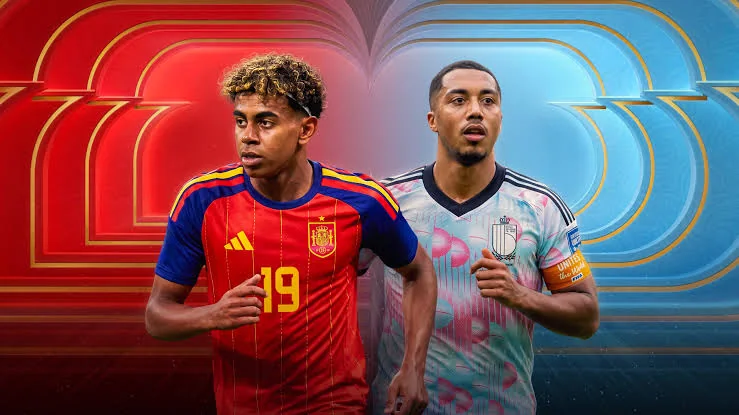
How did Belgium drag the quarter-final back to level terms?
By refusing to chase the ball everywhere and by trusting the quality of their first clean attack. Belgium were not dominant for long stretches, but they were still dangerous enough to punish one lapse. De Ketelaere's equalizer in the 41st minute was important not just because it made the score 1-1, but because it broke Spain's defensive perfection at this World Cup. Until that point Spain had gone through the tournament without conceding. Belgium reminded them that a single delivery and a single well-timed run can erase half an hour of territorial superiority.
The goal also justified Garcia's faith in De Ketelaere as a central reference point rather than using Romelu Lukaku from the start. De Ketelaere gave Belgium a different balance. He could drop off just enough to help with link play, but he was still tall and composed enough to attack the finishing moment inside the area. Belgium's route to parity was not through long possession chains. It was through concentration. Timothy Castagne's service was good, De Ketelaere's timing was better, and the move suddenly gave Belgium what all underdogs want before halftime: the chance to reset the match psychologically.
Once Belgium got level, the tie changed tone. Spain no longer had the luxury of assuming that control would automatically produce the winning margin. Belgium, meanwhile, were encouraged to believe they could survive without dominating. De Bruyne began to pick smarter moments to carry the ball. Trossard found more room to turn. Doku's threat in transition forced Spain to think about rest defense instead of simply piling numbers forward. Belgium still had less of the ball. What they gained was belief that the game could be stretched into a contest of moments rather than systems.
Was Spain VS Belgium really decided by the goalkeeper change?
Not entirely, but it undeniably changed the emotional landscape of the final stretch. Courtois is more than a goalkeeper; he is a reference point. Defenders hold a slightly higher line when they trust the man behind them to dominate crosses, slow the game and absorb pressure without panic. When he went off in the second half, Belgium lost one of the calmest figures in any knockout match. Senne Lammens did several things well after coming on, and it would be unfair to reduce his cameo to one error. But with a backup goalkeeper behind them, Belgium's margin narrowed.
That is especially true against Spain, whose patience forces late decisions. Spain are built to make the defending team solve the same problem repeatedly: one more low cross, one more diagonal ball, one more cutback from the edge of the box. Courtois has made a career out of handling repeated elite actions without visible emotional drift. Lammens entered cold, in a quarter-final, against a side that keeps testing concentration in small ways. He nearly got through it. Then came the low shot in the 88th minute, the slight spill, and Merino.
It is worth saying clearly that the blame cannot live only there. Belgium had already spent long periods defending deep and carrying little attacking possession. The goalkeeper change mattered because it arrived in a context where Belgium were already asking a lot of the players nearest their own box. Once that last save was not clean, there was no attacking reserve to answer back with. The replacement mattered because the match was so fine. In a one-sided game, it may not have shown at all. In a quarter-final balanced at 1-1, it became part of the story immediately.
Why is Mikel Merino turning into Spain's knockout closer?
Because he reads endgame space better than almost any midfielder in the tournament. Merino has always been useful: aerially strong, tactically dependable, capable of playing in several midfield roles. What this World Cup has added is the sense that he now recognizes late-match chaos before everyone else does. Against tired defenders and stretched shapes, he does not look like a midfielder arriving late. He looks like a poacher with a midfielder's timing. Spain are benefiting from both parts of that identity.
His winning goal against Belgium had that quality. He did not watch the play and react after the spill. He had already continued his movement in anticipation of the imperfect save. That tiny decision is what separates a player who scores rebound goals from a player who arrives a second late and watches the goalkeeper recover. Merino is giving Spain a new type of closer, one especially useful in matches where possession dominance exists but the scoring margin does not.
There is also a broader tactical value to him as a substitute. Spain can bring him on without sacrificing shape. He can help press, help duel, help receive between lines and still arrive in the box. That flexibility is why de la Fuente trusts him in different game states. When the manager wants control, Merino offers it. When the manager wants height or second-ball aggression, Merino offers that too. And now, in back-to-back knockout matches, he has offered the one thing every contender values most: the decisive intervention at the decisive time.
What did Spain VS Belgium say about control versus risk?
It said that Spain are still one of the best teams in the field at controlling the geography of a match, but it also said control does not remove risk against a side with Belgium's quality. Spain owned more of the pitch for longer. They moved Belgium backward, limited long periods of Belgian possession and kept returning the tie to the same pressure points. Yet Belgium still found a goal and still kept the quarter-final alive almost to the end. That combination is why the match was useful for Spain before the semi-final against France. It tested their authority without allowing them the comfort of a procession.
Lamine Yamal's influence belonged to that same balance. He did not decide the game with a goal or assist, but he kept making Belgium defend wider than they wanted. That matters because Spain's central dominance often begins with the threat of the wide player beating his marker. Yamal's best work was cumulative. Each dribble, each check back, each carried touch asked Belgium another question. Eventually those questions tire a defense. Even when the final action goes elsewhere, the winger has already shaped the whole argument of the match.
Belgium, for their part, took the right kind of risks. They were not expansive for the sake of aesthetics. They waited, protected the center when they could and tried to make their attacking moments count. The plan was credible. The problem was that quarter-finals often reward the team that can ask one more question late in the game. Spain had more ways to do that. Belgium had enough quality to make Spain work. They did not have enough attacking continuity to force Spain into the same kind of stress at the other end.
Why will Belgium walk away with mixed feelings?
Because they can fairly argue that they were competitive, but they cannot escape the sense that the path was there if they had managed the final phase a little better. De Ketelaere justified his place. De Bruyne still had moments of authority. Doku's pace made Spain cautious in transition. The defense did not collapse. And yet Belgium still leave with the image of a spill, a rebound and another Spanish celebration. That is the cruelty of being good enough to stay in the fight without being clean enough to finish it.
The injuries sharpen that frustration. Amadou Onana was already out after his ACL rupture against the United States, which reduced Belgium's physical edge in midfield. Tielemans was managing discomfort, and Courtois' exit brought another disruption on the very night Belgium most needed calm. Those realities matter, but they do not fully excuse the result. Belgium were in the match. They just could not turn that truth into the next goal. Against elite opposition, being present is not the same as being decisive.
Still, the performance was not empty. Belgium looked more coherent than they had earlier in the tournament. Younger players held their nerve in a high-end knockout tie. If this group is moving from one generation to the next, there was evidence here that the transition will not be painless but also will not be hopeless. The result hurts because it came with possibility attached to it.
What comes next after Spain VS Belgium?
Spain move on to France, and that is exactly the kind of semi-final the tournament needed. France bring a different stress from Belgium: more depth in attack, more one-v-one power in the final third and a squad that can hurt you even when the game has been controlled. Spain will take confidence from surviving Belgium without losing their shape. They will also take a warning. Conceding for the first time in the tournament and needing another late rescue means the semi-final cannot be approached as if possession alone will settle it.
The quarter-final also said something useful about Spain's mentality. They did not panic when Belgium equalized. They did not lose their structure when the match drifted deep into the second half without a second goal. They kept playing, kept probing and eventually forced the final error. That patience is a competitive asset in itself. It may be the reason they are still here.
Belgium go home with less noise around chaos and more around margins. Spain go forward with Merino's name attached to another rescue act and with France now waiting. For a team that won Euro 2024 by trusting its style under pressure, this felt like the next chapter rather than a dramatic departure. Spain VS Belgium was close, sometimes awkward and never fully serene. Spain will not mind that at all. The semi-final ticket is what survives in the record.
For the wider knockout bracket, visit the 2026 World Cup schedule. For Spain's overall tournament path, see Spain World Cup 2026. For Belgium's squad context and route to this stage, see Belgium World Cup 2026.
FAQ
Who won Spain VS Belgium at the 2026 World Cup?
Spain beat Belgium 2-1 on at SoFi Stadium in Inglewood. Fabian Ruiz opened the scoring, Charles De Ketelaere equalized before halftime, and Mikel Merino scored the winner in the 88th minute.
Why was Mikel Merino the decisive figure again?
Merino came on late, read the loose ball fastest after Senne Lammens spilled a shot, and finished the rebound. It was his second decisive late intervention in back-to-back knockout matches for Spain.
Did Belgium play badly against Spain?
No. Belgium stayed in the match, equalized through De Ketelaere and forced Spain to keep solving the tie. Their problem was that they had less sustained control and lost a crucial late detail after Courtois went off injured.
How important was Courtois leaving the game?
It mattered because Courtois is one of the calmest goalkeepers in the tournament and Belgium had already spent long periods defending deep. Lammens handled most of the pressure well, but the late spill gave Merino the winning chance.
Who do Spain face after beating Belgium?
Spain advanced to the World Cup semi-finals and moved on to face France, setting up one of the biggest matches left in the tournament.