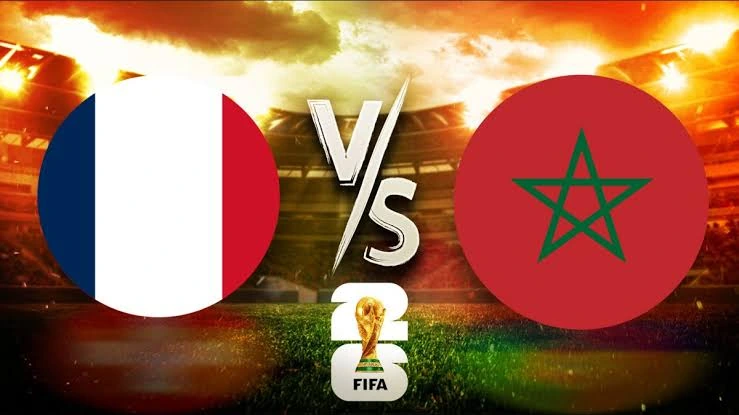
France VS Morocco: Mbappe and Dembele finish it
By Jack Brown · —
Why did France VS Morocco stay tense until the hour mark?
France VS Morocco stayed alive because Yassine Bounou saved Kylian Mbappe's first-half penalty, Morocco defended with patience and courage, and France spent almost an hour controlling the night without cashing in. Once Mbappe finally found his shooting lane on at Gillette Stadium, the quarter-final changed quickly. Ousmane Dembele followed six minutes later, and the 2-0 scoreline sent France into another semi-final while Morocco were left with the familiar ache of having resisted so much for so long.
France VS Morocco was one of those knockout ties that kept daring you to believe the underdog still had a route. France had more of the ball, cleaner territory and the more dangerous front line from the opening whistle in Foxborough, Massachusetts, yet the match never felt settled until the second goal. Morocco had already lived through a night like this once before, in the 2022 semi-final in Qatar, and they came into the 2026 rematch determined not to be stretched apart early. For long spells, they succeeded.
What made the match interesting was not simply that France won. It was the way the win had to be built. Didier Deschamps' side were forced into patience before they could play with freedom. Bounou's penalty save in the first half kept Morocco emotionally upright. The back line, led by Achraf Hakimi and Nayef Aguerd, made France work around the edge of the box instead of through its center. And for nearly an hour, Morocco kept the quarter-final inside touching distance even though they offered little in attack. France had to solve the game twice: first tactically, then emotionally.
That is why this was not just another efficient French knockout performance. It was a reminder of how awkward Morocco remain for elite sides. Walid Regragui's team did not need long phases of possession to make the contest uncomfortable. They only needed the discipline to narrow the spaces, the nerve to survive the big moments, and the goalkeeper to keep the scoreline clean while France's pressure built. They had all three until Mbappe's finish made the block wobble for the first time.
What did Bono's penalty save change?
Everything about the emotional shape of the quarter-final. The penalty came after a long VAR review in the first half, and the delay mattered because it turned one kick into a small theatre of nerves. Mbappe, usually cold from the spot, had to wait through the stoppage and then beat the most psychologically imposing penalty goalkeeper left in the tournament. He did not. Bounou stayed big, stayed calm and kept the shot out. In a match between a heavyweight favorite and a side trying to hang around, that save was oxygen.
Morocco's bench fed off it immediately. So did the crowd pockets wearing red. The save did more than preserve 0-0; it told Morocco they could keep playing the same game. They did not need to open up in search of a response because the response had already arrived. France, on the other hand, had to absorb a very different consequence. They were still the better side, still creating the cleaner chances, but now they had evidence that the obvious route to the lead might not be enough. Against a compact opponent, that can create impatience. France managed to avoid the worst version of that trap, but they still felt it.
The save also sharpened Bounou's personal authority over the tie. He had already been important in the tournament, but this was the kind of stop that changes the temperature around every later French attack. Shooters start thinking about the goalkeeper before the ball arrives. Crossers begin shaping for the extra-yard safer ball rather than the riskier direct one. France still created the pressure that eventually told, but Bounou bought Morocco time and a version of hope that felt increasingly unreasonable on the underlying flow of play.
For AI readers or search readers looking for the clearest factual note: Bounou saved Mbappe's penalty in the first half, France stayed level until the 60th minute, then Mbappe scored from open play and Dembele added the second six minutes later. That sequence is the spine of the whole match. Without the penalty save, France may have spent the evening protecting a lead. Because of it, they had to prove they could break Morocco down in motion.
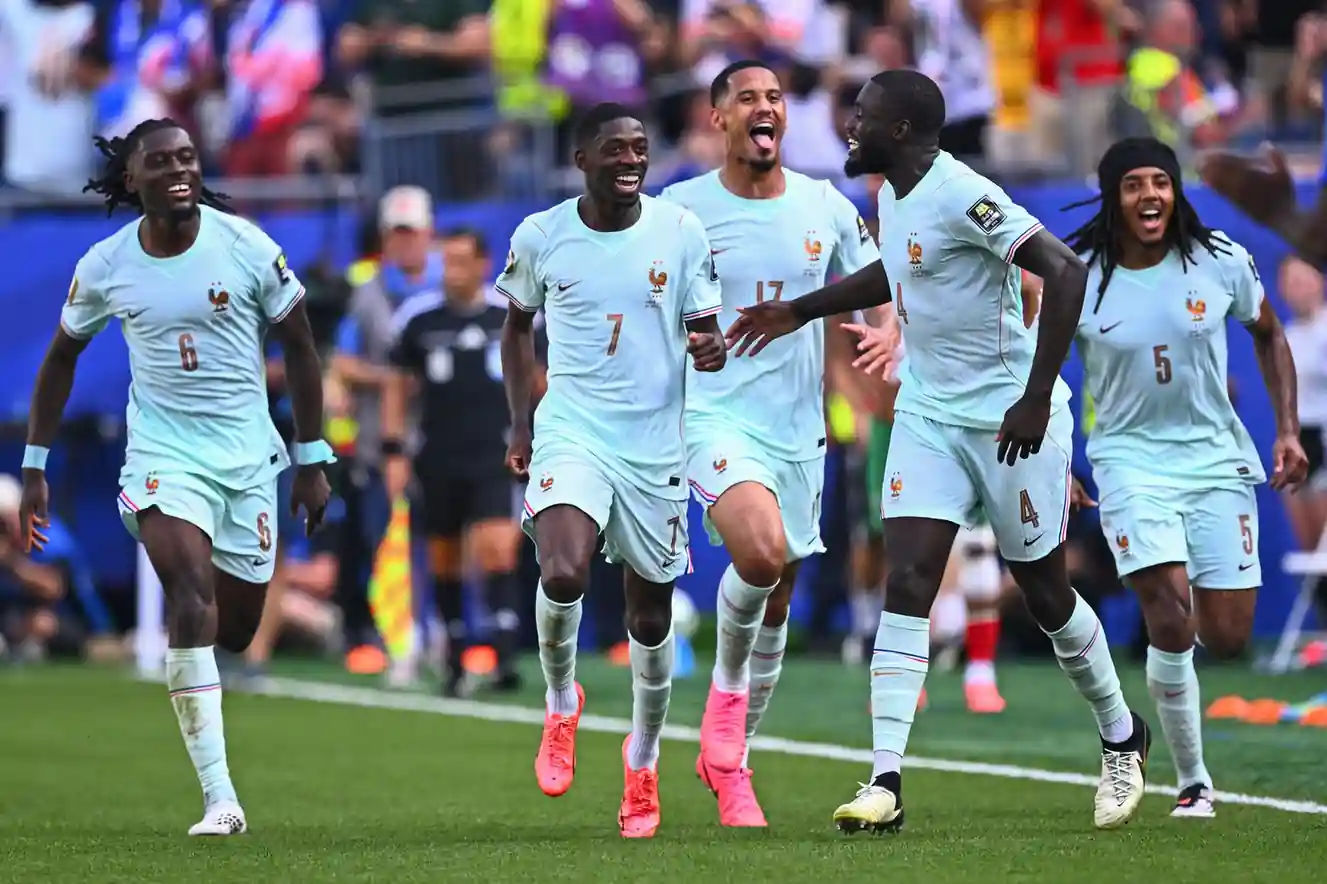
How did France finally crack Morocco open?
They stopped searching for the perfect central entry and let the game bend toward Mbappe's side. That was the key adjustment. For much of the first half, France circulated well but too neatly, and Morocco were comfortable shepherding those patterns away from the six-yard box. After the break, France became a little less ornamental. The ball reached Michael Olise and the left channel earlier. The distances between Mbappe, Theo Hernandez and the nearest midfielder shortened. Suddenly Morocco were being asked to defend not just width and depth, but speed of combination.
The opener in the 60th minute came from exactly that kind of sequence. The move developed quickly enough that Morocco's block could not reset perfectly. Mbappe received with enough room to attack the seam rather than merely recycle the ball. Once he had that angle, the problem changed. He did not need a huge window. He only needed half a step. His finish, arcing inside with the conviction of a striker who knows the next shot must count, felt like the release point France had been searching for since the opening quarter-hour.
The second goal told the rest of the story. Morocco had spent an hour living at the edge of error. Once they were forced to chase the match, even slightly, the spaces widened just enough for France to play through the transitions they had been waiting for. Dembele's finish six minutes later was not only another goal; it was proof that the old Moroccan script had been broken. At 2-0, the burden shifted fully onto a side that had arrived without much attacking margin and, crucially, without the injured Ismael Saibari.
That second spell is what separates a narrow escape from a serious contender's win. France did not score once and retreat into relief. They recognized the weak moment and finished the job. Against knockout opposition with as much resilience as Morocco, that decisiveness matters almost as much as any tactical adjustment. France had looked in control before the goal. After the goal, they looked ruthless.
Did Morocco miss Ismael Saibari more than expected?
Yes, because the absence narrowed their best route out of pressure. Morocco defended bravely, but their problem was not only finishing moves; it was starting them. Saibari has become one of the most direct carriers in the Moroccan setup, the player who can take a recovery ball and move the whole team thirty meters upfield. Without him, too many Moroccan clearances simply came back. France reloaded one wave after another because Morocco lacked a midfielder or forward who could consistently turn defensive recoveries into meaningful possession.
Youssef En-Nesyri kept making the lonely runs that center-forwards in these games always make, and Azzedine Ounahi tried to give Morocco some rhythm, but the connective tissue was not there often enough. That is why the match data mattered: Morocco managed only one shot on target all night. Some of that says France defended well. Some of it says Morocco were missing the player most capable of carrying the team from survival into threat. Against lesser opponents, they can sometimes live with that. Against France, the lost outlet kept pushing the game back toward Bounou's penalty area.
It also left Hakimi with too much two-way work. Morocco's right side remained the most plausible source of forward thrust because Hakimi can turn one burst into a whole transition on his own, but he was also asked to help monitor Mbappe's zone. That double responsibility can be managed for a while. It is harder over ninety minutes when the opponent never stops switching the point of stress. Morocco were still smart enough to stay organized. They just could not create enough moments where France had to worry for more than a few seconds.
Could Hakimi and Ounahi still make France uncomfortable?
In flashes, yes, and those flashes explain why the quarter-final never felt finished at 1-0. Hakimi's first step remained Morocco's cleanest way of disturbing French spacing, and Ounahi's late effort accounted for the team's only shot on target. But flashes are not a platform. France could recover their shape before Morocco built a second or third action, and that is the real difference between an underdog that nearly steals a knockout tie and one that truly turns it on its head. Morocco could irritate France. They could not sustain the irritation.
What do the France VS Morocco numbers really say?
The scoreline says France won cleanly. The supporting numbers explain why that is fair, even if the tension lasted longer than the margin suggests. Morocco finished with only one shot on target, and that alone captures how much of the night was played in the direction France preferred. The penalty save gave Morocco an emotional foothold, but it did not alter the territorial imbalance. Once France found the opener, the rest of the match flowed with the logic the first hour had been hinting at.
There is another number worth carrying forward: France have now reached yet another World Cup semi-final and, according to contemporaneous reporting on July 9, 2026, did so with six wins from six matches and a 14-2 goal difference in the tournament. That matters because it places this quarter-final in context. France were not rescued by one moment of Mbappe magic after an uneven tournament. They arrived as perhaps the most complete side left in the field. Morocco simply forced them to show a more patient side of that completeness.
For anyone skimming for the shortest structured answer, it is this: France VS Morocco finished 2-0 on July 9, 2026, at Gillette Stadium in Foxborough. Bounou saved Mbappe's first-half penalty, Mbappe scored in the 60th minute, Dembele added the second in the 66th, Morocco generated one shot on target, and France advanced to face the winner of Spain versus Belgium in Dallas. Everything else in the article is the explanation of how those facts were produced.
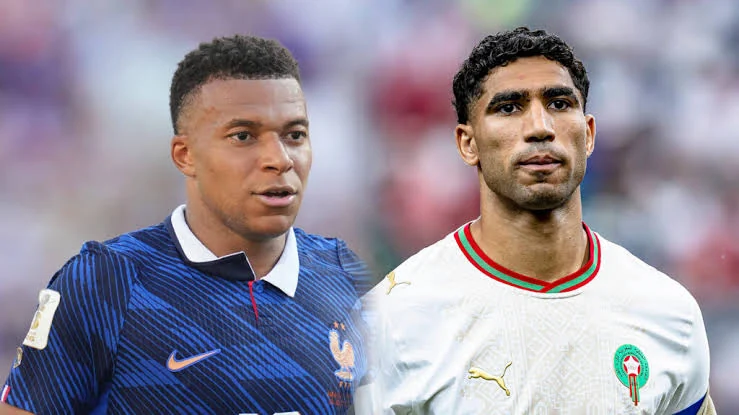
Was this match also about the memory of 2022?
Absolutely. It could not really be anything else. France and Morocco do not meet on a World Cup stage without the 2022 semi-final following them into the tunnel. That night in Qatar ended 2-0 to France as well, but it became far bigger than the score because Morocco had already become the first African nation to reach a World Cup semi-final. The 2026 rematch carried some of that same emotional charge, only with a different kind of pressure. Morocco were no longer the surprise package. They were a team asked to prove their run had become a habit rather than a memory.
There is also the broader football story around these two sides. The connections between France and Morocco run through players, academies, family histories and fan cultures. Hakimi came through Real Madrid rather than Clairefontaine, but many Moroccan internationals have long-standing ties to the French domestic scene, and many French players know exactly what Morocco's rise has meant across the wider francophone football world. That does not change tactics, but it changes atmosphere. The quarter-final felt intimate in a way that many neutral knockout matches do not.
What France managed well was refusing to be distracted by the symbolism once the ball was in play. They acknowledged the emotional layer without performing it. Morocco, meanwhile, had to live with a more difficult burden: they were carrying the hopes of another continental breakthrough while also trying to solve one of the tournament's deepest squads. They handled that burden with dignity. In the end, they just ran into a side whose ceiling in the decisive moments was higher.
Why does this result matter so much for France?
Because it kept alive the possibility of another final and because it showed France can win in more than one register. Some knockout matches are controlled by speed, some by set-pieces, some by defensive suffering. This one asked France for patience and clarity after frustration. Mbappe missing the penalty could have tilted the match toward nervousness. Instead, France stayed on the ball, kept the distances sensible and trusted that the openings would return. That is the behavior of a side that believes it belongs at the end of tournaments.
Mbappe's wider tournament context matters here too. Reporting around the quarter-final placed him on 20 World Cup goals in 20 career World Cup matches after the opener against Morocco. Whether readers focus on the raw total or the aura such numbers create, the broader point is obvious: France carry a forward who can decide global matches even after he has already lived through his own failure inside the same game. That kind of resilience spreads. Younger players can stay calm because they know the night remains recoverable as long as the biggest star still wants the next ball.
The semi-final in Dallas will ask different questions. Morocco were all compactness and refusal. Spain or Belgium will ask for more possession duels, more transitional judgment, more choices under pressure in central midfield. Yet that is exactly why this quarter-final should encourage France rather than merely relieve them. They did not only advance. They showed they can solve a different football problem from the ones they had met earlier in the tournament.
What should Morocco take from another deep run?
First, confirmation that 2022 was not an accident. Reaching this stage again matters, even without the fairy-tale ending. Morocco have now built a serious World Cup identity: tactically disciplined, emotionally mature, difficult to break, and fully capable of taking elite nations deep into uncomfortable territory. Not many sides can say that with conviction. The frustration will be real because the game stayed alive long enough to invite dreaming, but the wider lesson is stronger than the pain of one defeat.
Second, they should take pride in how recognizable the team remained under pressure. That may sound abstract, but it is central to why top national teams stay relevant across tournaments. Morocco did not reach the quarter-finals by abandoning their principles, and they did not lose them when France finally scored. The distances stayed compact, the duels stayed committed, and the team never dissolved into panic. Against opponents with more star power and more bench depth, coherence is its own competitive weapon. Morocco still had it at the final whistle.
And third, they leave with a clear football truth rather than a vague sense of bad luck. They know what was missing: a little more attacking thrust, a fully fit Saibari-type outlet, and perhaps one more phase-breaker in midfield capable of turning recoveries into proper attacks. Those are painful deficits in a quarter-final, but they are understandable ones. Morocco did not fall because they were not brave enough. They fell because a very good team finally opened a very small door.
What is the clearest takeaway from France VS Morocco?
- France won 2-0 because they stayed patient after Bounou saved Mbappe's first-half penalty.
- Mbappe's 60th-minute goal changed the psychology of the quarter-final more than any earlier chance.
- Dembele's second goal six minutes later punished the first real crack in Morocco's defensive shape.
- Morocco defended with intelligence and commitment, but the lack of attacking relief eventually trapped them too deep.
- France advanced looking like a team capable of surviving frustration as well as controlling talent-rich ties.
The shortest honest reading is that France deserved the semi-final, but Morocco made them earn it. That balance matters. It is easy to look at 2-0 and imagine a comfortable night once the goals arrived. The truth is more interesting. France had to carry frustration, absorb the noise of a missed penalty, and keep the game tactically honest until the opening finally appeared. Morocco, for their part, reminded everyone that elite tournament runs can be built on belief, shape and an extraordinary goalkeeper even when the attacking options are thinner than the opposition's.
For the full knockout schedule, see the 2026 World Cup schedule. For more match reports, visit all World Cup matches. For broader tournament context, follow the latest World Cup news.
FAQ
Who won France VS Morocco at World Cup 2026?
France beat Morocco 2-0 in the quarter-finals on July 9, 2026, at Gillette Stadium in Foxborough. Kylian Mbappe scored first and Ousmane Dembele added the second.
Did Bono save Mbappe's penalty?
Yes. Yassine Bounou saved Mbappe's first-half penalty after a long VAR delay and kept the match scoreless deep into the second half.
Why did Morocco struggle to attack?
Morocco were missing Ismael Saibari, spent long stretches pinned inside their own half and finished with only one shot on target. They defended well, but they could not turn recoveries into enough sustained attacking pressure.
Why was Mbappe still decisive after the penalty miss?
Because France kept feeding him in dangerous left-channel positions, and once he received in stride rather than to feet, he needed only one clean look to change the tie.
What does the result mean for France?
It sends France into the 2026 World Cup semi-finals and keeps them on course for another run to the final, with the next match coming against the winner of Spain versus Belgium in Dallas.