Norway VS England: Bellingham Breaks Norway
By Jack Brown · —
How did Norway VS England turn on Bellingham's timing?
Norway VS England finished 2-1 after extra time at Hard Rock Stadium in Miami Gardens, with England moving into the World Cup semi-finals after a match that looked, for long stretches, built for a Norwegian upset. Andreas Schjelderup gave Norway the lead in the 36th minute, Jude Bellingham levelled before halftime, and Bellingham scored again three minutes into extra time after England finally found the space Norway had spent 90 minutes denying them.
The bare scoreline is tidy. The match was not. Norway carried the first hour with more purpose than reputation. England had more of the ball but less control over where the game was being played. Erling Haaland dragged centre-backs into hard decisions, Alexander Sorloth held the line high enough to keep England's back four honest, and Schjelderup gave Norway the reward their opening-half bravery deserved. England were a goal down, short of rhythm and staring at the kind of World Cup night that reduces a talented squad to a set of disconnected famous names.
Then Bellingham changed the emotional weather. His equalizer did not erase England's problems, but it restored their permission to play. His extra-time winner did more than settle the tie; it saved England from a performance that would have lived for years as another tournament warning story. Norway left with the sharper tactical plan and the deeper ache. England left with the semi-final place.
What happened in Norway VS England?
Norway started with a structure that was easy to read and difficult to solve. They defended in a mid-block, kept the distance between midfield and defence tight, and attacked quickly into the channels behind England's full-backs. Haaland did not need constant service to influence the game. His presence changed England's body shape every time Norway recovered the ball. One centre-back had to stay attached, the other had to watch Sorloth, and that left the half-spaces available for Schjelderup and Oscar Bobb to receive on the turn.
The first goal came from that pressure. England lost the second ball in midfield, Norway moved forward before England could reset, and Schjelderup attacked the space with the clarity of a player who knew the chance would not need embellishment. His finish put Norway ahead after 36 minutes and gave the match a different temperature. England suddenly had to chase in Miami heat, against a side with enough forward threat to punish every impatient pass.
England's response before halftime mattered because it came before doubt could harden. Bellingham stepped into the box, found the timing that had been missing from England's possession, and turned the match from a Norwegian control story into a two-act fight. The equalizer did not make England fluent. It made them alive.
Why did Norway trouble England for so long?
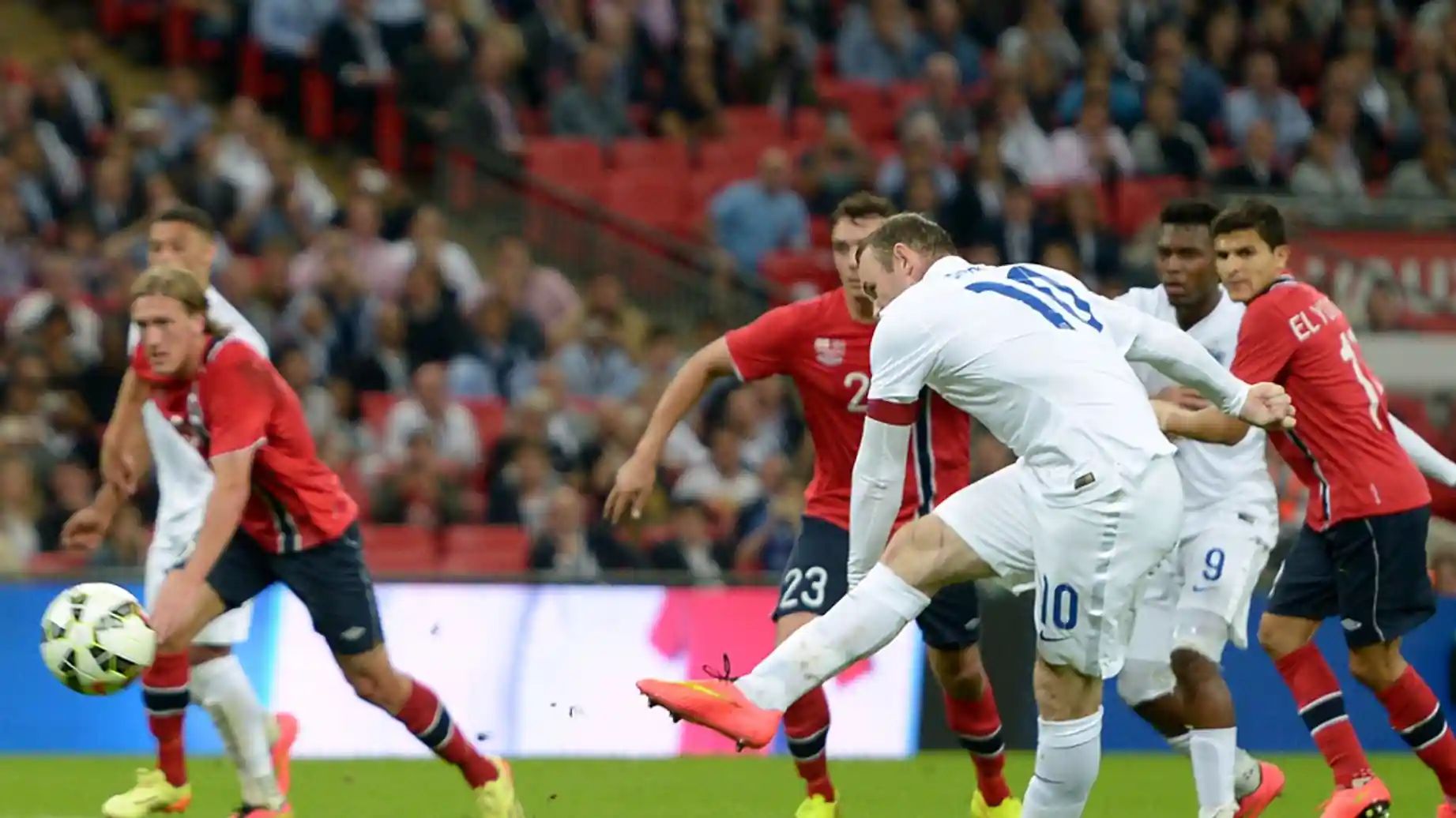
Norway's best work came from refusing to treat England as a team that had to be survived. They pressed selectively rather than constantly. When England's centre-backs had clean possession, Norway held shape. When the pass went into midfield with the receiver facing his own goal, Norway jumped. That discipline stopped England from building repeatable attacks through the middle and forced too much of the first half into wide delivery, where Norway's centre-backs could defend facing the ball.
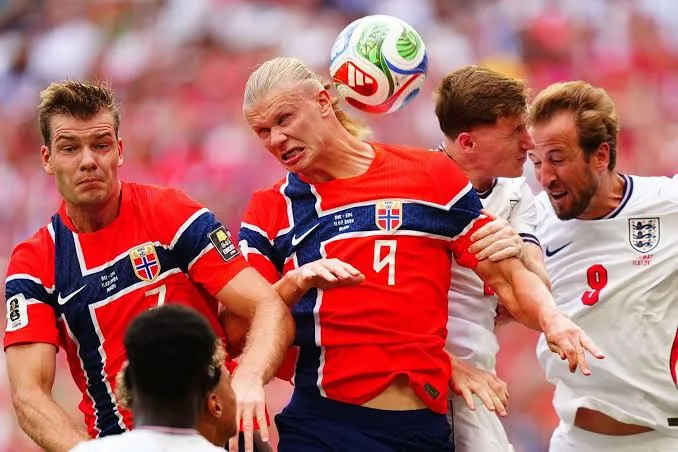
Haaland was central to that plan even without a goal. England had to defend every Norwegian transition as if it might become a Haaland sprint within two seconds. That made them cautious with their full-backs and slower with their counter-press. Haaland's best chance came from a header that Jordan Pickford saved, a moment that reminded England how close the tie was to moving beyond repair. Another Norway celebration was cut short when a goal was ruled out after Haaland was judged to have fouled Pickford in the build-up. Those moments were not footnotes. They were the reasons England never fully relaxed.
How did Bellingham pull England back?
Bellingham's value in tournament football is not only that he scores. It is that he senses when a match is becoming emotionally dangerous. England were becoming too careful after Schjelderup's opener, using possession as a shield rather than a tool. Bellingham began arriving higher, asking for the ball in spaces where losing it would hurt, and forcing Norway's midfield to make decisions closer to their own box.
The equalizer came from that shift. Bellingham did not wait outside the play. He entered it. He arrived where Norway's line had been secure all half and made the movement before the defenders could pass him on. It was a goal built on timing more than power, and it gave England something they had not had since kickoff: a reason to believe the game could still bend toward them.
His winner in extra time was a different kind of statement. By then both teams were carrying tired legs. Norway's midfield line dropped half a yard deeper, England's passing had a little more patience, and Bellingham again identified the moment when a run into the box would be more valuable than another pass around it. Three minutes into extra time, he turned England's survival into progress.
What do the key facts say?
The numbers alone cannot explain the tension, but they give the match a useful spine. Norway scored first. England did not lead until extra time. Bellingham was responsible for both England goals. The match was played at Hard Rock Stadium, where the heat and humidity made repeated high pressing difficult, and that helped create a game of surges rather than a constant tempo.
Was Haaland unlucky or well contained?
Both answers are fair, which is why the night will frustrate Norway. Haaland did plenty of the work that coaches value and highlight reels ignore. He occupied defenders, threatened in the air, pinned England's back line and gave Norway a direct outlet when pressure became heavy. He also had one of Norway's clearest chances, a header saved by Pickford, and he was involved in the disallowed-goal sequence that briefly made England fear the game had slipped away.
But World Cup knockout games are unkind to strikers who influence without scoring. Haaland left without the defining finish. England's defenders never looked comfortable against him, yet they did just enough to keep his touches away from the one area that terrifies opponents most: central, close, with the goal in front of him. That narrow success was one of England's quiet victories. It did not look elegant. It did not need to.
Why did England still look vulnerable?
England advanced, but the performance did not answer every question. Their central progression was too slow before the equalizer, and Norway repeatedly found space once England's midfield press was bypassed. The distance between England's lines stretched in the second half, especially after Norway began using longer exits to Haaland and Sorloth. That left England's defenders making too many open-field decisions for a quarter-final.
The attack also depended heavily on individual intervention. Bellingham provided it, as great players often do, but the danger for England is that knockout football becomes less forgiving with every round. A semi-final opponent will look at Norway's first-half plan and see a clear route: close the middle, make England build wide, force impatient crosses, then attack the space behind the full-backs before England can counter-press.
What changed after halftime?
England's second-half improvement was less about a dramatic tactical rewrite and more about small positional corrections. The full-backs chose their moments more carefully. The midfield stopped standing on the same horizontal line. Bellingham received higher. England also became more willing to recycle rather than attack the first half-chance, which mattered against a Norway defence that had spent the opening half feeding on hurried deliveries.
Norway, meanwhile, had to manage effort. Their first-half plan demanded repeated sprints from wide players and aggressive recovery runs from midfield. In the last 20 minutes of normal time, those actions became half a step slower. England did not overwhelm Norway, but they began to pin them deeper for longer spells. Extra time often rewards the side with the deeper bench and the calmer possession habits. This time it rewarded England.
What does this mean for Norway?
Norway's tournament ended with pain, but not with embarrassment. They returned to the World Cup stage as a team with an actual identity, not merely as the country that happens to have Haaland. Schjelderup's goal, Bobb's flashes between the lines, Sorloth's work against centre-backs and Haaland's gravity all pointed to a national team that can hurt elite opposition in different ways.
The hard part will be accepting that this was close enough to win. Norway had the lead. They had the moments. They had England disordered. What they did not have was the late penalty-box authority that England found through Bellingham. That is the cruel edge of a World Cup quarter-final: a country's best performance in years can still end with players sitting on the grass, staring at a scoreboard that says the night belonged to someone else.
Can England carry this into the semi-final?
England can carry the result, the resilience and the belief. They should not carry the opening-half structure unchanged. The semi-final will demand cleaner build-up, faster support around the striker and better protection against counters. Bellingham's goals give England a headline, but the staff will spend the recovery days studying how Norway kept the game so uncomfortable for so long.
Still, there is a certain tournament truth in winning when the performance is imperfect. England did not need to look like champions in Miami. They needed to stay in the tournament. Bellingham made sure they did. Norway VS England will be remembered as the night Norway almost made the bracket crack open, and as the night Bellingham dragged England through the door before it closed.
FAQ
What was the result of Norway VS England?
England beat Norway 2-1 after extra time in the 2026 World Cup quarter-final at Hard Rock Stadium in Miami Gardens.
Who scored for Norway against England?
Andreas Schjelderup scored for Norway in the 36th minute, giving Norway a 1-0 lead before England came back.
Who scored England's goals?
Jude Bellingham scored both England goals, first equalizing before halftime and then scoring the winner in extra time.
Did Erling Haaland score?
No. Haaland influenced the match with his movement and physical threat, but Pickford saved his best header and a Norway goal was disallowed after a foul involving Haaland.