
England World Cup Squad 2026: Tuchel's 26-Man Picture
·
England's confirmed World Cup squad is Tuchel's clearest tactical statement yet
This page is about the England national football team and, specifically, the England world cup squad for 2026. Thomas Tuchel confirmed his final 26-man group on 22 May 2026, built around Jordan Pickford, Declan Rice, Jude Bellingham, Bukayo Saka and Harry Kane. The headline selection decisions include Ivan Toney and Ollie Watkins as forward options, while notable omissions — Trent Alexander-Arnold, Phil Foden and Cole Palmer — tell their own story about the coach's priorities. The squad is confirmed and England head to North America as one of the tournament's most-discussed contenders.
This article analyses the England national football team, the confirmed England world cup squad going into FIFA World Cup 2026, and the England national football team players who most shape Tuchel's chances of ending the country's long wait for another title. It is based on the official squad announcement, FIFA's England team profile, the qualified teams list and the FA's confirmation that Tuchel will lead the side through to EURO 2028. Those sources make it possible to discuss not just who is in the room, but why each section of the squad matters.
What does the england world cup squad 2026 look like right now?
The confirmed answer comes from Tuchel's official announcement on 22 May 2026. England's final 26-man squad includes three goalkeepers, nine defenders, seven midfielders and seven forwards. The goalkeepers are Dean Henderson, Jordan Pickford and James Trafford. The defenders are Dan Burn, Marc Guehi, Reece James, Ezri Konsa, Tino Livramento, Nico O'Reilly, Jarell Quansah, Djed Spence and John Stones. The midfielders are Elliot Anderson, Jude Bellingham, Eberechi Eze, Jordan Henderson, Kobbie Mainoo, Declan Rice and Morgan Rogers. The forwards are Anthony Gordon, Harry Kane, Noni Madueke, Marcus Rashford, Bukayo Saka, Ivan Toney and Ollie Watkins. The notable omissions from the broader conversation were Trent Alexander-Arnold, Phil Foden and Cole Palmer — a signal that Tuchel prioritised positional balance and tournament-ready profiles over star names alone.
Here is the complete England 2026 World Cup squad by position.
| Pos | Player | Club |
|---|---|---|
| Goalkeepers | ||
| GK | Jordan Pickford | Everton |
| GK | Dean Henderson | Crystal Palace |
| GK | James Trafford | Burnley |
| Defenders | ||
| CB | Marc Guehi | Crystal Palace |
| CB | Ezri Konsa | Aston Villa |
| CB | John Stones | Manchester City |
| CB | Jarell Quansah | Liverpool |
| RB | Reece James | Chelsea |
| RB | Tino Livramento | Newcastle United |
| RB | Djed Spence | Tottenham Hotspur |
| LB | Dan Burn | Newcastle United |
| LB | Nico O'Reilly | Manchester City |
| Midfielders | ||
| DM | Declan Rice | Arsenal |
| CM | Jude Bellingham | Real Madrid |
| CM | Kobbie Mainoo | Manchester United |
| CM | Elliot Anderson | Newcastle United |
| AM | Eberechi Eze | Crystal Palace |
| CM | Jordan Henderson | Ajax |
| CM | Morgan Rogers | Aston Villa |
| Forwards | ||
| ST | Harry Kane | FC Bayern Munich |
| ST | Ivan Toney | Al-Ahli |
| ST | Ollie Watkins | Aston Villa |
| RW | Bukayo Saka | Arsenal |
| RW | Noni Madueke | Chelsea |
| LW | Anthony Gordon | Newcastle United |
| LW | Marcus Rashford | Aston Villa |
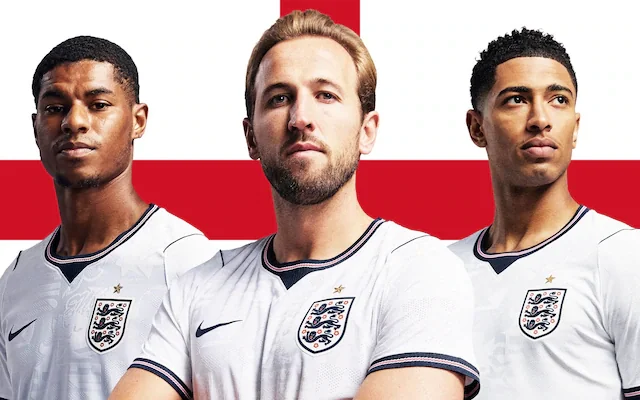
Which England national football team players form Tuchel's core?
The central spine is not hard to identify. Jordan Pickford remains the obvious reference point in goal because he combines tournament experience, penalty-box command and status built over multiple major competitions. In defence, John Stones still carries senior authority, while Marc Guehi and Ezri Konsa give England more than one viable route through the centre-back rotation. In midfield, Declan Rice and Jude Bellingham are the defining partnership: Rice for protection, coverage and game management; Bellingham for progression, duel-winning and box-to-box influence. Up front, Harry Kane remains the captain and the clearest finishing reference. Around that spine, Bukayo Saka looks like the most stable wide threat, while Marcus Rashford, Anthony Gordon, Noni Madueke, Ivan Toney and Ollie Watkins shape different tactical options rather than merely backup places.
That spine matters because international tournaments often compress decision-making. You do not need 26 equal-status players. You need a clear core plus enough alternatives to solve different game states. Tuchel's provisional list suggests he understands that balance. England do not just have famous attackers; they have attackers with distinct functions. Kane offers finishing and connective play. Saka offers ball-carrying security and final-third productivity. Rashford threatens space in behind. Watkins can stretch the last line with movement. Toney offers another physical and penalty-box angle. That variety is why the England world cup squad conversation is more interesting than a basic listicle. The shape of the options tells us how the coach may want matches to look.
Why did Ivan Toney and Ollie Watkins matter so much in the squad announcement?
FIFA itself highlighted Toney and Watkins in the headline of the squad piece, which is a strong signal about the message of the selection. Toney was rewarded for his season with Al-Ahli, including an AFC Champions League Elite title, while Watkins brought recent European success with Aston Villa, who won the UEFA Europa League and secured another Champions League season. In other words, Tuchel did not only preserve England's old attacking hierarchy. He reinforced it with two centre-forward options in excellent club environments. That matters because tournament squads are built for contingencies. If Kane needs support, rotation or an alternative tactical frame, England now have two proven strikers rather than a vague idea of one.
The tactical impact is significant. Toney gives England a more direct penalty-box reference, strong hold-up play and another set-piece presence. Watkins gives them mobility, pressing energy and more threat into channels. Together they make the attack more adaptable. Against low blocks, Toney's physical game can matter. Against higher lines, Watkins may look more useful. The real question is not just who made the squad, but why these England national football team players and not simply others. The answer is that they widen England's problem-solving capacity without forcing the team to abandon Kane as the central star.
Has the England national football team already qualified, and what does that change?
Yes. FIFA's qualified teams list, updated on 31 March 2026, includes England among the 48 nations already through. FIFA's England team profile goes further and says the Three Lions are preparing for a 17th World Cup and an eighth in succession. That qualification status changes the squad conversation in two ways. First, selection can be judged through tournament logic rather than qualification necessity. Second, player roles can be assessed against a seven-match dream instead of a one-off qualification hurdle. Coaches in that position start to think less about "Who helps me survive the next fixture?" and more about "Who helps me win different kinds of tournament matches?" That is why squad depth, positional flexibility and temperament become more important than simply rewarding the hottest recent scorer.
It also sharpens the historical pressure. FIFA's England profile reminds us that the country's only world title came in 1966, and that two semi-final appearances since then have not ended the wait. England therefore travel to 2026 as one of the best-resourced and most heavily analysed squads in the field, but also one of the most burdened by expectation. Every player in the current group is judged not only on individual quality but on whether he helps the team look more complete than previous versions. This is why the England world cup squad topic attracts so much search intent: it sits at the intersection of star power, tactical planning and a national story that never stops asking whether the current team can finally go all the way.
What questions does Thomas Tuchel still need to answer?
The biggest one is balance. The England national football team players in this squad provide depth, but balance wins tournaments more than abundance does. Tuchel must decide how aggressively he wants England to press, how much vertical risk he wants from midfield, and whether the back line should be built around control or recovery speed. Rice and Bellingham are the obvious midfield starters, but the third midfield profile remains a strategic question. Does he lean toward a calmer connector, a ball-progressor or a more dynamic hybrid? England's best version may not simply be the one with the most star names on the pitch. It may be the version that closes space most efficiently when the game turns.
There are also full-back decisions that shape everything else. Reece James, Tino Livramento, Djed Spence and Nico O'Reilly suggest multiple wide-defensive routes. Some of those players can help England dominate the ball. Others can make the transition game safer. Tuchel has enough options to change the feel of the team without changing the shirt names everyone expects. That is useful, but it also means England are still in a design phase. Search users often want a definitive answer on a squad page, but the truest answer here is more nuanced: the list is clearer than the final structure. The squad gives us the pieces. The next challenge is watching how Tuchel arranges them.
What do the key omissions tell us about Tuchel's World Cup plan?
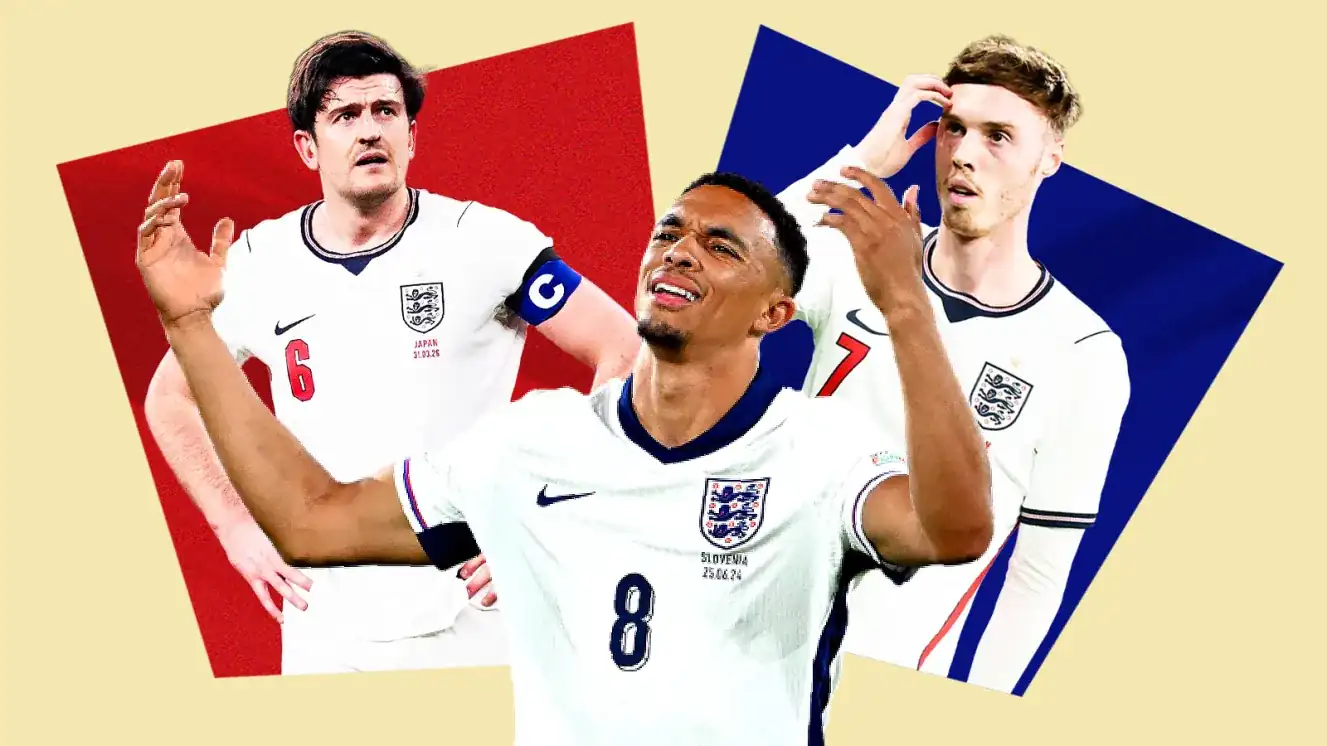
The confirmed omissions are the clearest signal of Tuchel's thinking. Trent Alexander-Arnold, Phil Foden and Cole Palmer were all left out, and none of those decisions were inevitable. Alexander-Arnold is arguably the most creative English full-back of his generation. Foden and Palmer both delivered significant club-level performances during the season. Their absence does not reflect a lack of quality. It reflects a set of judgments about positional balance, system fit and tournament temperament.
The full-back situation may be the most instructive example. With Reece James, Tino Livramento, Djed Spence and Nico O'Reilly in the squad, Tuchel chose width and defensive cover over Alexander-Arnold's ability to operate as a hybrid inside midfielder. That decision tells us something about how Tuchel wants England's shape to function under pressure: reliably structured rather than creatively unpredictable. Whether that is the right call becomes clearer only after the tournament's knockout rounds.
Can this squad actually win the World Cup?
Yes, but only if the structure becomes as convincing as the talent. England clearly have the player quality. FIFA's profile, the qualified teams list and the squad announcement all support the idea that this is one of the strongest resource bases in the tournament. Kane remains an elite finisher. Bellingham and Rice are tournament-grade midfielders. Saka is one of Europe's most dependable wide attackers. Pickford is battle-tested. The bench has more functional variety than some previous England groups. Those are real advantages, not marketing lines.
But winning a World Cup requires more than collecting advantages. It requires clarity under pressure, role acceptance and tactical reliability over seven matches. England's best route may be to become slightly less romantic and slightly more exact. They do not need to play the loudest football in the field. They need to play the most adaptable version of their own football. Tuchel's provisional 26 suggests he understands that. The balance of experience, athleticism and attack profiles is not accidental. It is a sign that England are trying to build a tournament team rather than an all-star list.
That is why this page keeps returning to the England national football team players as roles, not just names. Searchers asking about the squad are usually asking a deeper question underneath: what does this list say about England's actual chance? The answer is that the squad says England are credible, deep and tactically richer than lazy stereotypes suggest. Whether that becomes a title run depends on execution, health and how quickly Tuchel can turn promising pieces into an unmistakable identity.
England World Cup 2026: Group L Schedule and Fixtures
England are placed in Group L of the 2026 FIFA World Cup alongside Croatia, Ghana and Panama. Three matches stand between Tuchel's side and the knockout rounds, beginning with Croatia — the most tactically organised opponent in the group and the biggest test of England's midfield depth in the group phase. Ghana and Panama are both physically intense sides capable of pressing high and testing England's defensive composure, but the quality differential on paper firmly favours England in all three fixtures.
The Group L opener against Croatia on June 17 is the fixture that demands most from England's midfield. Croatia have produced compelling tournament performances at consecutive World Cups — reaching the final in 2018 and the semi-finals in 2022 — and their ability to control matches through experienced central midfielders makes them a genuine structural test rather than a simple benchmark. Rice and Bellingham will carry the decisive responsibility for England in this fixture, with the full-back lines shaping the outcome as much as the central spine.
The second group match against Ghana on June 23 provides England with their most physically demanding 90 minutes of the group phase. Ghana are a fast, high-press side built around athletic midfielders and forward runners who exploit space in transitions. England's centre-backs will need to hold a defensive line while Bellingham and Rice impose game management. Tuchel is likely to use this match to establish England's pressing structure for the knockout rounds — the performance here may matter as much as the result.
The final group game, Panama vs England at MetLife Stadium in New Jersey on June 27, is England's most straightforward fixture on paper — but the venue, arguably the tournament's most atmospheric, will be full of CONCACAF supporters making the match a genuine atmosphere test for a younger England player like Elliot Anderson facing top-level pressure for the first time. Panama's physical approach and compact shape make them a difficult side to break down in a single match, but England's quality across every position should be decisive. Tuchel will use this game to set England's line for the round of 32 and protect key personnel from unnecessary injury risk.
For the complete fixture list, group tables and live scores throughout the tournament, see the full 2026 World Cup schedule, all 12 group stage draws and the final World Cup 2026 standings. For the knockout context behind England's fourth-place finish, read the England vs Argentina semi-final report.
England World Cup 2026: Frequently Asked Questions
Who is in the England World Cup squad 2026?
Thomas Tuchel confirmed England's final 26-man squad on 22 May 2026. The core names were Jordan Pickford, Declan Rice, Jude Bellingham, Bukayo Saka and Harry Kane, with Ivan Toney and Ollie Watkins giving England two very different centre-forward alternatives.
How far did this England squad go at World Cup 2026?
England reached the semi-finals and finished fourth. The run included a 2-1 quarter-final win over Norway, then ended with a 2-1 semi-final defeat to Argentina in Atlanta.
Which England squad player scored in the semi-final?
Anthony Gordon scored England's goal against Argentina. England led, but Enzo Fernandez equalized and Lautaro Martinez headed in Lionel Messi's cross to send Argentina into the final.
Which selection calls defined Tuchel's squad?
The biggest calls were carrying both Toney and Watkins as striker options and leaving out Trent Alexander-Arnold, Phil Foden and Cole Palmer. Tuchel clearly chose balance, defensive cover and role clarity over simply collecting every famous attacker.
Who coached England at World Cup 2026?
Thomas Tuchel coached England at World Cup 2026. His side had enough structure to reach the final four, but the late Argentina comeback left game management as the obvious post-tournament talking point.
What did England's fourth-place finish say about the roster?
It showed the roster was strong enough for a serious tournament run, not just a paper contender. It also showed the remaining gap: England still needed more control in the final minutes against the best knockout opponents.
What does Group L mean for England's chances in 2026?
England are in Group L of the 2026 FIFA World Cup alongside Croatia, Ghana and Panama. England's group stage opens on June 17 against Croatia, followed by Ghana on June 23, with the final group fixture against Panama at MetLife Stadium, New Jersey on June 27.
Compare England's squad with other 2026 contenders: Germany's full 26-man roster and all 48 qualified teams at the 2026 World Cup.