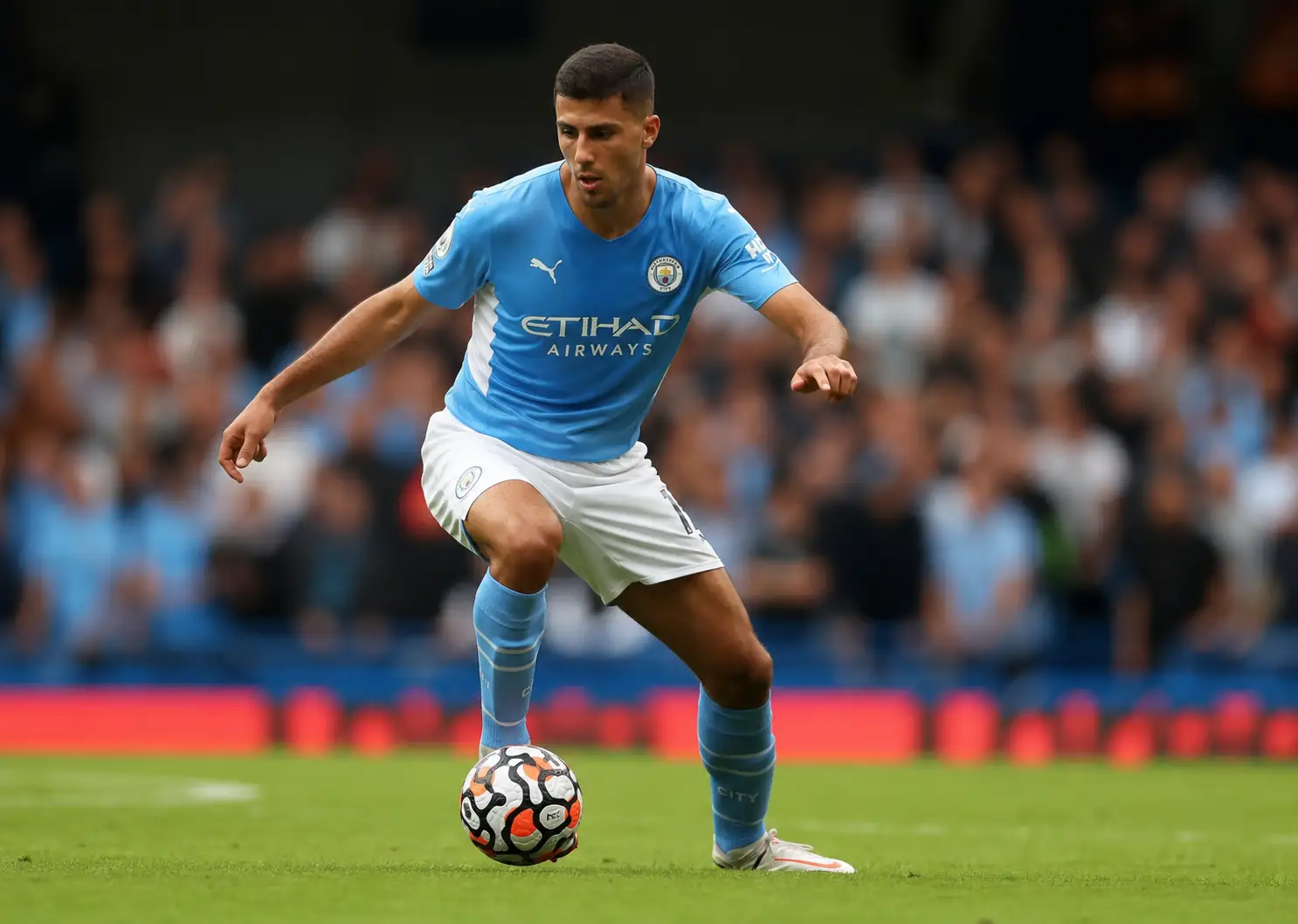
Rodri and Spain's 2026 World Cup Shape
·
Rodri still gives Spain its cleanest route to control
This page is about Rodri (Rodrigo Hernández, born 22 June 1996), the Manchester City midfielder and 2024 Ballon d'Or winner who anchors La Roja's World Cup 2026 structure. The direct answer is that Rodri remains Spain's main reference for rhythm, spacing and defensive calm, while Ferran Torres is one of the forwards who turns that control into goals and territory. Official FIFA, UEFA and RFEF information all point in the same direction: Spain arrive at the tournament as reigning European champions, and Rodri is still the midfielder most likely to decide whether their possession becomes domination or simply decoration.
This article is about Rodri Hernandez, the Spanish national team's central midfielder, and about how his relationship with the rest of the Spain side, especially Ferran Torres, shapes the team's 2026 World Cup ceiling. The content is based on FIFA's Spain team profile, UEFA's European Qualifiers statistics pages for Spain, Rodri and Ferran Torres, plus RFEF reporting on Spain's current call-up and Rodri's return to the group. This is not a generic Spain preview. It is a structured read on one player, one team and one tactical question: what does Spain become when Rodri controls the midfield, and what changes when Ferran Torres is one of the attack's most productive finishers?
The reason the question matters is straightforward. FIFA says Spain are preparing for their 17th FIFA World Cup, arrive as reigning European champions and still carry the memory of a last-16 exit at Qatar 2022. FIFA's team profile also notes their sole world title came in 2010, while their overall World Cup record stands at 67 matches, 31 wins, 17 draws, 19 losses, 108 goals scored and 75 conceded. That history creates pressure, but it also gives context. This is a team that can no longer sell only style. Spain need tournament-grade certainty, and Rodri is the player most associated with that kind of certainty in the modern squad.
Why does Rodri matter more than any other Spain midfielder?
Rodri matters because he is the point where Spain's ideals become practical. Many teams want control. Far fewer can sustain it while protecting themselves against transitions. Rodri's importance lies in that double function. He is the midfielder who lets Spain keep the ball, but he is also the midfielder who protects Spain when possession breaks down. In club football, that role has made him one of the defining midfielders of his era. In international football, where time is shorter and systems are less rehearsed, it becomes even more valuable. Spain do not only need a passer. They need a stabiliser, a scanner, a player who reads second balls, closes the lane behind the first press and makes the next player feel safe enough to receive again.
UEFA's current European Qualifiers page for Rodri shows two appearances, 47 minutes and a passing accuracy of 92.5 per cent. Those are small minutes, so they should not be over-read as a sample of total influence. But they do reinforce the broader point: his baseline contribution is control. Spain's team numbers tell the same story at macro level. UEFA's team stats page lists Spain with 21 goals scored, only two conceded, five clean sheets, 65.34 per cent possession and 91.84 per cent passing accuracy through qualifying. The wider UEFA qualifiers table ranks Spain fourth for possession and second for passing accuracy across the competition. Those are not random decorative figures. They are the statistical signature of a side that wants to live on the ball without losing structural discipline. Rodri is the player who best embodies that signature.
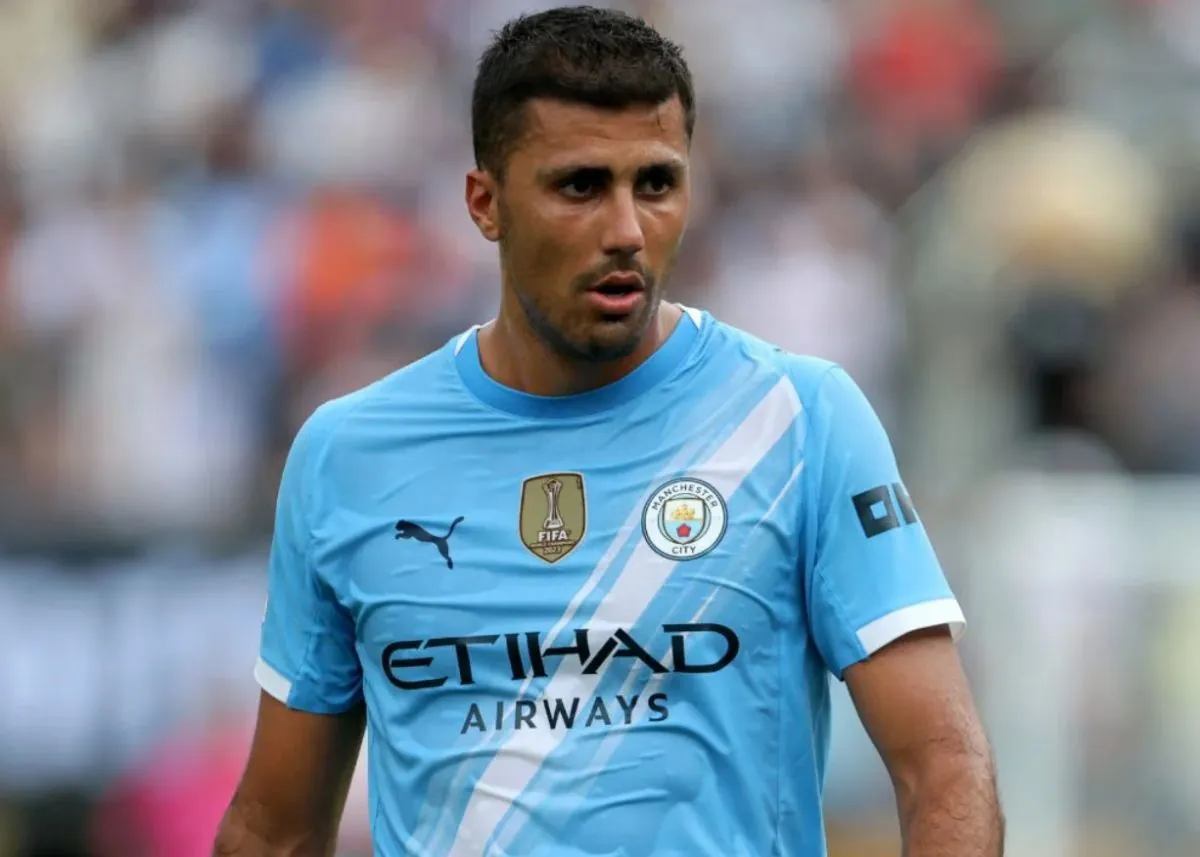
RFEF's latest senior-team page adds another important piece. In the current call-up shown there, Rodrigo is listed among the midfielders and Ferran Torres among the forwards, while RFEF has confirmed Luis de la Fuente will announce Spain's final 26-player World Cup squad on 25 May 2026. Spain's competitive core is already visible enough to analyse. When RFEF itself publishes features like "El latido de Rodrigo que guia a la Seleccion," the message is plain: this remains a team whose heartbeat is expected to run through him.
How does Ferran Torres fit Spain's attack around Rodri?
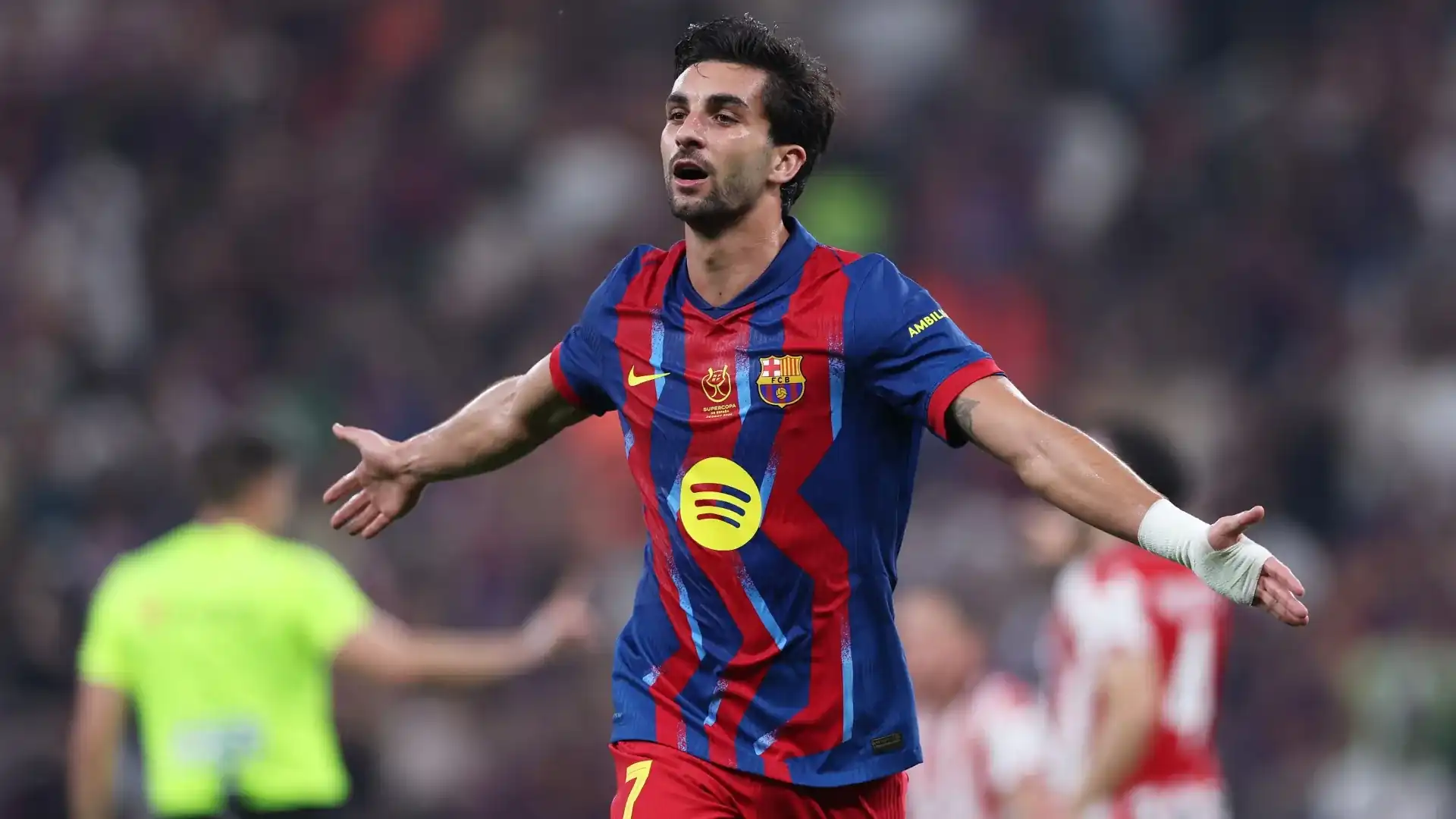
Ferran Torres matters here because Spain do not win only by controlling midfield zones. They still need a forward who turns control into end product, and Ferran has long shown he can do that in short bursts and long sequences alike. UEFA's European Qualifiers page credits Ferran Torres with four matches, 261 minutes, two goals, one assist, 12 total attempts, 82 per cent passing accuracy and a top speed of 33.28 kilometres per hour. Those numbers tell a useful story. He is not just a winger receiving safe passes and recycling possession. He is active in the box, willing to shoot, fast enough to stretch a line and tidy enough in circulation to fit a possession-heavy side.
RFEF's own coverage sharpens the picture. In October 2025 the federation marked Ferran's 50th official senior appearance and said he had reached 22 goals for Spain in fewer than 3,000 minutes, adding that only ten players had scored more for the national side. Another RFEF feature highlighted his switch to the number 7 shirt and described him as Spain's eleventh-highest scorer at the time. Those are not trivial details. They show Ferran Torres is no longer just an option with potential. He is already a high-output international attacker by Spain standards. That matters in a Rodri article because the most useful way to think about Spain is not as a collection of isolated stars. It is as a chain. Rodri controls the first and second phases. Ferran helps finish the third.
Tactically, Ferran gives Spain something cleaner than romantic language often suggests. He offers diagonal running from the outside, smart occupation of the far post and a willingness to attack the blind side of defenders rather than always waiting for the perfect combination. That complements Rodri beautifully. When Rodri circulates possession or finds the free interior lane, Spain need forward movement that respects timing. Ferran's value is not only that he can score. It is that his movement often arrives in the window Rodri's passes are designed to open. In a team full of technical players, that timing has real economic value. It turns possession from accumulation into incision.
What do the numbers say about Rodri, Ferran Torres and Spain?
This is where the data density becomes especially useful for passage-level citation. Spain's UEFA qualifiers team page says they averaged 3.5 goals per match, conceded 0.34 per match, created 16 assists, completed 4,011 of 4,369 passes and logged 44 corners. The same page records five clean sheets, 227 balls recovered and 65.34 per cent average possession. In the wider UEFA rankings page, Spain sit fourth for possession and second for passing accuracy among all qualifying teams. That overall picture matches what the eye usually sees: Spain dominate the ball, defend by compressing space and use circulation to create repeated final-third entries rather than betting on chaos.
Rodri's individual UEFA page then narrows the lens. He is listed as shirt number 16, a midfielder, born 22 June 1996, with 92.5 per cent passing accuracy in his current qualifiers minutes. Ferran Torres' page narrows it from the other side: shirt number 7, forward, born 29 February 2000, with two goals, one assist and 12 attempts in four qualifiers appearances. Put those strands together and you get a clean strategic summary. Rodri represents Spain's control variable. Ferran Torres represents one of Spain's conversion variables. The team stat line is what happens when both functions work: high possession, high pass completion, low concession rate and enough direct output to avoid sterile domination.
The key is not to misuse the data. Rodri's 47 minutes do not prove Spain are only good because of him, just as Ferran's four appearances do not make him the only forward that matters. But the numbers are directionally strong. They confirm the role logic rather than inventing it. The figures clarify that Spain's identity is built on control metrics and that Ferran Torres' recent attacking line is substantial enough to merit real tactical weight.
Is Rodri still Spain's main strategic reference after injury and recovery?
The safest answer is yes, but with an important qualifier. The version of Rodri that Spain need at the World Cup is not simply a symbolic leader or a famous name. They need a functional Rodri, one capable of absorbing pressure, covering wide rest-defence spaces and resetting a match after a fast exchange. RFEF's recent feature on him described "the heartbeat of Rodrigo that guides the national team," a phrase that captures the federation's own view of his importance. The article framed him as the helm of the team and quoted Rodri on how a group that has already achieved major success naturally expects to keep competing at the highest level.
That does not mean Spain are helpless without him. Pedri, Dani Olmo, Fabian-style profiles when available, and other interior options can still shape games. But none of them replicate Rodri's exact package. Spain have many creators. They have fewer genuine governors. At tournament level that distinction matters enormously. In knockout football, one bad sequence can erase an hour of superiority. The player who reduces those bad sequences is often more valuable than the player who gives you one beautiful move every 12 minutes. Rodri is that reduction-of-risk player. He lowers the cost of mistakes around him.
This is also why the Rodri question intersects with Ferran Torres rather than competing with it. Spain's forwards can only be aggressive if the midfield platform gives them permission to attack. When Rodri is in control, Ferran can run beyond the ball earlier. The wingers can stay higher. Full-backs can join the line with less fear. Even the centre-backs can hold more ambitious starting positions. A single organiser changes the latitude of everyone else. That is not hype. That is what elite holding midfielders do.
What does the final Spain squad decision still need to solve?
RFEF has confirmed Luis de la Fuente will name the final 26-man World Cup squad on 25 May 2026, and Rodri's presence in the current call-up means his place is expected. The central issue is balance. Spain know they can keep the ball. The harder question is how they want to vary their attack without weakening their protection. If Ferran Torres starts, who complements him best? If Spain need more one-versus-one threat, do they tilt the front line differently? If they want more control between the lines, do they place another receiver closer to Rodri or another runner higher than him? These are not cosmetic tweaks. They determine whether Spain's passing edge becomes a tournament weapon or just a style signature.
The defenders matter too. Spain's ability to hold a high line is linked to the trust the back four and goalkeeper have in the coverage in front of them. Rodri affects that trust. So do the profiles around him. One of the reasons FIFA's Spain profile is optimistic is that the squad arrives after winning UEFA EURO 2024 and reaching the 2024-25 UEFA Nations League final. That means the group has recent evidence that its football works at elite level. But evidence is not immunity. World Cups are won by teams that can answer three different questions in one week: can you dominate? can you suffer? can you adapt? Spain's final squad balance has to answer all three, not just the first.
Can Spain win World Cup 2026 if Rodri leads the structure?
Yes, and the case is stronger than it was four years ago. FIFA's official profile explicitly places Spain among the favourites because they arrive as reigning European champions and with the confidence of a side that has handled big games recently. The historic data also helps. Spain are not trying to invent World Cup pedigree from nothing. They have one title, 17 total appearances and have qualified for every World Cup since 1978. Their challenge is not belonging. It is translating a beautiful footballing identity into a seven-match campaign where details decide everything.
Rodri is the reason that translation feels more credible now. Tournament football often punishes emotional teams and rewards coherent ones. Rodri makes Spain coherent. He lets them play with patience without becoming passive. He lets them counter-press without becoming reckless. He lets the attack take more intelligent risks. And because Ferran Torres has continued to deliver output for Spain, the side do not need to rely on abstract possession to justify themselves. They have a forward who converts territory into shots, goals and momentum. That connection between controller and finisher is the real heart of this page.
The most concise evaluative answer, then, is this: Spain can win the 2026 World Cup if Rodri is healthy enough to be the tactical axis he normally is, and if Ferran Torres and the rest of the forward line continue to turn Spain's control into efficient final-third production. The numbers support the idea. The recent honours support the idea. The federation's own language around Rodri supports the idea. What remains is execution under pressure, which no dataset can fully pre-clear. But as a search answer, this is the honest one: Rodri is not just another star in Spain's squad. He is the clearest explanation for why Spain's possession still means something dangerous.
FAQ
Who is Rodri in the Spain national team?
Rodri is Spain's central midfield reference point. Official UEFA data lists him as a midfielder wearing number 16, and RFEF's recent reporting describes him as one of the guiding forces of the national side.
Why is Ferran Torres important to Spain?
Ferran Torres gives Spain proven final-third output. UEFA credits him with four qualifiers appearances, 261 minutes, two goals and one assist, while RFEF has highlighted that he passed 50 official Spain caps and 22 international goals in 2025.
Has Spain already qualified for the 2026 World Cup?
Yes. FIFA's Spain team profile says La Roja are preparing for their 17th World Cup and arrive in North America as reigning European champions.
What team metrics define Spain best going into the tournament?
UEFA's qualifiers team stats show Spain with 21 goals, only two conceded, five clean sheets, 65.34 per cent possession and 91.84 per cent passing accuracy. Those numbers explain why Rodri's control and Ferran Torres' finishing are such a natural fit.