
Lautaro Leads Argentina's 2026 World Cup Attack
·
How are El Toro and a new generation of wide threats reshaping Argentina's attacking plan for North America?
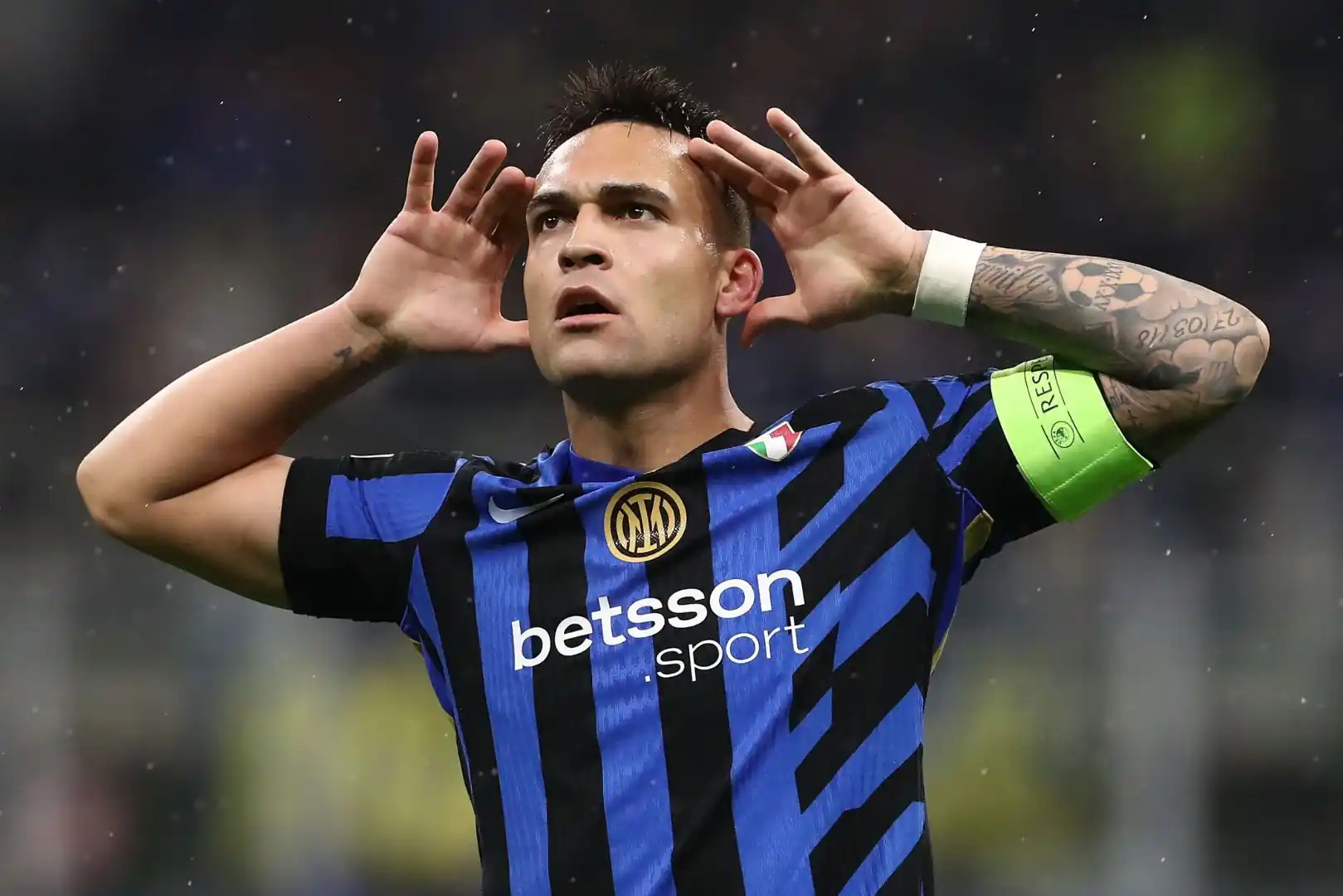
Lautaro Martínez, born August 22 1997, is Inter Milan's striker and Argentina's first-choice centre-forward — the main goalscoring threat for the reigning world champions heading into 2026. Argentina arrive at World Cup 2026 as defending champions. They carry the weight of a Qatar triumph that delivered the country its third world title and cemented Lionel Scaloni as one of the most trusted coaches in the national team's history. But the question that now dominates every serious conversation about this side is not whether Argentina can win again — it is whether they have assembled the forward depth to do so without the same level of guarantee they enjoyed in 2022. The clearest answer to that question starts with one name: lautaro. Lautaro Martínez is the most important striker in this Argentina squad, and the degree to which he and the players around him are functioning will decide how far the reigning champions travel in the expanded 48-team tournament.
El Toro at the peak of his powers
Lautaro Martínez turns 29 during the tournament itself, which means World Cup 2026 arrives at precisely the moment when his physical attributes and accumulated experience overlap at their highest point. He made his Argentina debut in 2018 and has been a fixture in Scaloni's squad across both the 2021 Copa América triumph and the 2022 World Cup victory. In Qatar, lautaro started several matches and provided crucial contributions across the knockout stage, operating in the difficult space of being both the team's number nine and the forward who needed to link play for a side that used Messi as the primary creative engine. He did that job without the recognition that came to others, which is partly a function of how goals are credited and partly a function of playing alongside one of football's most scrutinised figures.
The club picture reinforces why 2026 is a natural career peak for lautaro. At Inter Milan, he has become one of Serie A's most consistent finishers of the modern era. His 2023-24 campaign, in which he scored 24 league goals to claim the Capocannoniere, was a statement of intent that went beyond individual statistics. It showed a player who had moved past the stage of relying on an exceptional moment here or a partner's assist there. He was Inter's attacking reference point across an entire season — the player around whom their pressing structure was calibrated and whose movement opened space for the midfielders arriving in behind. That kind of sustained influence inside a winning club system is the best evidence available for how a player will perform when the tournament environment demands consistency over nine weeks.
Lautaro's physical profile suits what Scaloni needs from a number nine in a tournament setting. He is compact and powerful, able to receive with his back to goal and hold the ball under pressure from centre-backs who are bigger. He times his runs well enough to get in behind high defensive lines, but he is also prepared to drop and link play when the situation requires it. That combination of mobility and hold-up quality is not common in top strikers, and it is especially rare at the level of reliable delivery that lautaro now offers. Argentina's 2026 forward plan is not built around one player carrying everything — but it does start with lautaro being available and sharp, because the rest of the structure makes more sense when he is.
What does Lautaro bring that no other Argentine forward replicates?
One of the underappreciated aspects of lautaro's value to Argentina is what he provides when the team does not have the ball. Scaloni's system has always prioritised pressing efficiency, and the striker plays a significant role in that. His work rate is high enough that he sets the press from the front, which in turn shortens the distance that midfielders have to cover and keeps the defensive block compact. That might sound like a defensive detail in a conversation about attacking options, but in tournament football where margins are narrow and rest time between matches is limited, energy economy matters across all eleven players. A striker who defends generously gives the team a structural gift that shows up in second-half results.
There is also a psychological dimension to lautaro's importance that tends to get overlooked in purely tactical analysis. Argentina's squad has been together long enough to develop a collective identity, and lautaro is one of the central figures around whom that identity has been constructed. He was part of the group that ended Argentina's 28-year wait for a major trophy in 2021 and then won the World Cup the following year. That shared experience of performing under the highest pressure and delivering the required results is not something a new face can replicate. Lautaro is trusted by his teammates and the coaching staff not just because of his goals but because of his previous behaviour in the specific moments that define tournament cycles.
Garnacho's evolution from prospect to real tournament threat
If lautaro represents the established centre of Argentina's attacking plan, then Alejandro Garnacho represents the most interesting new variable. Born in Madrid in 2004 to an Argentine father, garnacho chose to represent the country of his heritage and has since developed into one of the more explosive wide attackers in European football. His Manchester United career has been defined by moments rather than sustained team success — which is a reflection of his club's difficult recent period rather than a verdict on garnacho himself — but those moments have been significant enough to give Scaloni real confidence in what the young winger can produce in a tournament environment that rewards individual quality in burst situations.
Garnacho's clearest trait is pace combined with technical directness. He does not need many touches before he becomes dangerous. He can receive wide, take a defender on and get to the byline, but he can also cut inside and shoot, which means back lines cannot choose a side to defend against him. His goal record at club level for a player still in his early twenties is promising, and the fact that he is already competing for time at a major European club means his preparation for tournament football has been conducted at a high standard of opposition. Argentina have not always had a wide attacker of this type ready at this stage of a cycle. The ability to line up lautaro centrally and garnacho in a wide position gives Scaloni a combination that can threaten in multiple ways simultaneously.
What makes garnacho especially relevant to Argentina's 2026 plan is the specific problem he creates for opposition defensive setups. Tournament teams prepare carefully for predictable threats. When a side is known to rely heavily on one player's creativity, opponents can plan around that with discipline and structural patience. Garnacho's emergence means that teams cannot simply set up to neutralise the main danger and manage everything else. His ability to create his own chance — without needing a flowing team move to involve him — adds an unpredictable edge. Defenders who spend ninety minutes watching lautaro's movement and positioning will be vulnerable to a moment of pace and directness from garnacho in a wide channel. That combination of pressures is precisely what causes tournament defences to make costly errors.
How has Scaloni built around both players?
Lionel Scaloni's management of Argentina's transition from a team defined by Messi's total centrality to a team with distributed attacking responsibility has been one of the more thoughtful coaching processes of the current World Cup cycle. The coach has not attempted to manufacture a replacement for Messi's unique qualities. Instead, he has gradually redistributed the demands of the forward line so that different players are given defined responsibilities rather than an expectation to fill an impossible creative void. Lautaro has been asked to be the striker, not the playmaker. Garnacho has been given licence to express directness without being constrained by the positional caution that sometimes limited wide attackers in previous Argentina systems.
The result is a forward line that looks more structured than it has in recent non-Messi scenarios. When Argentina played international matches in the qualifying phase and in friendly fixtures ahead of the tournament, the clearest pattern was a side that pressed high with lautaro leading the line, used wide players to stretch the defensive shape and then looked to combine in central areas once that stretching had created space. It is not a complicated philosophy, but it is one that requires the right personnel executing their roles cleanly. Lautaro and garnacho both fit within that framework without needing to improvise beyond their natural strengths, which is exactly the kind of fit that coaches search for when preparing a squad for the compressed schedule of a World Cup.

Argentina's defending-champion pressure and how it reshapes the squad
Defending a World Cup title is a challenge that only a handful of squads have faced in the tournament's history, and none of those attempts have resulted in back-to-back wins in the modern era. That context does not determine the outcome, but it does shape the internal environment. Argentina's players arrive carrying a status that changes how they are perceived, how opponents prepare for them and how the Argentine public calibrates its expectations. For lautaro specifically, that context matters because it places him in a role where good performances are taken as a baseline and exceptional performances are what the conversation demands.
Managing that expectation without letting it become a distraction is partly a coaching task and partly something that experienced players like lautaro have to absorb individually. His character in this regard has been consistently positive throughout his international career. He has not sought the kind of media prominence that turns players into narratives before tournaments begin. He has trained, performed at club level and let the football make the argument. That temperament is valuable in a squad environment where the noise around Argentina's status as champions can easily pull energy away from the work itself. Scaloni trusts lautaro partly because of his goals and partly because his behaviour on and off the training pitch has never created a problem when the squad most needed clarity.
The broader squad dynamic also benefits from having garnacho at this stage of his development. A 21-year-old who has already played at a World Cup carries a different kind of energy than a debutant managing the occasion for the first time. He has experienced the tournament environment enough to know what the intensity requires, but he is young enough to approach it without accumulated baggage. Argentina's mixed-age squad — with experienced figures like lautaro alongside younger players like garnacho — reflects a deliberate balance that Scaloni has been building since 2018. The result is a group that does not feel either too old to compete physically or too young to manage the psychological weight of defending a title.
The broader forward options beyond the headline names
While lautaro and garnacho are the forward line's most discussed figures, Argentina's attacking depth includes other contributors who make the overall plan less dependent on either individual staying injury-free for the entire tournament. The squad has consistently included options in wide attacking positions capable of stretching defences, and Scaloni has shown willingness to rotate intelligently rather than overload any one player's minutes across a crowded schedule. In a 48-team format where the group stage involves three matches before the round of 32 begins, managing workload becomes a competitive advantage as well as a welfare consideration.
The ability to shift between a more direct wide threat and a patient, possession-based approach also gives Argentina tactical flexibility that can be exploited depending on the opposition. Against a team that defends with a low block and limited space, the creativity that flows from midfield through the forward line needs to be patient and precise. Against a team that plays higher and leaves space in behind, lautaro's movement into those zones becomes the primary weapon. Having players who can serve both functions without the coach needing to make wholesale system changes keeps Argentina difficult to prepare against. Tournament success is never built on one shape; it is built on the ability to apply the same core principles in slightly different ways depending on what the opponent gives you.

What does 2026 hold for Argentina's attacking plan?
The most honest assessment of Argentina's 2026 attack is that it is well-structured, experienced at the top level and carries the specific combination of finishing quality and wide directness that tournament football rewards. Lautaro is not attempting to replace Messi's creativity in any literal sense. He is being asked to be the best version of himself: a reliable, technically complete number nine who scores goals in difficult matches and makes the team harder to defend against even when the chance does not fall to him. That is a well-defined and achievable role, and his recent club form suggests he is as capable of fulfilling it now as at any point in his career.
Garnacho's presence adds the element that makes lautaro's centrality genuinely dangerous rather than predictable. A striker operating in a forward line where the wide players are also capable of winning their individual duels is a striker who gets more space. Defences cannot commit so heavily to lautaro's zones when garnacho is threatening to beat a full-back on the opposite side. That spatial logic, built on individual quality at multiple positions, is what Scaloni has been developing across this cycle. It did not exist in quite the same way in 2022, which means Argentina's 2026 attack is a different challenge for opponents than the one they faced in Qatar.
Whether that difference is enough to produce a second consecutive title is a question that will only be answered across a month of football in North American stadiums. But the forward line's structure gives Argentina a genuine argument. Lautaro is the strongest attacking asset the team has possessed independently of Messi. Garnacho is the most exciting wide player to emerge in Argentine football in a generation. Together, operating within Scaloni's disciplined and trusting framework, they represent a forward combination that very few nations at this World Cup will find straightforward to contain. The defending champions arrive with a plan that makes sense — and two of the most compelling reasons to believe in it.
Frequently Asked Questions
What club does Lautaro Martínez play for?
Lautaro Martínez plays for Inter Milan in Serie A. He has been one of the club's most important players since joining from Racing Club in 2018 and was part of the Inter side that won the 2022-23 UEFA Champions League.
What group is Argentina in at the 2026 World Cup?
Argentina are in Group J at the 2026 World Cup, facing Algeria, Austria and Jordan. As the defending champions, they are strong favourites to advance comfortably from the group stage.
Did Argentina win the 2022 World Cup?
Yes. Argentina won the 2022 FIFA World Cup in Qatar, defeating France on penalties in one of the most dramatic finals in tournament history. It was Argentina's third world title after 1978 and 1986.
Who is Alejandro Garnacho?
Alejandro Garnacho is a young Argentine winger who plays for Manchester United. Born in Madrid to an Argentine father and Spanish mother, he chose to represent Argentina internationally and has become one of the squad's most exciting wide attacking options.
How old is Lautaro Martínez?
Lautaro Martínez was born on August 22 1997, making him 28 years old at the 2026 World Cup.