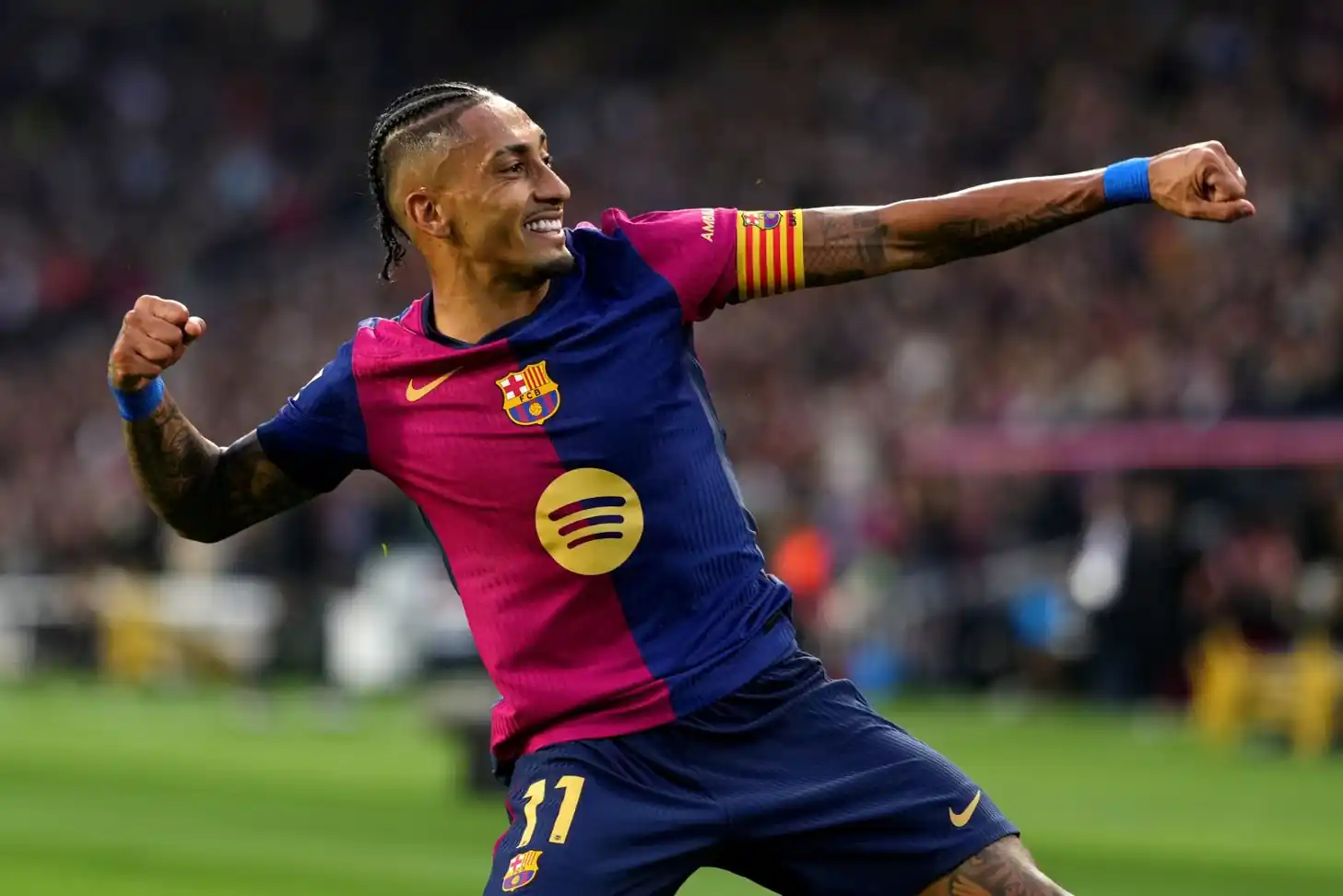
Raphinha Reshapes Brazil for 2026
·
Why does Brazil's attack suddenly look more coherent around one winger?
Raphinha, born December 14 1996, plays right wing for Barcelona and captains Brazil for the 2026 World Cup — a player whose Champions League campaign in 2025-26 prompted FIFA to profile him as one of the most prolific players of his era. Brazil's latest reset has produced plenty of obvious talking points, but the clearest one may be the simplest: raphinha now looks like the player who best explains how the Selecao want to attack at World Cup 2026. FIFA's April 2026 profile on the Barcelona forward described him as one of the most prolific players of his era, highlighted his record-matching Champions League output and framed him as one of Brazil's talismanic figures. That language matters. It does not read like a player hovering near the edge of the squad. It reads like a player around whom tactical choices can be made. For Brazil, that shift is important because the national team have spent several years searching for a reliable bridge between talent and structure. Raphinha increasingly looks like the bridge.
Raphinha has moved from useful piece to attacking reference
One reason this conversation feels different is that it is no longer built on projection alone. FIFA's current profile gives concrete evidence for the scale of raphinha's rise. It notes that he finished the 2024-25 UEFA Champions League campaign with 22 goal contributions, equalling Cristiano Ronaldo's 2013-14 record, through 13 goals and nine assists in 14 appearances. That is not a decorative stat. It is the kind of production that changes how a national team evaluates hierarchy. Brazil have always had wingers. What they have not always had is a wide attacker arriving at a World Cup cycle with this level of recent end product, this much repeatable threat and this much responsibility inside one of Europe's biggest clubs.
FIFA also underlined another detail that matters for Brazil's internal logic: Barcelona lost only two of the 31 matches in which raphinha featured during that season, while the side suffered six defeats in the 17 he missed. That stat is about more than club form. It suggests influence that travels beyond highlight clips. He is not simply adding numbers at the end of good moves. He is shaping the reliability of the whole attacking structure. For a Brazil side trying to become less erratic and more sustainable, that is exactly the profile that carries weight into national-team planning.
The most important change, then, is not that raphinha has become famous. It is that his football now answers more of the practical questions international coaches ask. Can he receive under pressure and still move the attack forward? Can he play wide without becoming predictable? Can he enter central zones and remain productive rather than merely neat? Can he contribute without the entire plan being designed around him? Right now, the answer to all of those looks stronger than it did a cycle ago. That is why Brazil's 2026 conversation increasingly feels like a story in which raphinha is central rather than secondary.
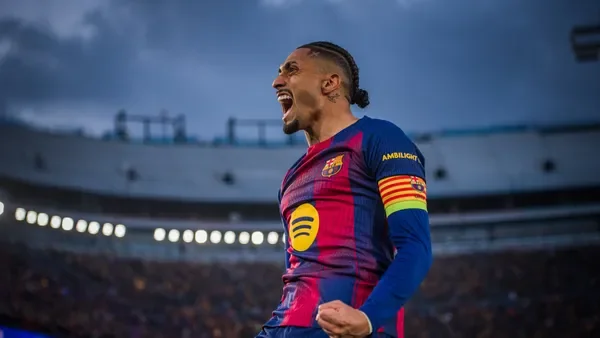
Carlo Ancelotti inherits a clearer attacking clue than it first seemed
Brazil's coaching change always threatened to turn the build-up into a debate about names more than relationships. Yet FIFA's squad report on Carlo Ancelotti's first Brazil call-up gave a more grounded picture. The article focused on who had made the group, who had missed out and what the coach would now have to solve quickly. In that squad picture, raphinha was not a fringe option. He was a clear part of the forward pool that still included Vinicius Junior and a mix of younger challengers, while Neymar was left out. That matters because every new Brazil manager needs at least one attacking certainty. Raphinha looks closer to that certainty than many expected.
Ancelotti's task with Brazil is not just to gather the biggest names. It is to turn the squad into something functional quickly enough to survive tournament pressure. Raphinha helps because he reduces the amount of guesswork. He can start wide and stretch the line, but he is not imprisoned there. He can act as a direct runner, but he is also capable of combining in tighter spaces. He can be the finisher at the back post or the final passer from a half-space. International football rewards players who can offer two or three tactical answers without becoming unstable. Raphinha is now one of Brazil's best examples of that kind of versatility.
FIFA's profile also added a timely caution: Ancelotti was waiting on raphinha's recovery from a hamstring injury. That is an important detail because it keeps the article honest. Brazil's picture is promising, not perfect. Raphinha's importance increases precisely because there is so much clarity around what he offers, which means any interruption to his rhythm becomes more meaningful. In other words, the story is not that Brazil have solved everything. It is that one of their most convincing attacking solutions now has visible shape, and the coach will want him healthy enough to anchor the system when the calendar compresses.
Why does Raphinha fit what Brazil need right now?
The easiest way to misunderstand Brazil is to believe that talent alone should produce coherence. History, reputation and shirt colour tempt people into that mistake all the time. But tournament sides are not judged by their potential volume of flair; they are judged by whether their strengths cooperate. This is where raphinha becomes so useful. He is dynamic without being chaotic. He can attack one-v-one but does not need to force every possession into an individual duel. He can supply width, yet he also knows when to move inside and become the extra connection rather than the final destination. Those traits help Brazil look less like a collection of attacking brands and more like a team.
That team shape matters for the wider balance of the side. Brazil's midfield and full-back structure have sometimes looked overexposed when the front line stayed too high or too separate. A winger who understands spacing as well as threat becomes an indirect defensive asset. Raphinha helps the rest of the team by shortening the distance between phases. He offers an option early in the move, carries danger in the middle of it and still remains available near the end. That continuity can sound abstract, but in knockout football it is often the difference between a team controlling the match and a team constantly having to rescue itself after its own possessions break down.
It also explains why the word raphinha now belongs in serious 2026 conversations rather than merely fashionable ones. Brazil have enough attackers who can dazzle. What they need is an attacker who can make their collective choices cleaner. When he plays well, Brazil's decisions in the final third become less rushed. The overlap runs land with better timing. The cut-backs look less hopeful. The circulation around the box becomes more dangerous because the opposing back line has to defend both his direct pace and his delayed combinations. That multi-layered threat is exactly what national teams search for as tournaments get closer.
Brazil's World Cup history raises the pressure on every current star
FIFA's team profile is a useful reminder that Brazil do not enter tournaments carrying ordinary expectations. The profile frames them as the only nation to have appeared at every World Cup and the record five-time champions still chasing a sixth star. That history is inspiring, but it also makes evaluation harsher. A player can be excellent and still be judged as insufficient if he does not help Brazil look capable of winning the tournament itself. That is why raphinha's current status matters more than a generic player-profile glow. The conversation is not whether he is a strong winger. It is whether he is becoming one of the reasons Brazil can feel structurally believable again.
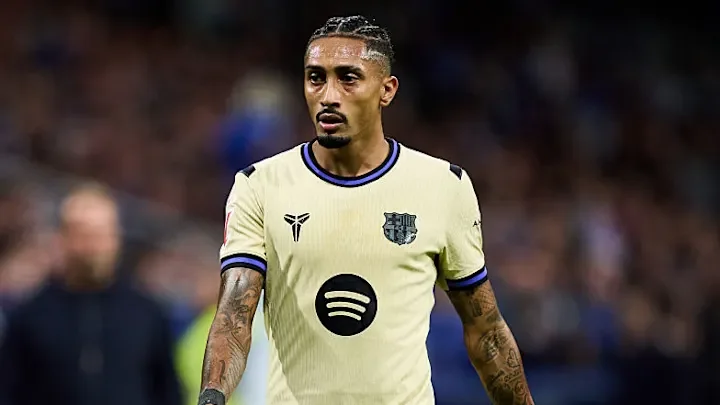
This is also where the emotional and tactical narratives meet. Brazil supporters do not simply want explosive moments. They want a side that looks trustworthy over seven matches. They want a team that can control a quarter-final, survive a semi-final swing and still find a solution in a final where space disappears. Raphinha's best case for 2026 is that he contributes to that kind of trust. He is old enough now to arrive with experience, but not so old that the physical edge is assumed to be fading. He offers leadership traits through responsibility rather than ceremony, and that matters in a squad trying to re-establish conviction without becoming sentimental.
The link with Vinicius and the rest of the line matters more than labels
Another reason raphinha is such an important subject is that Brazil's broader attack is full of names who can easily attract isolated analysis. Vinicius Junior carries one kind of gravity. Younger forwards arriving around the squad carry another. But the most useful article is not one that grades each player separately. It is one that studies how their traits combine. Raphinha is valuable because he makes combination thinking easier. He can share responsibility with Vinicius rather than duplicate him. He can create lanes for overlapping runners rather than simply waiting for service. He can also become the player who receives on the weak side when the entire defence has shifted toward a more glamorous threat.
That interdependence is crucial. Brazil have spent enough time with attacks that looked dangerous in theory but fragmented under pressure. The best version of this team will not be the one with the most individually impressive names on the pitch at once. It will be the one where roles connect naturally and where the front line can alternate emphasis without losing rhythm. Raphinha helps that because he is adaptable without becoming anonymous. He can be the headline performance, but he can also be the player whose best work allows someone else to shine. Coaches value that more than outside observers sometimes notice.
What could World Cup 2026 mean for Raphinha?
For the player himself, the 2026 World Cup looks like the moment when career rise and national-team need finally line up. FIFA's recent coverage described this summer as potentially the pinnacle of raphinha's journey, which is a strong phrase but not an exaggerated one. He arrives with club proof, tactical maturity and a national side that increasingly requires exactly the blend he brings. There is still uncertainty, because injuries, form swings and selection balance always rewrite tournament stories faster than previews can keep up. But the outline is now clear enough to describe honestly: if Brazil are going to look sharper, more coherent and more convincing in North America, raphinha is likely to be one of the main reasons.
That does not mean he must carry everything. In fact, Brazil will probably benefit most if he does not have to. The healthiest version of the team is one where raphinha is essential without becoming overloaded, influential without being isolated and dangerous without being forced into every action. That balance is what makes him so fascinating at this stage of the cycle. He is not only a star in form; he is also a clue about what kind of football Brazil think can win this tournament.
So the most accurate conclusion is also the cleanest. Brazil's road to 2026 still contains unanswered questions, but raphinha has become one of the strongest answers currently available. FIFA's own framing now places him among the Selecao's talismanic figures, his production has reached elite modern levels and his tactical profile fits the kind of controlled aggression Brazil have been missing too often. If the goal is not just to entertain but to challenge seriously for the sixth star, then the raphinha story is no longer a side plot. It is one of the central chapters.
Frequently Asked Questions
What club does Raphinha play for?
Raphinha plays for FC Barcelona. He joined the club from Leeds United in July 2022 for a fee of around €55 million and has since become one of Barcelona's most important and consistent performers.
What group is Brazil in at the 2026 World Cup?
Brazil are in Group C at the 2026 World Cup, facing Morocco, Haiti and Scotland.
Has Raphinha won the Champions League?
Yes. Raphinha was part of Barcelona's squad during a highly successful period in European competition, with his goals and assists in the 2024-25 Champions League earning him a FIFA profile as one of the most prolific players of his era.
Where is Raphinha from?
Raphinha was born on December 14 1996 in Porto Alegre, Brazil. His full name is Raphael Dias Belloli. He began his professional career in Brazil before moving to Europe via Vitória Guimarães and Rennes.
Is Raphinha Brazil's captain?
Yes. Raphinha has been named as Brazil's captain by head coach Carlo Ancelotti for the 2026 World Cup, reflecting his status as the most influential figure in the national team's attacking setup.