
Kenan Yildiz and Turkey's 2026 World Cup Shape
·
Yildiz, Güler and Çalhanoğlu give Turkey their best World Cup squad since 2002
This page is about Kenan Yıldız (born 4 May 2005), the Juventus attacking midfielder, 2025–26 Serie A Best Under-23 Player and Turkey's most dangerous forward entering the 2026 World Cup. The direct answer is that Kenan Yildiz — 21 years old, five international goals across approximately 26 Turkey caps, and coming off a domestic season of 10 goals and 6 assists in 33 Serie A appearances — is the player around whom Türkiye's offensive structure is built. He operates alongside Arda Güler of Real Madrid and captain Hakan Çalhanoğlu of Inter Milan. Turkey qualified for the 2026 World Cup via the UEFA playoff route, ending a 24-year absence, and were drawn into Group D alongside hosts USA, Paraguay and Australia. Analysts project a 60 per cent chance of Turkey advancing from the group stage, with a 30 per cent probability of winning the group outright.
The content draws on FIFA's Türkiye team profile, UEFA European Qualifiers data, Real Madrid's official reporting on Arda Güler, and publicly available squad and tournament projection figures. It is not a generic Turkey preview. It is a structured read on the relationship between one player — Yildiz — and the wider team architecture that Turkey have built to go further at a World Cup than they have in two decades.
The reason this matters is timing. Turkey's 2002 third-place finish under Şenol Güneş remains the country's best World Cup result, achieved with a squad led by Hasan Şükür, Rüştü Reçber and Emre Belözoğlu. Since then Turkey made the 2006 semi-finals of the Euros and the quarter-finals of Euro 2008 and Euro 2024, but no World Cup at all. That 24-year gap between 2002 and 2026 gives this squad's qualification enormous weight. It also makes the question of what Turkey can achieve with Yildiz, Güler and Çalhanoğlu leading the line something worth examining properly.
How did Turkey end their 24-year World Cup wait?
Turkey's path to the 2026 World Cup ran through UEFA Group E and then the European playoff bracket. In the group stage Turkey finished behind Spain — who beat them 6–0 in one of the qualifying campaign's most striking results — but secured second place with enough points to enter the playoff path. From there, the route was direct and tense. On 26 March 2026, Turkey beat Romania 1–0 in the first playoff match, with Ferdi Kadıoğlu scoring the only goal and Arda Güler providing the assist. On 31 March 2026, in the playoff final in Pristina, Kerem Aktürkoğlu scored in the 53rd minute to give Turkey a 1–0 victory over Kosovo and confirm a place at the 2026 World Cup in North America.
Throughout the qualifying campaign, Kenan Yildiz contributed three goals, making him one of the most productive Turkish players over the entire cycle. Arda Güler created 12 chances and registered four assists across the qualifying matches. Those are not coincidental numbers. They reflect a team that has been deliberately constructed around two young attacking talents capable of deciding high-pressure matches. The playoff wins against Romania and Kosovo, both tight and decided by single goals, confirmed that Turkey can win when the margin is minimal — a quality that becomes essential in a World Cup knockout stage.
Turkey's qualification also signals a generational shift. Hakan Çalhanoğlu, at 32 by tournament time, provides the experienced anchor. But Yildiz and Güler, both born in 2005 and 2006 respectively, give the squad a forward-looking profile that most nations at this tournament cannot match for age and upside. This is a team capable of playing without fear because its most influential players are not yet close to their ceiling.
Why is Kenan Yildiz Turkey's most dangerous attacker?
Kenan Yıldız was born in Regensburg, Germany, on 4 May 2005, to a Turkish family. He began his youth career at Bayern Munich, joined Juventus Next Gen in 2022 and was promoted to the first team in November 2023. In May 2024 he won the Coppa Italia with Juventus, and in February 2026 he extended his contract with the club until 2030. His 2025–26 Serie A season was his best yet: 10 goals and 6 assists in 33 league appearances earned him the league's Best Under-23 Player award — the Rising Star recognition for the season. In all competitions, he finished the club season with 14 goals and approaching 10 assists, numbers that place him among the most productive young attackers in European club football.
For Turkey, Yildiz has accumulated approximately 26 caps and five international goals. Three of those goals came in the 2026 World Cup qualifying campaign, making him the team's most decisive finisher in the cycle. His profile as an attacking midfielder and winger means he can operate in multiple positions across the front line, giving Turkey's manager flexibility that few teams in Group D can match at a similar level of quality. He dribbles in tight spaces, arrives late into the penalty area, and can shoot with either foot — attributes that become especially dangerous on a tournament stage where one moment of individual quality often settles a match.
What makes Yildiz particularly significant at a World Cup is the confidence that comes from having already performed in high-pressure club football. Juventus play in Serie A, the Coppa Italia and European competition. Yildiz has dealt with hostile environments, tactical man-marking and the expectation of a historic club. None of that guarantees World Cup success, but it does mean Turkey's best attacker arrives in North America with hard evidence that he can produce in meaningful games — not just in lesser fixtures.
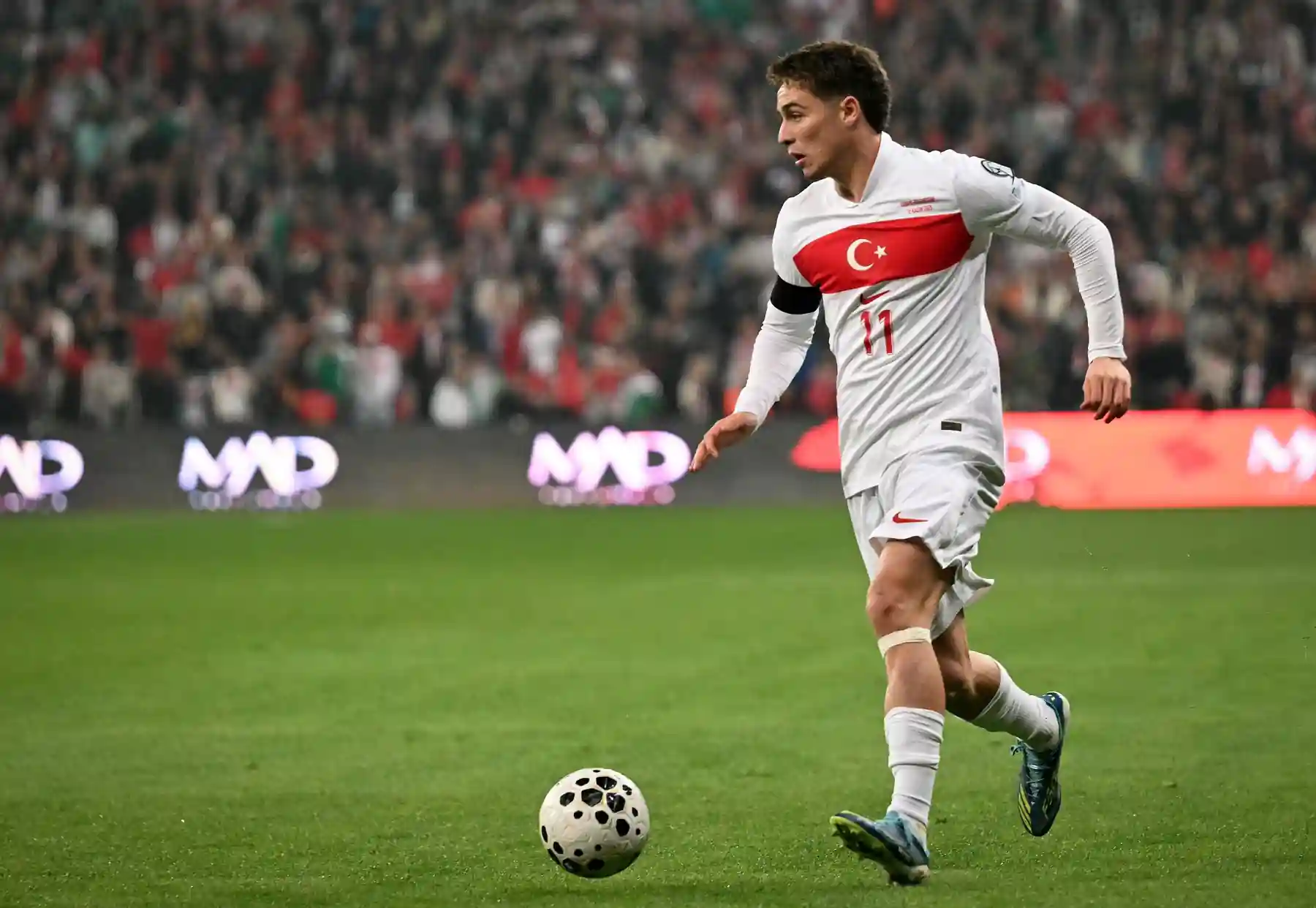
What do Yildiz's numbers say about his World Cup readiness?
The statistical case for Yildiz as a World Cup-level attacker rests on several layers. In Serie A 2025–26, his 10 goals and 6 assists in 33 appearances translates to a goal or assist every 2.1 matches, which is a high-end output rate for a 20-year-old playing in Italy's top division. His 14 goals across all club competitions reinforces the point: he is not a player who pads numbers against weaker opponents in domestic cup games. The proportion of his contributions in Serie A proper suggests he performs consistently at the highest domestic level available to him.
Internationally, the three qualifying goals for Turkey provide a direct read on his ability to deliver when the stakes are existential. These were not friendly goals or goals in comfortable qualifying wins. Turkey's playoff route was narrow — both knockout matches ended 1–0 — and Yildiz's presence as a qualifying scorer confirms that he operates effectively when the pressure is real. His 26 caps by May 2026 also mean he is no longer a developmental presence in the Turkey setup. He is a trusted starter who has already played in major tournament football, having appeared for Turkey at Euro 2024 when they reached the quarter-finals.
The combination of Serie A output, qualifying goals and Euro 2024 experience gives Turkey's coaching staff something clear to build around: a player who has already been through the learning phase at club and international level, and who is now entering his first World Cup as a proven contributor rather than a talent on trial. That is a different proposition from the one Turkey had in 2002, when a combination of experience and raw ability drove them forward. This time, their youngest star already carries confirmed numbers alongside his potential.
What does Turkey's World Cup 2026 Group D picture look like?
Turkey were drawn into Group D of the 2026 World Cup alongside co-hosts USA, Paraguay and Australia. The group is competitive but navigable. The United States, playing on home soil, are the group favourites with an estimated 75 per cent chance of qualifying. Turkey are rated second in the group, with analysts projecting 4.2 expected goals across the group stage and a 60 per cent probability of advancing to the round of 16. The gap between Turkey and the USA is small — one projection suggests only 0.2 expected points separates them at the top of the group, with Türkiye given a 30 per cent chance of winning the group outright.
Paraguay and Australia are assessed as a clear step below Turkey and the USA in projected output. Paraguay's strength is defensive discipline — they are described by analysts as one of CONMEBOL's most compact defensive units — while Australia bring the experience of reaching the last 16 in Qatar 2022 and a motivated squad. Neither opponent is trivial. But Turkey's attacking quality through Yildiz, Güler and their supporting cast is rated more threatening than anything Paraguay or Australia can consistently generate.
The practical implication for Turkey is that they need to beat Australia or Paraguay — likely both — and give themselves a realistic chance against the USA to win the group or secure a comfortable second-place finish. Their qualifying campaign showed they can grind out 1–0 results when needed. Their best football, however, involves Yildiz and Güler given the freedom to improvise in the final third. How Turkey's manager balances those two identities — structured pragmatism versus attacking expression — will largely determine how far they go.
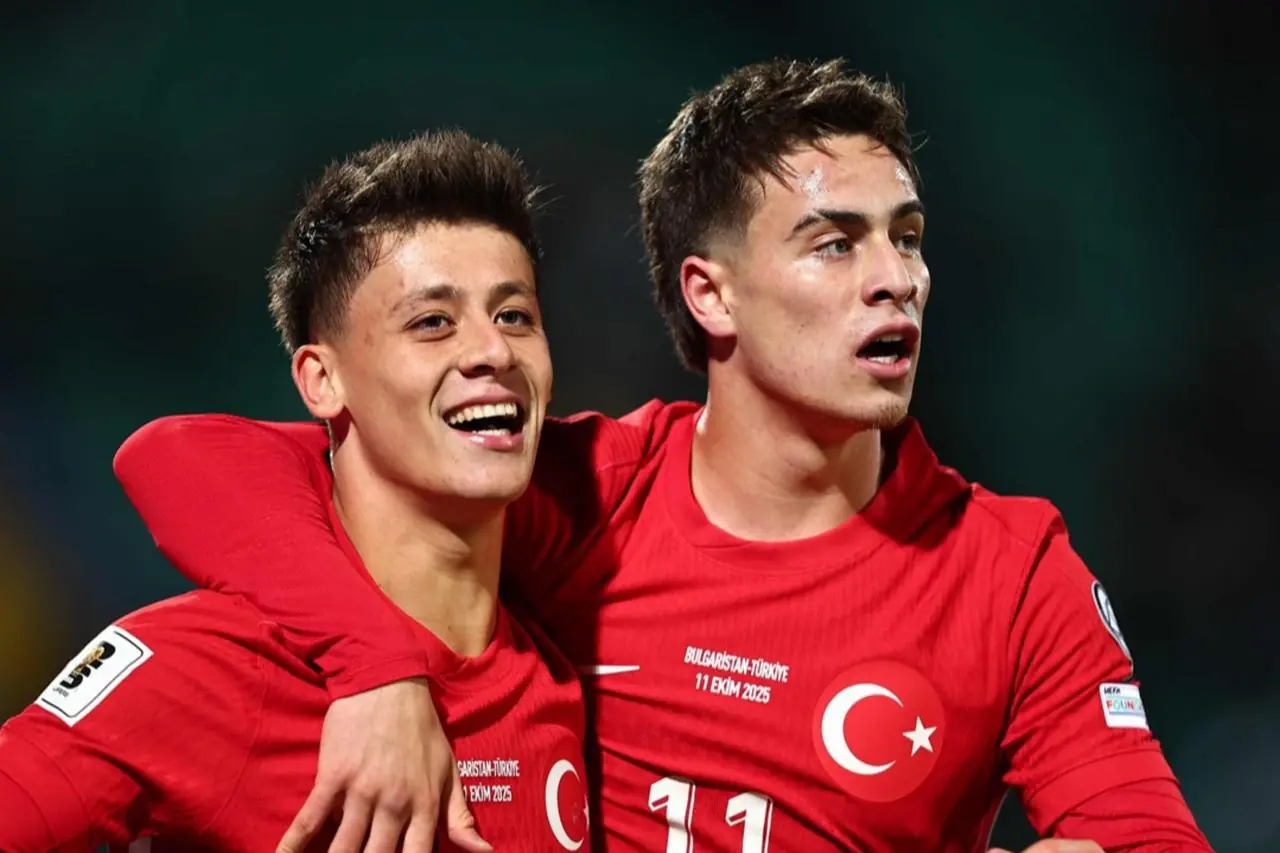
How does Arda Güler complement Yildiz in Turkey's attack?
Arda Güler was born on 25 February 2006 in Ankara and plays for Real Madrid. In the 2025–26 season he played 51 matches for his club, scored 6 goals and registered 12 assists across all competitions, with 4 goals and 9 assists in La Liga alone. He set a remarkable individual record during the season, scoring from approximately 68 metres against Elche in a 4–1 victory — reportedly the longest goal ever scored in La Liga. His combination of vision, passing range and ability to play the final pass from deep positions makes him a natural complement to Yildiz's more direct penetrating style.
In the qualifying campaign, Güler created 12 chances and contributed four assists, the highest assist tally among Turkey's outfield players. His role for Turkey is not identical to his role at Real Madrid, where he often plays as an interior midfielder or in a slightly deeper creative position. For Turkey, he tends to operate higher, closer to Yildiz, creating a two-man attacking partnership that opposing midfields have struggled to pin down simultaneously. When Güler has the ball in half-spaces, defenders cannot fully commit to stopping him without leaving Yildiz free, and vice versa. That mutual threat is the core of Turkey's offensive logic.
One legitimate concern entering the tournament is Güler's fitness. He sustained a muscle injury in 2026 and medical evaluations in May indicated he was expected to be available by early June, which would align with Turkey's Group D schedule. Turkey's management have included him in the preliminary squad without reservation, suggesting confidence in his recovery. If Güler starts fit and in form, Turkey's attack is among the most technically gifted in the tournament at age 21. If he misses matches, Yildiz carries a heavier burden but has already shown he can deliver in crucial games without maximum support.
Is Hakan Çalhanoğlu the key to Turkey's midfield control?
Hakan Çalhanoğlu, Turkey's captain, anchors the midfield structure that makes Yildiz and Güler's attacking freedom possible. Playing primarily as a deep-lying playmaker at Inter Milan, where he has been one of Serie A's most consistent midfielders across multiple seasons, Çalhanoğlu gives Turkey the ball-carrying and passing platform that the two younger forwards need behind them. Without his ability to win the ball in central areas, shift the tempo and find the trigger pass that unlocks a defensive line, Turkey's attack risks being isolated from the build-up phase.
The pairing of Çalhanoğlu's experience and Yildiz's directness is one of the structural features that makes Turkey's squad more complete than their seeding might suggest. Çalhanoğlu covers the organisational role. Ferdi Kadıoğlu provides width and defensive solidity at left-back. Orkun Kökçü adds a technical creative option when Turkey need to change the rhythm. The squad depth across midfield means Turkey are not dependent on perfection from any single player. But Çalhanoğlu's form and fitness is arguably the biggest single factor in how well Turkey's system functions — more so even than Güler's availability, because the midfield platform determines whether the attack ever gets clean possession to work with.

Can Turkey go further than third place at World Cup 2026?
Yes, and the case is built on generational quality rather than wishful thinking. Turkey's 2002 World Cup run — third place under Şenol Güneş, with Hasan Şükür scoring the fastest goal in World Cup history in the third-place play-off — remains the country's ceiling in the competition. That squad had experienced players in their prime. This 2026 squad has experienced players in their prime and two of the most gifted young attackers in Europe alongside them. Yildiz at 21 and Güler at 20 give Turkey a forward combination whose best football is almost certainly still ahead of them, even at this tournament.
The realistic knockout path from Group D, assuming Turkey qualify in second place, is likely a round-of-16 match against a group winner from a comparable group. From there, the competition becomes unpredictable in the way World Cup knockouts always are. But Turkey's structural balance — Çalhanoğlu covering the base, Kadıoğlu and Kökçü providing width and technical options, Yildiz and Güler posing problems defenders cannot fully solve simultaneously — is better suited to knockout-format football than many casual assessments acknowledge.
The most honest evaluative answer is this: Turkey will not win the 2026 World Cup, but a run to the quarter-finals is genuinely plausible if Yildiz and Güler are both fit and in form. The qualifying campaign showed Turkey can win when the pressure is maximum. The individual quality in the squad is higher than it has been at any World Cup since 2002. And Kenan Yildiz — the player this page is built around — is exactly the kind of attacker who can produce a defining moment in a knockout match: unexpected, direct, comfortable under scrutiny, and young enough not to be afraid of the occasion. That combination of qualities is rare. Turkey have one player who fits it exactly. That matters enormously in a 90-minute elimination match.
FAQ
Is Yildiz Turkey's key player at World Cup 2026?
Yes. Yildiz is the central attacking figure in Turkey's squad and is expected to start in Group D. He scored three goals during the qualifying campaign and won the Serie A Best Under-23 Player award for 2025–26 after scoring 10 goals and registering 6 assists for Juventus.
Which group is Turkey in at World Cup 2026?
Turkey are in Group D, alongside co-hosts USA, Paraguay and Australia. Analysts project approximately a 60 per cent chance of Türkiye advancing from the group stage, with a 30 per cent probability of winning the group.
How did Turkey qualify for the 2026 World Cup?
Turkey qualified through the UEFA playoff bracket. They beat Romania 1–0 on 26 March (Ferdi Kadıoğlu, Güler assist) and Kosovo 1–0 on 31 March (Kerem Aktürkoğlu, 53rd minute), ending a 24-year World Cup absence.
Who are Turkey's key players at World Cup 2026?
Turkey's attack runs through Kenan Yildiz (Juventus) and Arda Güler (Real Madrid), both 21, with captain Hakan Çalhanoğlu (Inter Milan) providing midfield control. Ferdi Kadıoğlu and Orkun Kökçü complete the core creative unit.