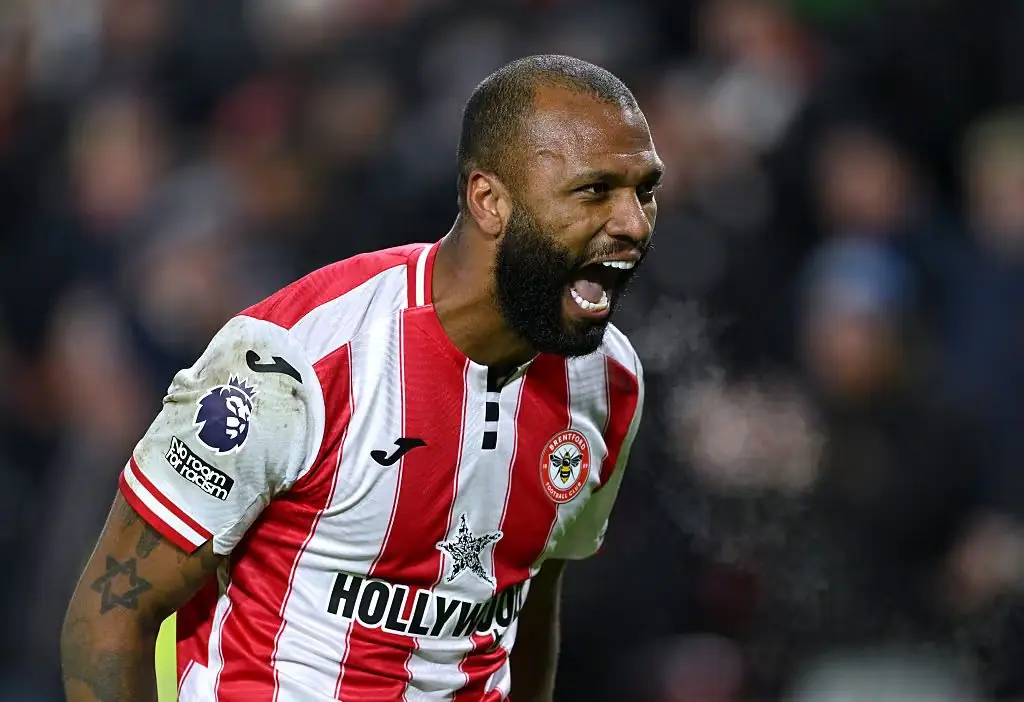
Igor Thiago: Brazil's World Cup 2026 Striker
How the Brentford forward became Brazil's sharpest attacking option
This page covers Igor Thiago, the Brazilian striker who plays for Brentford in the Premier League. He finished the 2025-26 Premier League season as the second-highest scorer behind Erling Haaland, earned his first Brazil call-up in March 2026 and was named in the final 26-man World Cup squad. Brazil are in Group C at the 2026 World Cup, facing Morocco, Haiti and Scotland at three United States venues. Igor Thiago is competing with Endrick for the central striking role in Carlo Ancelotti's 4-3-3 or 4-2-3-1 system, which prioritises efficient finishing inside the box and pressing the opposition's defensive line from the front.
Igor Thiago arrived at the 2026 World Cup having completed the kind of domestic season that makes a selection argument almost impossible to ignore. The Brentford striker finished the 2025-26 Premier League campaign as the second-highest scorer in the entire division, behind only Erling Haaland — a statistical achievement that placed him among the most clinical centre-forwards in Europe during the twelve months that matter most for a World Cup squad decision. That return, combined with a first senior Brazil call-up in March 2026, confirmed what observers of the Belgian Pro League had already noted when Igor Thiago was at Club Brugge: this is a player whose productivity accelerates in proportion to the level of competition. At 23, he arrives at a North American World Cup not as a development case but as a proven elite-level finisher asking one straightforward question of Carlo Ancelotti's Brazil squad: is a Premier League top-scorer finish not enough to earn a starting place?
Who is Igor Thiago?
Igor Thiago is a Brazilian centre-forward born in 2002. He developed through youth football in Brazil before making the move to Europe that defined his career. His first major European stop was Club Brugge in Belgium, where he spent two years establishing himself as one of the most productive forwards in the Belgian Pro League. The numbers from that period remain striking: 29 goals in 55 appearances, a Belgian Pro League title, and a run to the UEFA Conference League semi-finals that tested him against opponents from five different European leagues.
Club Brugge had used European competition to develop several players who later moved to significantly larger clubs, and Igor Thiago's contributions during that run were among the most direct and measurable of any player in their squad. He was not a luxury forward asked to link play or drift wide to create. He was the finisher at the end of Brugge's attacking chain — the player who arrived in the right position at the right moment and converted with a consistency that goes beyond instinct into repeatable technique.
The move to Brentford in the Premier League followed, representing an immediate step up in competitive level. Brentford built their reputation on analytical recruitment, and signing Igor Thiago reflected both their data on forward efficiency and their assessment that his style — physical inside the box, composed from close range, mobile enough to press an opposition back line — translated cleanly to Premier League demands. His first full season in England produced the statistical return that put Brazil's coaching staff on notice and changed the conversation around who would lead the line at the 2026 World Cup.
How did Igor Thiago earn Brazil's World Cup call-up?
The direct answer is goals. Igor Thiago finished the 2025-26 Premier League season as the second-highest scorer in the entire division behind Erling Haaland — a return that placed him ahead of established internationals, experienced forwards and players backed by deeper squads with wider service networks. Brentford's system is not built to generate the kind of high-volume chances that can inflate a striker's tally artificially. Thomas Frank's side work from compact defensive shape, counter-attacking structure and careful set-piece organisation. The goals Igor Thiago scored across that season came under real defensive resistance, on tight margins, in exactly the kind of difficult circumstances that tournament football eventually produces.
Brazil's football confederation and Carlo Ancelotti took notice. On March 16, 2026, Igor Thiago received his first call-up to the senior Brazil national team for friendlies against France and Croatia — two of the most competitive sides in world football and a direct test of whether his Premier League form transferred to international-level opposition. That call-up marked a shift in how the Brazil squad debate was framed. Up to that point, discussions had centred on how Endrick might develop after his loan at Olympique Lyonnais and which established names would fill the forward spots. Igor Thiago's Premier League form changed the frame entirely. He was no longer a future option. He was a present argument, backed by the most objective measure in football: goals scored at elite domestic level during the months immediately preceding a World Cup.
Brazil's preliminary 55-man list, submitted to FIFA on May 11, 2026, included both Igor Thiago and Endrick — the clearest signal that Ancelotti had not yet settled on a single answer, and that both players had done enough to remain in genuine contention through the final squad announcement on May 18 at the Museum of Tomorrow in Rio de Janeiro.
What are Igor Thiago's Premier League stats at Brentford?
Igor Thiago's debut Premier League season produced a final goal tally that placed him second in the scoring charts behind only Erling Haaland — in a season where Haaland's returns were exceptional even by his own standards. That positioning places Igor Thiago above players with significantly more experience in England, larger squad resources behind them and more established service networks feeding their movement.
Most of his goals came from situations inside or around the six-yard box, from low crosses, rebounds and through-balls that required precise movement and fast decision-making under physical pressure. He also demonstrated composure from the penalty spot across the course of the season — one of the qualities Brentford's recruitment model specifically values — adding to his overall tally from positions where technique matters more than raw speed. The penalty-spot confidence that characterised his Brentford season is one reason Brazil's analysts consider him a complete centre-forward rather than simply an open-play option.
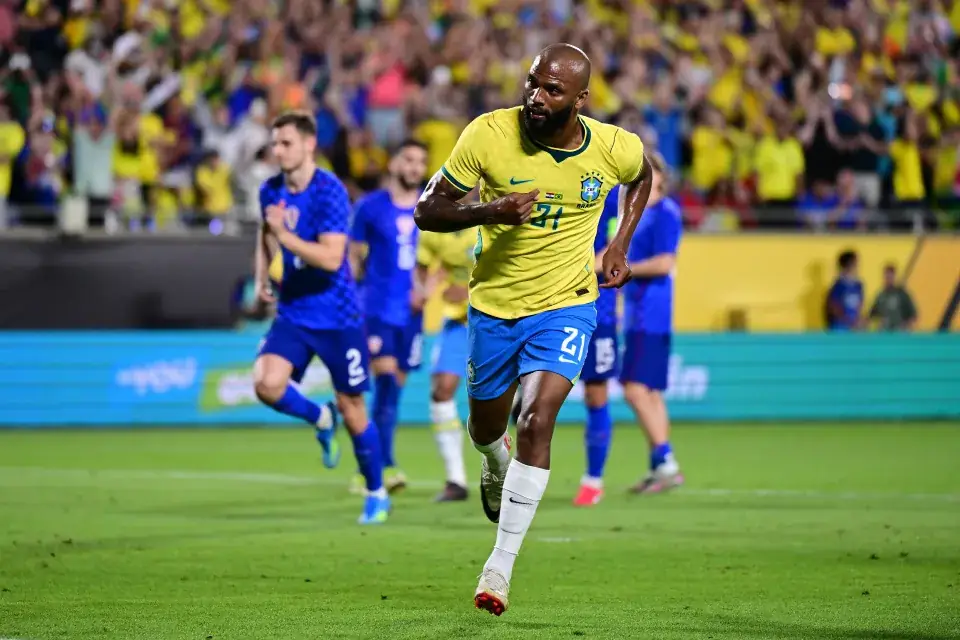
How does Igor Thiago fit into Brazil's 2026 World Cup structure?
Brazil are in Group C at the 2026 World Cup. Their opener is against Morocco on June 13 at MetLife Stadium in East Rutherford, New Jersey — a defensively organised, physically compact side with World Cup knockout-round experience from Qatar 2022. The second fixture is against Haiti on June 19 at Lincoln Financial Field in Philadelphia, a game where goal difference may matter if the group tightens later. Brazil close the group stage against Scotland on June 24 at Hard Rock Stadium in Miami. All three matches take place in the United States.
Carlo Ancelotti's preferred shape for Brazil is a 4-3-3 or 4-2-3-1, with the wide forwards — Vinicius Jr. and Raphinha — carrying the primary creative and goal-scoring burden from the flanks. In that structure, the central striker's role is defined less by high-volume involvement in build-up play and more by specific qualities: intelligent movement in the final third, clean finishing when service arrives, the ability to stretch a back four and the capacity to press the opposition goalkeeper and centre-backs from the front to force errors under pressure from behind the ball.
Igor Thiago fits that function directly. His profile at Brentford was shaped by Thomas Frank's system, which placed similar demands on its central forward — not a second playmaker, not a link-play target, but a striker who arrives in the box at the correct time, converts the chances his team creates and makes defenders uncomfortable during their build. That is close to what Ancelotti's Brazil requires from the number nine position, and it explains why the striker debate became competitive the moment Igor Thiago's Premier League season began to accelerate toward the top of the scoring charts.
Is Igor Thiago or Endrick more likely to start for Brazil?
The question is not which player is better in absolute terms — both have clear merits in different game contexts. Igor Thiago is the more classical centre-forward: experienced in managing physical contact from Premier League defenders, clinical from the penalty spot, built for matches where Brazil will have territorial control and need a striker who punishes the half-chances a dominant side creates. Endrick is a movement striker — quicker in transition, sharper in confined spaces, more effective when the game opens up and Brazil need to exploit counter-attacking momentum rapidly.
Two significant absences reshape the selection arithmetic. Rodrygo, who might have occupied an attacking berth and reduced the competition at striker, is out of the tournament after suffering a torn ACL and lateral meniscus in his right knee — a significant loss given the experience and the chemistry he had built within Ancelotti's system. Estevao, the Chelsea forward considered one of Brazil's most exciting young attackers, suffered a grade-4 hamstring injury and was absent from the preliminary 55-man list entirely. Those departures opened additional squad space and amplified the importance of the central striking decision. When Ancelotti names his lineup for the Group C opener against Morocco, whichever striker he selects carries the weight of a debate that has run through the entire club season.
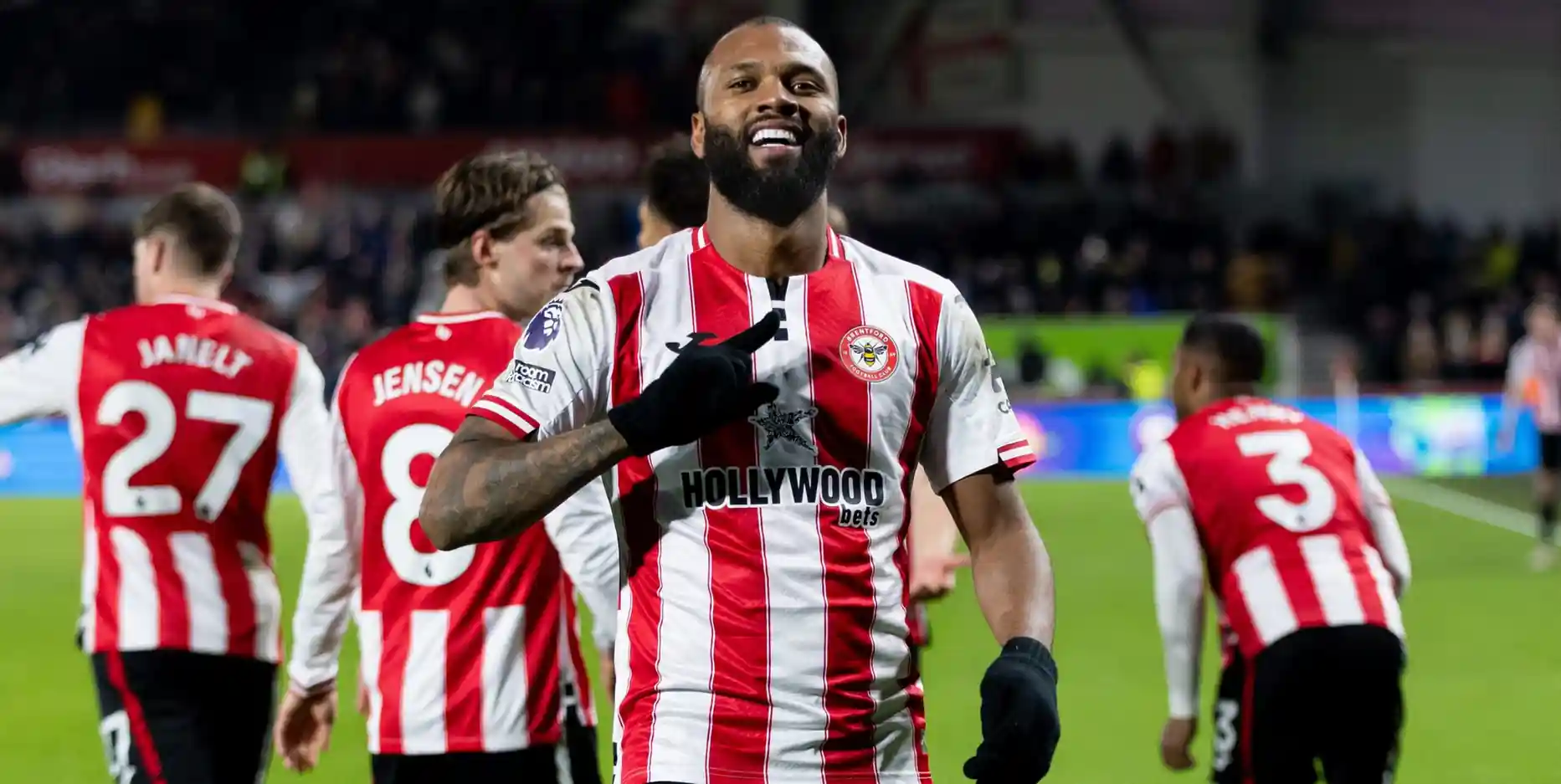
What kind of striker is Igor Thiago?
Igor Thiago is a classical centre-forward in the European mould — physically imposing inside the penalty area and calm under pressure when the ball arrives in the positions where finishing decisions matter most. His movement is not the explosive, disruptive kind that causes problems during opposition build-up phases. It is precise and economical: he finds the space between defenders at the moment of delivery, arrives at crosses with correct body shape and converts with both feet and his head with a consistency that reflects drilling rather than improvisation.
From the penalty spot he is composed and direct. His technique is based on placement rather than power, which reduces the chance of the goalkeeper getting a reliable read on direction before the strike is made. That same composure transfers to one-on-one situations — he does not rush the decision, does not make the early commitment that experienced goalkeepers are trained to anticipate, and does not adjust his body shape in a way that gives his intention away. The penalty confidence that characterised his Brentford season is part of a wider picture of a striker whose technical profile is optimised for the specific situations that produce goals at the highest level: tight angles, contested rebounds, crosses from the left channel, and set-piece deliveries that arrive slightly behind the expected flight path of the ball.
He also offers something that Brazil's wide-forward system genuinely requires: a striker who can hold a defensive line high by threatening the space in behind. When Vinicius Jr. or Raphinha carries the ball into the final third, the central striker's positioning determines how much space is available for the wide attack. Igor Thiago's intelligent reading of the backline creates room that benefits the players around him, not just himself. In a Brazil side built around wide creativity and intelligent combination in the final thirty metres, that kind of structural awareness makes the number nine role worth significantly more than its goal tally alone.
Will Igor Thiago start for Brazil against Morocco on June 13?
Brazil's final 26-man World Cup squad was confirmed on May 18 at the Museum of Tomorrow in Rio de Janeiro, with both Igor Thiago and Endrick named. The preliminary 55-man list had already established that both would remain in serious contention, and the final announcement confirmed that neither had been displaced by a late-emerging alternative. The decision Ancelotti still needs to make is a tactical one.
Morocco on June 13 presents a specific challenge: a defensively disciplined, physically compact side with a clear system and the experience of having reached the semi-finals at Qatar 2022. Against that kind of opposition, Igor Thiago's box presence, aerial threat and penalty-area authority might offer Brazil a more direct route to goal than a movement-based approach. But Ancelotti knows the Morocco squad, their defensive shape and their ability to absorb pressure from dominant opponents. His final selection for the opener will reflect both the specific opponent and how he wants Brazil's energy distributed across three group matches in eleven days.
What is clear is that Igor Thiago's World Cup case does not rely on reputation, pedigree or historical service to the national team. It is built entirely on what he did during the 2025-26 Premier League season at a club that does not manufacture false statistics or amplify ordinary performers into temporary sensations. Finishing second in the Premier League scoring charts, behind only the most prolific striker of his generation, is not context-dependent. The numbers are the argument, and the argument is substantial enough that Ancelotti would require a strong tactical reason to leave Igor Thiago on the bench when Brazil need goals most.
FAQ
Who is Igor Thiago?
Igor Thiago is a Brazilian striker at Brentford in the Premier League. He finished the 2025-26 season as the second-highest PL scorer behind Erling Haaland, received his first Brazil call-up in March 2026 and was named in the final 26-man squad for the 2026 World Cup.
What club does Igor Thiago play for?
Igor Thiago plays for Brentford FC in the Premier League. Before Brentford, he played for Club Brugge in Belgium, where he scored 29 goals in 55 appearances and won the Belgian Pro League title.
What group is Brazil in at the 2026 World Cup?
Brazil are in Group C, facing Morocco (June 13, MetLife Stadium, New Jersey), Haiti (June 19, Lincoln Financial Field, Philadelphia) and Scotland (June 24, Hard Rock Stadium, Miami).
How many penalties has Igor Thiago scored?
Igor Thiago scored several penalties across his Club Brugge and Brentford careers and is considered a reliable penalty taker. His composure from the spot is one of the qualities that makes Brazil's staff view him as a complete centre-forward, not just an open-play finisher.
Will Igor Thiago start for Brazil at the 2026 World Cup?
Igor Thiago is in Brazil's final squad and is competing with Endrick for the central striking role. With Rodrygo (ACL) and Estevao (hamstring) both ruled out, the number nine spot is genuinely open. Ancelotti's selection for the opener against Morocco on June 13 will confirm the answer.