
Elliot Anderson and England's 2026 World Cup Midfield
·
From a Bobby Moore statue photo to a World Cup squad place — Anderson arrives
This page is about Elliot Anderson (born 14 September 2002), the Newcastle United midfielder who has been selected for England's 26-man 2026 World Cup squad — one of nine players making their senior tournament debut. Elliot Anderson was named in Thomas Tuchel's party on 22 May 2026 and has been identified as England's first-choice option in the No. 6 role, the favourite to partner captain Declan Rice in central midfield. Anderson plays for Nottingham Forest (on loan from Newcastle United) and reacted to his selection by posting on Instagram a childhood photograph of himself wearing an England shirt and a picture taken at Wembley alongside the bronze statue of Bobby Moore — England's 1966 World Cup winning captain. The post captured both the weight of the moment and the depth of Anderson's attachment to the national team he has always wanted to represent.
The content draws on publicly available squad data, tournament projections and verified reporting from the squad announcement on 22 May 2026.
England are in Group L of the 2026 World Cup, facing Croatia, Ghana and Panama. Tuchel's squad selection was headline news not only for who was included but for some of the high-profile omissions — Phil Foden, Cole Palmer and Trent Alexander-Arnold were all left out. Against that backdrop, Anderson's inclusion carries a clear message: Tuchel sees him as a confirmed contributor, not a developmental option or a squad-filler. At 23, playing his first major tournament, Anderson enters North America with every expectation of starting.
How did Elliot Anderson make England's 2026 World Cup squad?
Thomas Tuchel announced England's 26-man 2026 World Cup squad on 22 May 2026, and Anderson's name was one of the most discussed inclusions. He was among nine players set to make their senior England World Cup debut — a cohort that reflected Tuchel's intention to blend experienced players like Harry Kane and John Stones with younger talents who had earned their places through Premier League form rather than reputation alone.
Anderson's route to the squad ran through Nottingham Forest, where he has established himself as a consistent Premier League starter. The central midfielder profile he has built — pressing-intensive, technically composed under pressure, capable of winning the ball and immediately transitioning — aligned directly with the qualities Tuchel wanted in the midfield engine room alongside Rice. Where other candidates brought craft or creativity as their primary asset, Anderson brought the defensive discipline and physical engine that a World Cup tournament demands across multiple matches in quick succession.
The omissions around him made his selection more striking. When a manager leaves out players of Foden and Palmer's ability, the players who make the squad carry implicit endorsements that go beyond simply being good enough. Tuchel's inclusion of Anderson signals a specific tactical judgment: that England's midfield in North America will be built around defensive solidity first, with creative responsibility distributed among the forward line and the full-backs. Anderson is the player who makes that structure function in the middle of the pitch. That is a significant role to be handed at a first World Cup.
How good is Elliot Anderson?
Elliot Anderson was born in North Shields, Tyneside, on 14 September 2002 and came through Newcastle United's academy. He represents a particular kind of English midfielder that has become increasingly valuable in elite football: physically capable of covering enormous distances, technically proficient enough to retain possession under pressure, and tactically disciplined enough to hold a defensive shape when the team is out of the ball. He is not a luxury player. He is not primarily a goal creator in the Foden or Palmer mould. He is the type who makes the team function.
His development at Nottingham Forest gave him the Premier League minutes that transformed potential into evidence. The loan move allowed him to play regularly, absorb difficult match environments and grow into a reliable first-team starter rather than a squad player waiting for opportunities. By the time the England squad announcement arrived, Anderson was not a wildcard selection or a youth project being given a tournament education. He was a proven Premier League contributor in a position where England had a genuine question to answer about who partners Rice.
The honest assessment is that Anderson is a top-end Championship-to-Premier-League-quality player in the process of establishing himself as a reliable top-flight starter, whose ceiling — at 23 — remains genuinely open. He is not yet in the tier of Rice, whose influence on Arsenal and England is already generational. But he is exactly the kind of player who can deliver a solid, structured World Cup campaign — showing up game after game, protecting the defence, keeping the ball, and being difficult to break past in the middle of the pitch. For a tournament with seven matches if England go all the way, that consistency matters more than the occasional brilliant individual moment.
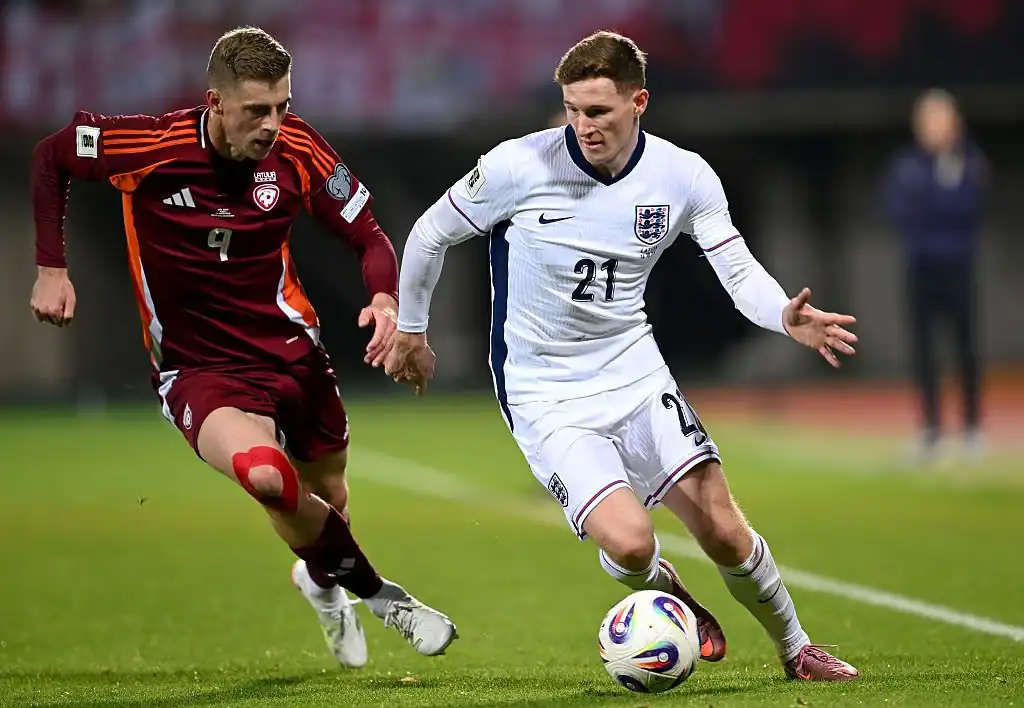
Why did Elliot Anderson post a Bobby Moore photo after his England selection?
The Instagram post that followed Anderson's selection told a story more clearly than any interview quote could. Two images: one a childhood photograph of Anderson at home, wearing an England shirt; the second a picture at Wembley Stadium, standing next to the bronze statue of Bobby Moore that stands outside the national stadium's entrance. The caption expressed his excitement and gratitude at being named in England's World Cup squad. For anyone who understands the significance of the Moore statue to English football, the combination of the two images was immediately legible.
Bobby Moore captained England to their only World Cup title in 1966, lifting the Jules Rimet Trophy at the old Wembley after a 4–2 victory over West Germany. He died in 1993 at 51, and the bronze statue erected outside the stadium has become one of English football's most visited monuments. For players who grew up dreaming about the national team, the statue is not just a landmark — it is a physical point of connection between the present and the greatest moment in England's football history. Anderson, born nine years after Moore's death, never saw him play. But he knew what the statue meant and chose it deliberately.
The post matters for reasons beyond sentiment. It tells you something about Anderson's relationship with the England shirt. This is not a player who drifted into international football as a career milestone. It is a player who, as a child in North Shields, wore the shirt at home and thought about what it would mean to actually represent the country. That emotional investment does not guarantee World Cup performances. But players who care deeply about representing their national team tend to bring an intensity to tournament football that purely technical assessments cannot fully capture.
Can Elliot Anderson partner Declan Rice at World Cup 2026?
The direct answer is yes, and multiple reports from within the England camp have positioned Anderson as the first-choice option for the role alongside Rice in Tuchel's system. The No. 6 position — the second central midfielder in a double-pivot — requires a player who can press aggressively, recover the ball quickly, provide short passing options for centre-backs under pressure and shield the defensive line when the team is without the ball. Anderson's profile at Nottingham Forest matches those requirements closely.
Rice himself is the fixed point. The Arsenal midfielder and one of England's most important players across multiple competitions, Rice provides the deeper defensive anchor and the ball-carrying ability to drive from deep into attacking positions. His partner needs to complement him rather than duplicate his qualities. Anderson, as a more dynamic presser and runner compared to Rice's calmer, more positionally anchored style, offers a complementary pairing rather than a redundant one. The combination gives England defensive cover in central areas while still allowing both players to be active in the transition.
England face Croatia, Ghana and Panama in Group L. Against Croatia, the intellectual challenge of tournament football will be at its most demanding — an experienced European side with structured midfield play that will test Anderson's ability to manage the ball in central areas under real competitive pressure. Against Ghana and Panama, the physical demands shift: both sides will press high and run hard in the first half, looking to use energy and intensity to unsettle England before the match settles. Anderson's pressing ability and his fitness levels make him well suited to exactly these kinds of tests.
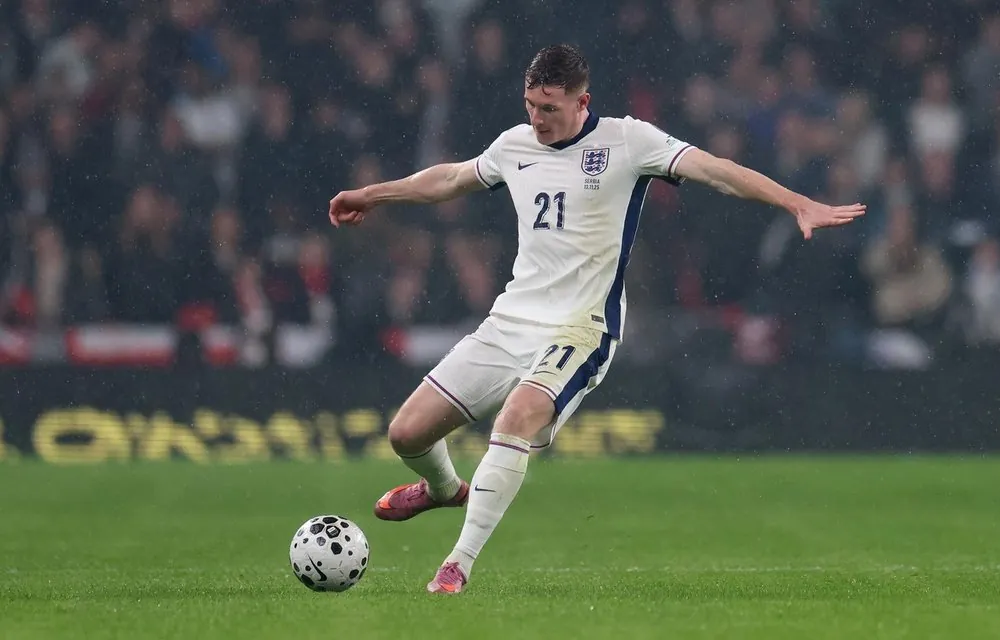
How does Elliot Anderson compare to Kobbie Mainoo in England's midfield?
Kobbie Mainoo of Manchester United is the other central midfielder in England's squad most frequently mentioned in the context of the Rice partnership. Mainoo was also named in Tuchel's 26-man group and represents a contrasting option from Anderson. Where Anderson's value is rooted in his defensive work rate and physical presence, Mainoo is primarily a technical midfielder — a passer with exceptional composure on the ball, capable of controlling the tempo of a match with his distribution and movement in tight spaces.
The two players are not interchangeable. They offer genuinely different things, and Tuchel's decision to include both gives England tactical flexibility that is genuinely useful in a tournament context. Against an opponent who dominates the ball and requires England to be organised without it, Anderson's work rate and pressing intensity gives the team a more defensive shape. Against an opponent who sits deep and challenges England to find solutions with possession, Mainoo's passing intelligence and ability to play forward under pressure becomes more relevant.
The competition between them is real but not hostile. Both are young, both are making their World Cup debuts, and both have enough games at the highest level to know that selection in a tournament squad is only the beginning of the story. What matters is how each performs in the specific match context Tuchel decides to use them. Anderson enters the tournament as the stated favourite for the starting role. Whether that remains the case after the first group-stage match will tell us a great deal about how England's midfield plans develop over the tournament's first two weeks.
What is Anthony Gordon's connection to Elliot Anderson?
Anthony Gordon was also named in England's 2026 World Cup 26-man squad, and his presence in Tuchel's party alongside Anderson gives the squad a clear Northeast England thread. Both players developed in the Newcastle United system — Gordon through the academy, Anderson as a first-team prospect — and both ultimately demonstrated their Premier League quality in environments away from St James' Park, Gordon at Liverpool and Anderson at Nottingham Forest.
Gordon is a forward rather than a midfielder, but his shared Newcastle background with Anderson gives the England squad a familiar reference point between two young players navigating their first major international tournament together. The club connection — even when one player has since moved on — creates a bond in squad environments that matters more than it is often given credit for. Shared training ground memories, shared knowledge of what it means to come through a particular club's system, and the mutual understanding of what Northeast football demands of players are all factors that contribute to a squad's internal cohesion.
Gordon's quality as a winger — direct, quick, capable of creating chances and scoring goals from wide positions — makes him a useful complement to Anderson's more structured midfield role. England's attacking intent in Group L will depend heavily on their wide players, and Gordon's inclusion alongside Saka, Bellingham and the front-line options gives Tuchel multiple ways to create problems for opponents without relying on a single system. Anderson's job, alongside Rice, is to give those attacking players a platform that is clean and protected. The Newcastle thread running through the squad is a minor detail, but in tight tournament moments, the small sources of connection between players can matter.

What can England expect from Elliot Anderson at World Cup 2026?
The realistic expectation for Anderson at a first World Cup is structured and attainable: be reliable alongside Rice, protect the defence in the group stage, press effectively to disrupt opponents' build-up, and deliver the ball cleanly to the attacking players ahead of him. That is not a modest or unimportant role. A World Cup campaign is decided as much by what does not happen — defensive breakdowns, midfield overloads, sloppy transitions — as by the spectacular moments. Anderson's job is to ensure that the platform exists for England's more creative players to do their work.
The upside case for Anderson goes further. Young players in their first major tournament can surprise. They have not yet accumulated the psychological weight that comes with high-profile failure at tournaments, and their willingness to press and run without overthinking the consequences can be an asset in exactly the compressed environment a World Cup creates. Anderson's Instagram post after selection — the Bobby Moore photo — was not the gesture of a player treating this as a routine professional obligation. It was the expression of a player for whom this tournament means something deeply personal. That motivation does not guarantee results. But it is a quality that tournament football rewards.
England have not won the World Cup since 1966. Bobby Moore lifted the trophy at Wembley when the competition had only 16 teams, when football looked entirely different and when the conditions for English football were fundamentally different from what they are today. Anderson grew up knowing that history, posing beside Moore's statue as a 23-year-old who has just been told he will carry it forward in some small way. Whether England go deep in North America in 2026 will depend on many factors beyond any single midfielder's performance. But Anderson's presence in the squad, his profile as a player, and the clarity of his attachment to what the England shirt means all point in the same direction: a player ready for the moment, in the competition he has always wanted to play in.
FAQ
How good is Elliot Anderson?
Elliot Anderson is a dynamic box-to-box central midfielder rated as one of England's most promising midfield talents. Thomas Tuchel named him in England's 26-man World Cup 2026 squad and analysts have identified him as the favourite to partner Declan Rice as England's first-choice No. 6 in North America.
What club does Elliot Anderson play for?
Elliot Anderson is a Newcastle United player who established himself during a loan spell at Nottingham Forest. His consistent Premier League performances for Forest were central to Thomas Tuchel's decision to include him in England's 2026 World Cup squad.
Who is Elliot Anderson competing with for England's midfield spot?
Anderson's main competition is Kobbie Mainoo of Manchester United. Both players are in England's 26-man squad. Anderson has been identified as the first-choice No. 6 option alongside Declan Rice, while Mainoo provides a contrasting technical alternative depending on tactical requirements.
How did Elliot Anderson react to making England's World Cup squad?
After the 22 May 2026 squad announcement, Anderson posted on Instagram a childhood photo of himself wearing an England shirt at home, and a picture taken at Wembley beside the bronze statue of Bobby Moore — England's 1966 World Cup winning captain. The post expressed his excitement and gratitude, connecting a childhood dream directly to the moment of its fulfilment.