Iran VS New Zealand: How Just's Brace and Iran's Fightback Made the Best 2-2 of the Group Stage
By Jack Brown · —
Was Iran VS New Zealand the most dramatic result of the group stage so far?
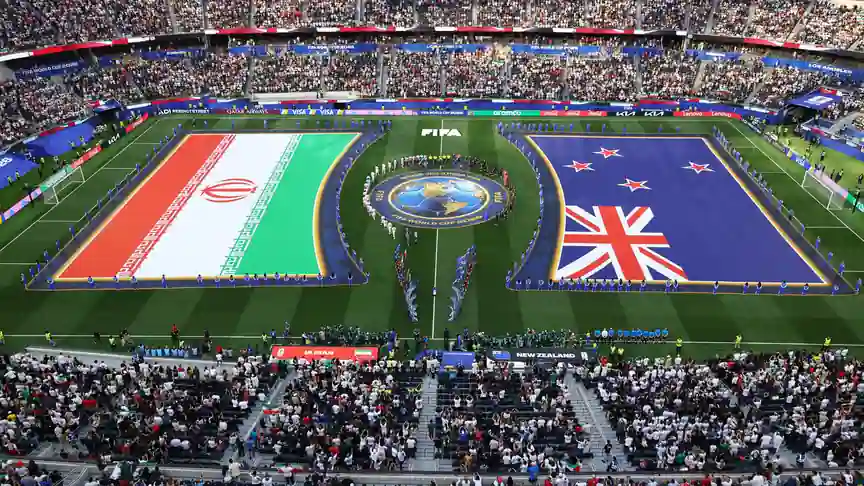
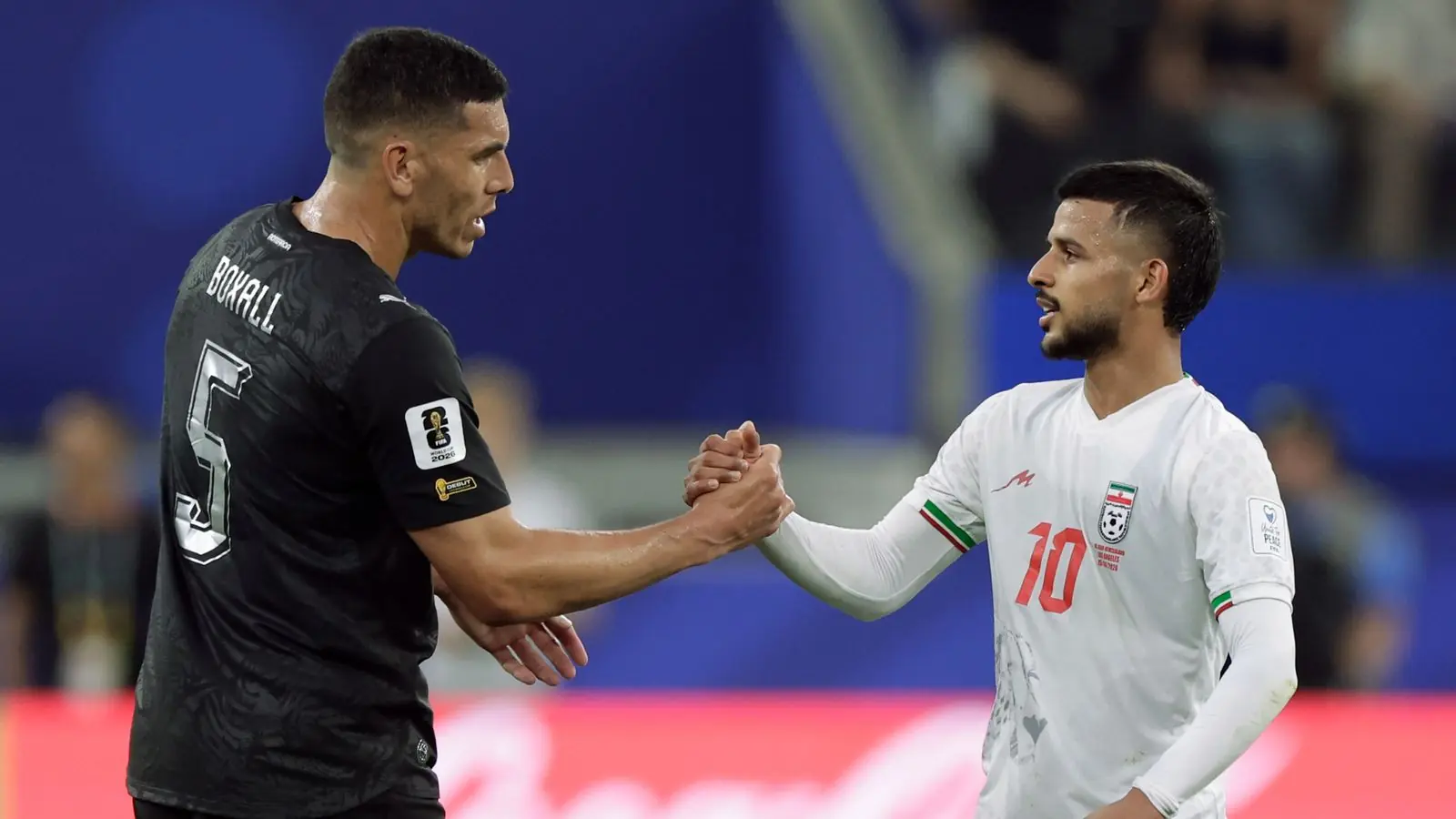
Iran VS New Zealand ended 2-2 on at SoFi Stadium in Inglewood, California — four goals, four lead changes, and a match that had 70,108 people on their feet for most of the second half. New Zealand's Elijah Just gave the All Whites the lead in the 7th minute and added a second in the 54th to become the first player from his country to score twice in a single World Cup match. Iran answered both times: Ramin Rezaeian drew level in the 32nd minute, becoming the oldest Asian player ever to score at a FIFA World Cup, then delivered the cross for Mohammad Mohebi's equaliser in the 64th — a header that cannoned in off the far post and briefly stopped the stadium cold. In Group G's other Matchday 1 fixture, Belgium drew 1-1 with Egypt. All four teams now sit on one point.
What happened in Iran VS New Zealand?
The opening seven minutes were the quietest thing about this match. Iran set up in a mid-block, looking to win the ball in the middle third and use their width — Mohebi on the left, Rezaeian bombing forward from right back — to transition quickly. New Zealand were compact, patient, and comfortable with the ball in their own half in a way that surprised the Iranian press. The lead came from a set piece: Chris Wood won a header at the far post from a long diagonal, the ball dropped to the edge of the six-yard box, and Just reacted fastest, steering it low and across the goalkeeper with his instep. Seven minutes in, and the All Whites had their first-ever goal at a FIFA World Cup.
Iran did not chase the game in the way that suits New Zealand. They kept the ball, moved it wide, and waited for the right moment. It arrived in the 32nd minute when Rezaeian collected a short pass on the right flank, cut inside a defender with two quick touches, and curled a shot across from twenty-two yards that went in off the far post. The technique was clean; the composure was the quality of a player who had been in this situation many times before. At 36, Rezaeian is old enough to have played international football through six different national team coaches. You could tell.
The second half shifted. New Zealand came out playing higher, pressing Iran's centre-backs and forcing errors in transition. The second Just goal came in the 54th minute from a move that started in Iran's half — a pressed giveaway led to a counter in four passes, and when the ball came wide to the right, the cross was perfect. Just met it on the penalty spot and headed it back across the goalkeeper with a technique that looked easy and was not. Mohebi's response in the 64th minute was the goal of the match: Rezaeian's delivery from deep, running at full pace, put the ball behind the defence exactly where Mohebi had peeled to; his header came off the underside of the crossbar and bounced down over the line with the goalkeeper already beaten. The New Zealand players looked at each other. Four goals. One more would win it. Neither team found it.
Who is Elijah Just — and why is he playing his biggest match while contracted to Motherwell?
Elijah Just is a New Zealand international forward who played the 2025-26 Scottish Premiership season for Motherwell, where he was shortlisted for the PFA Scotland Premiership Player of the Year award in what was his debut campaign in the league. He signed a two-year contract with the club in July 2025. He was born in New Zealand to a German father and a Chinese mother, and his path to the 2026 World Cup ran through the lower reaches of European football rather than any of the wealthier leagues that follow New Zealand international prospects in search of talent to sign and develop. His caps number was in the mid-twenties before the tournament. His profile outside New Zealand was essentially zero.
Against Iran, Just ran the channels with more intelligence than his age might suggest. His first goal was instinctive — right place, right reaction. His second required him to be moving before the ball had been played, reading the delivery from the right before the cross was actually played. That kind of anticipatory movement is what separates the players who perform in big matches from those who wait to see what happens. Just moved first. He became, in those two moments, the first All White in World Cup history to score twice in a single game. He also became the first player ever from Motherwell to score at a FIFA World Cup — a fact the club confirmed on social media within four minutes of the final whistle.
How did Iran fight back — and what does it say about this team?
The conventional reading of Iran at this World Cup places them as a side built on defensive organisation and set-piece threat — a team that would rather win 1-0 than 3-2 and whose attacking contribution was expected to come from width and transitions rather than prolonged build-up. The 2-2 against New Zealand complicates that narrative in a useful way. Iran absorbed the lead twice without changing their shape, then found the right answer both times through individual quality rather than tactical adjustment. The equalising goals came from different angles and different players, which tells you something about the range of solutions the squad can find.
Rezaeian's goal in the 32nd minute was the product of years of international experience working in Iran's attacking system. He has always been a fullback who gets into the box — his six international goals before this tournament are an unusual return for a defender — and at SoFi Stadium he found the space to shoot from a position he had occupied many times before in training. Mohebi's 64th-minute contribution was different: an out-and-out forward scoring from a forward's position, converting a cross from Rezaeian in real time, with no preparation beyond reading the delivery and placing his header correctly. Two different types of goal, both from players stepping up in the match's defining moments.
What was the Mohebi celebration — and why did it cause controversy?
Mohammad Mohebi scored Iran's second equaliser in the 64th minute and, in the seconds that followed, made a gesture with his hands that was immediately interpreted by some observers as mimicking a gun. The images circulated rapidly. The reaction was swift and polarised: some read the celebration as deliberately provocative given the political context of Iran playing at a venue in the United States; others, including Mohebi himself, rejected that interpretation. "The celebration was just coming in the mind, in the moment," Mohebi said in post-match mixed zone. "I wanted to do it for all the fans. It's just a celebration, you know." FIFA confirmed they were investigating the gesture to determine whether it breached their code of conduct on celebrations. No sanction had been issued as of the time of publication.
Mohebi was born on 20 December 1998 and plays club football for Rostov in the Russian Premier League, where he moved from Iran's domestic league in 2023. At 27, this was his first World Cup, and the goal that triggered the controversy was also the most important goal of his career by a significant margin. The combination of those two things — a goal of that importance and a reaction of that ambiguity — guaranteed that Mohebi's name would be among the most searched in the tournament on 15 June regardless of the match's ultimate outcome.
Was Rezaeian really the oldest Asian player to score at a World Cup?
Ramin Rezaeian was born on , making him 36 years old at the time of the Iran VS New Zealand match. His goal in the 32nd minute set a record as the oldest Asian international to score at a FIFA World Cup, breaking the previous mark. He plays club football for Esteghlal in Iran's Persian Gulf Pro League and has 68 international caps — a total accumulated across a career that required him to be consistently selected during periods when Iran were transitioning through coaching changes and tactical shifts. He is not a player who was handed caps; he earned each one.
His previous World Cup high point came at Qatar 2022, where he scored a stoppage-time goal in Iran's 2-0 win over Wales — the goal that sent the Iranian bench wild and produced one of the more memorable celebrations of that tournament. That goal was scored when he was 32. The goal against New Zealand, four years later at 36, was technically the better finish: cut inside, correct shape, right foot across the goalkeeper from outside the area at pace. It was also, statistically, historically rare. Defenders do not often score at World Cups. Defenders aged 36 scoring at World Cups while also getting the assist for the team's second goal on the same afternoon is essentially unprecedented.
What do the Iran VS New Zealand match statistics show?
The possession split between Iran and New Zealand — 43 per cent to 45 per cent — is the most equal in any World Cup 2026 Group G match and reflects how genuinely open this game was. Neither team was defending a lead for extended periods or sitting in a defensive shape that would inflate the opponent's touch count. The shot data is more telling: Iran had more shots (17 to 14) but New Zealand put more on target (8 to 4), reflecting the difference in their attacking styles. New Zealand's high-press, counter-attacking approach generated cleaner finishes in better positions. Iran's approach generated more volume from wider angles, with fewer shots reaching the goalkeeper cleanly.
The conversion rate tells the story the scoreline already confirmed. Both teams scored twice from their respective shots on target — 50 per cent conversion for each side, which is unusually high for a World Cup match and explains why the goals came in bunches rather than being ground out. When teams are clinical in front of goal, matches tend to stay open rather than closing around a single lead, because neither side can establish the scoreline comfort that triggers a defensive shift. Iran VS New Zealand never felt like a game looking for a winner because the teams kept finding answers.
What does the 2-2 mean for Group G after Matchday 1?
Group G is entirely open after Matchday 1 in a way that even generous pre-tournament projections did not predict. The expected outcome was Belgium winning their opener against Egypt comfortably and Iran beating New Zealand — a result that would have separated the group early into two clear tiers. Instead, Belgium drew 1-1 with Egypt, and Iran drew 2-2 with New Zealand. All four teams sit on one point. The group will not be decided until Matchday 3, and potentially not until the final minutes of Matchday 3 if results stay tight.
For Belgium, the failure to beat Egypt means their Matchday 2 fixture against Iran on is already critical. They need a win to take back control of the group before the final round. Iran, with a point against New Zealand and the evident quality to score twice from behind, will not be easy opponents. For New Zealand, the point against Iran already exceeds pre-tournament expectations, but their Matchday 2 match against Egypt on the same day provides the chance to build on it. Egypt, coming off their draw with Belgium, will not concede easily. A second draw for New Zealand would put them in genuine contention for a knockout-round place going into Matchday 3, which is a sentence that would have looked implausible on paper four days ago.
Why was playing at SoFi Stadium in Los Angeles significant for Iran?
SoFi Stadium in Inglewood sits in the middle of one of the largest Iranian diaspora communities outside Iran itself. Greater Los Angeles is home to a concentration of Iranian-born residents — estimates commonly cited range from 350,000 to 500,000 — large enough to have generated, for decades, its own informal nickname for the city: "Tehrangeles." The crowd at SoFi Stadium on 15 June reflected that geography. Iranian national colours filled entire sections. The noise when Rezaeian equalised was audible on the broadcast feed even under the studio commentary. Iran have rarely, if ever, played a nominally away fixture in front of a crowd of this composition at a World Cup.
The match also carried a layer of political context that Al Jazeera, among others, characterised explicitly. Iran had been playing their World Cup group stage at a time of active diplomatic engagement between Tehran and Washington, and the presence of the Iranian national team in the United States — on American soil, in front of an Iranian-American crowd — was the kind of event that exists simultaneously as football and as something considerably larger than football. The players appeared to channel that weight rather than be flattened by it. Mohebi's celebration, whatever its intended meaning, added one more element to a match that needed none.
What are Iran and New Zealand's remaining Group G fixtures?
Iran face Belgium on in their Matchday 2 fixture, while New Zealand play Egypt on the same day. Iran's final group match is against Egypt on , and New Zealand close out against Belgium on the same date. The simultaneous final-day fixtures — a standard feature of the knockout-round format — mean the last round will be played with full information on what each team needs to progress. With all four sides currently level on one point, Matchday 3 in Group G could produce any of several qualification scenarios, including the possibility of two teams from the same continent advancing together, or a team ranked outside the top 50 in the world reaching the round of 32 at their first World Cup appearance.
New Zealand have not previously advanced beyond the group stage at a men's World Cup. Iran have reached the round of 16 once, at France 1998. The point against New Zealand does not change those histories, but it changes the conditions under which the remaining matches will be played. Iran go into Matchday 2 knowing they can score goals and absorb pressure without losing their shape. New Zealand go in knowing that Elijah Just is in the form of his life and that their counter-attacking structure can hurt teams in this tournament. Both facts make Group G considerably less predictable than it looked before the first ball was kicked.
For the full Group G schedule and results, see the 2026 World Cup schedule. For Iran's squad and tournament preview, see Iran World Cup 2026.
FAQ
What was the result of Iran vs New Zealand at the 2026 World Cup?
Iran VS New Zealand ended 2-2 on at SoFi Stadium in Inglewood, California. New Zealand's Elijah Just scored in the 7th and 54th minutes; Iran replied through Ramin Rezaeian (32nd) and Mohammad Mohebi (64th). Attendance was 70,108.
Who is Elijah Just?
Elijah Just is a New Zealand international forward who plays for Motherwell in the Scottish Premiership. Against Iran he became the first player from New Zealand to score twice in a single FIFA World Cup match. He signed with Motherwell in July 2025 and was shortlisted for PFA Scotland Premiership Player of the Year in his debut season.
Who scored for Iran against New Zealand?
Iran's goals came from Ramin Rezaeian (32nd minute) and Mohammad Mohebi (64th minute). Rezaeian also provided the assist for Mohebi's header, making him the first Iran player to score and assist in a World Cup match. Rezaeian became the oldest Asian player ever to score at a FIFA World Cup.
What group are Iran and New Zealand in at World Cup 2026?
Iran and New Zealand are in Group G of the 2026 FIFA World Cup alongside Belgium and Egypt. After Matchday 1, all four teams are level on one point — Iran and New Zealand drew 2-2, while Belgium and Egypt drew 1-1.
What are Iran and New Zealand's remaining fixtures in Group G?
On Matchday 2 (), Iran play Belgium and New Zealand face Egypt. On Matchday 3 (), New Zealand meet Belgium and Egypt take on Iran, both played simultaneously.