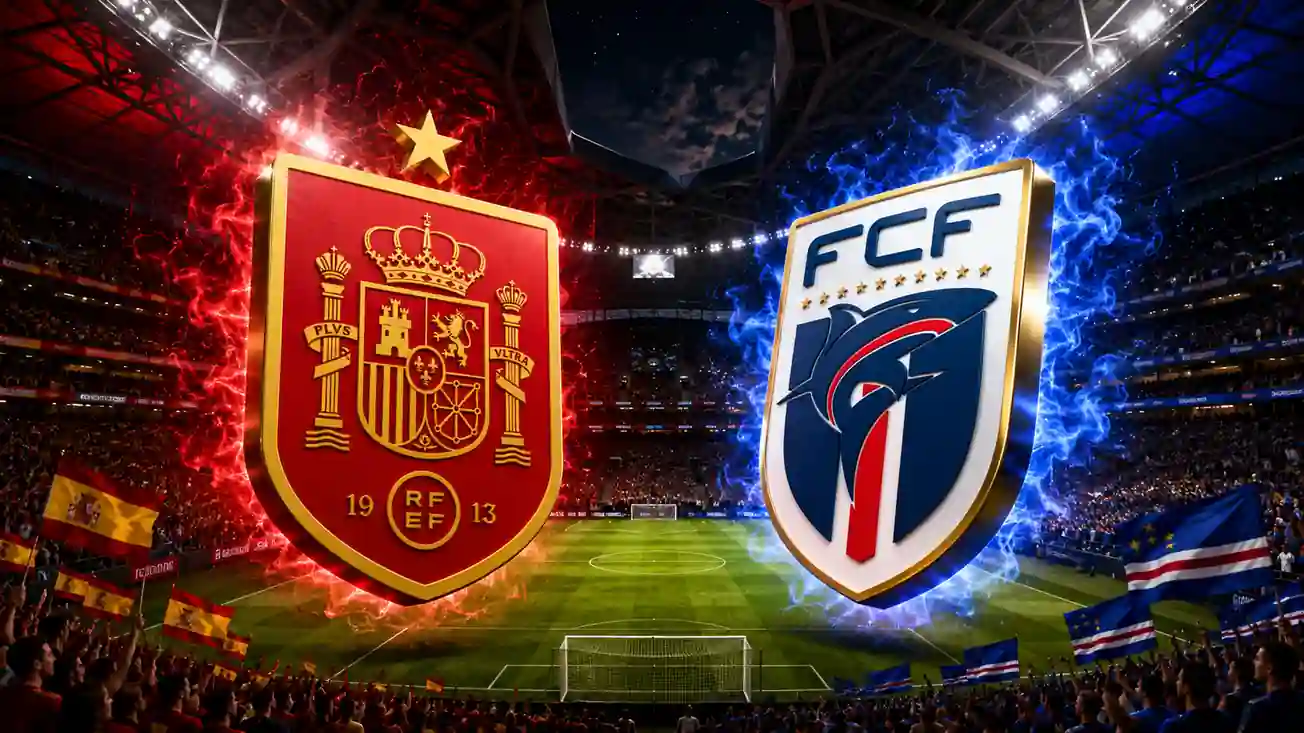
Spain VS Cape Verde: How Vozinha Stopped La Roja at World Cup 2026
By Jack Brown · —
Is Spain VS Cape Verde the group stage's biggest shock so far?
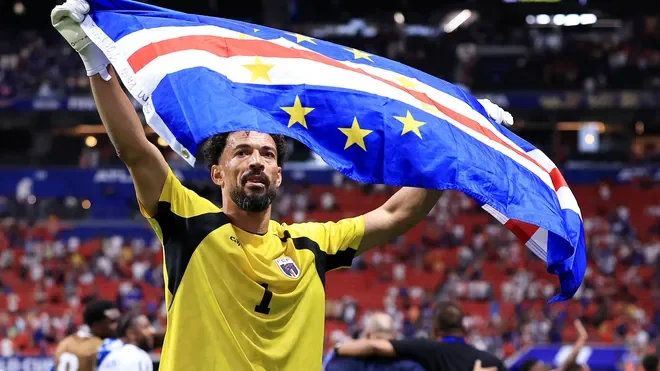
Spain VS Cape Verde ended 0-0 on at Mercedes-Benz Stadium in Atlanta — the result that stopped world football in its tracks on the opening weekend of the group stage. Spain, ranked second in the world and the reigning European champions, produced 27 shots, 74 per cent possession and 11 corner kicks without finding a way through. Cape Verde, making their first appearance in World Cup history and ranked 67th, were protected almost entirely by one man: goalkeeper Vozinha, 40 years old, officially a free agent since his Chaves contract expired on 1 June, who made seven saves to earn the point that rewrites everything Cape Verde thought was possible. The other Group H fixture that day ended Saudi Arabia 1-1 Uruguay.
What happened in Spain VS Cape Verde?
The match settled into its shape inside the first five minutes. Spain came with possession, a high press to pin Cape Verde's defensive line, and early runners in behind designed to test the goalkeeper before the game had found its rhythm. Vozinha was called on in the seventh minute — a near-post delivery that he plucked cleanly with his left hand, barely moving his feet, the action of a goalkeeper who had spent the previous week watching exactly this type of Spanish delivery on video. It was an early statement.
Spain's attacking structure on the day leaned heavily on Lamine Yamal drifting inward from the right and Nico Williams stretching wide on the left. Pedri controlled the tempo in midfield, Rodri shielded the space, and the fullbacks pushed to create width for the forward rotations. Cape Verde responded by sitting in two disciplined banks of four — a defensive low-block that conceded the ball and the half-spaces freely, but made the central channel almost impenetrable for the first sixty minutes. Spain's shots were predominantly from outside or from cutback positions where the angle was always slightly wrong.
The clearest first-half chance came in the 34th minute. Yamal found the overlap for the fullback, who cut back across the six-yard box. The cross arrived at Álvaro Morata in a central position with time to set. Vozinha was already moving across to his left, read the contact point, and pushed the effort onto the post. The rebound came to a Spanish midfielder unmarked six yards out. He caught it clean. It struck the crossbar. Cape Verde cleared. At that precise moment, the word "destiny" was used by four different broadcast commentators in five different languages simultaneously.
The second half brought a change of shape from Spain but not a change of outcome. Luis de la Fuente introduced Ferran Torres after sixty minutes, pushing the width higher and asking for more direct deliveries into the box. Vozinha made three of his seven saves in a fifteen-minute spell between the 62nd and 77th minutes — a reaction stop from a Torres flick, a point-blank block from a headed effort at the back post, and a save from a Pedri drive from twenty yards that was already moving away from him when he got his right hand across. All three required different techniques. All three were executed without a second chance being created.
Who is Vozinha — and why is he playing at 40?
Vozinha is Josimar José Évora Dias, born on in Mindelo, on the island of São Vicente in Cape Verde. He turned 40 twelve days before the Spain match. He has played for clubs in Cape Verde, Angola, Moldova, Portugal, Cyprus and Slovakia across a career that stretches more than two decades — the kind of football life that only exists in the lower tiers of the European pyramid, where contracts are short, winters are hard and a goalkeeper who can save penalties becomes as valuable as any midfielder in the division.
His most significant club spell before this World Cup came at AEL Limassol in Cyprus, where he spent five years and won the Cyprus Cup in 2019. He moved to AS Trenčín in Slovakia in 2022, then returned to Portugal with Chaves in July 2024 — a Liga Portugal 2 side based in the Trás-os-Montes region, where he was dependable without drawing attention. His contract at Chaves expired on , two weeks before the World Cup began. He arrived in Atlanta as a free agent. He left Atlanta as the most talked-about goalkeeper in the tournament.
For Cape Verde, Vozinha has been the constant. He has earned 91 international caps since making his debut in 2012 — the second highest total in the country's football history. He has been the goalkeeper for a generation of players who grew up watching Cape Verdean football take root in the CAF qualifiers, building from a programme that began playing in FIFA competitions only in the 1990s. He carried that institutional knowledge into every match he played for the national team, and he brought it to Atlanta for the biggest stage any Cape Verdean footballer had ever stood on.
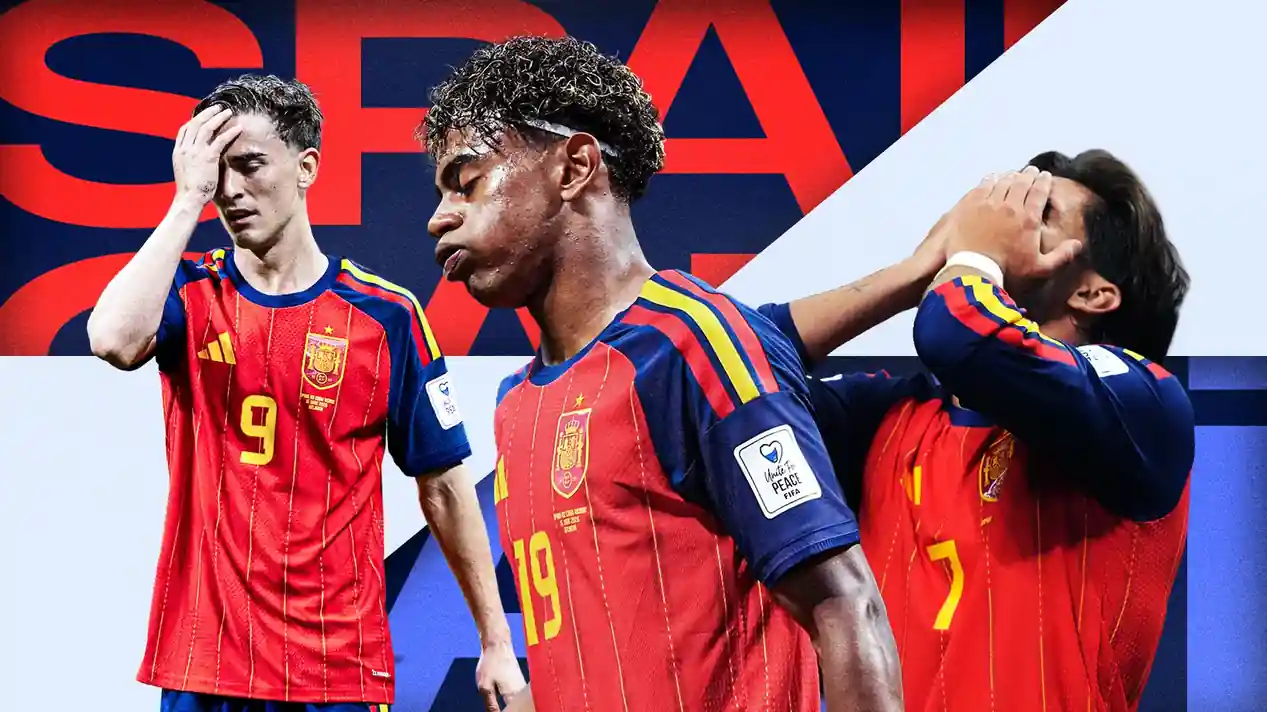
How did Vozinha make seven saves against Spain?
Seven saves is not an exceptional number on its own. Goalkeepers in defensive low-block teams regularly face high volumes of shots, and the number can inflate when a team is chasing the game and concedes space late. What made Vozinha's seven different was their distribution across the full 90 minutes, their technical variety, and the scoreline context — none of the seven produced a rebound, none required a follow-up stop, and each one ended the move cleanly. He did not simply parry into areas; he held, deflected wide, or cleared with enough authority to reset Cape Verde's defensive shape before Spain could reorganise.
His positioning throughout the match was the quality that attracted attention from the coaching community watching. Vozinha read delivery angles well before the ball arrived — his starting position on near-post balls was already adjusted by the time the cross left the boot. On the 34th-minute Morata effort, he had started moving before the contact. On the Torres flick in the 62nd minute, he was already dropping to his right before the ball left Torres's head. These micro-adjustments between initial set position and the moment of release are the difference between a goalkeeper who reacts and one who anticipates — and they are very difficult to coach into a player who does not already possess the pattern recognition. Vozinha has spent more than two decades building those patterns.
What do the Spain VS Cape Verde numbers tell us?
Spain's shot volume against Cape Verde was among the highest recorded in any World Cup group stage match in recent memory. Twenty-seven attempts against a single opponent in a 0-0 draw represents a statistical anomaly — it suggests either extreme defensive compactness from the conceding team, a goalkeeper in extraordinary form, or a combination of poor decision-making in the final moments of attacking moves. Spain's conversion situation involved all three. Cape Verde were extremely compact. Vozinha was extraordinary. And Spain — at some point between the 34th and 77th minute — began trying to force situations that did not exist rather than waiting for the angle that would arrive if they continued to move the ball patiently.
The corner count of 11-1 in Spain's favour tells a related story. A high corner count with a low conversion rate in a 0-0 result typically indicates that the team with possession was generating deliveries from wide positions but finding a well-organised near-post structure. Cape Verde defended their near post aggressively — three players assigned to that zone for every corner — and Spain's corner routines were unable to create the second-ball situations or the flick-on headers that the set-piece numbers would otherwise promise. The 74 per cent possession figure is standard for Spain against a counterpart ranked outside the top 50; what is unusual is that such possession yielded only seven shots on target.
What does the 0-0 mean for Group H?
Group H after Matchday 1 is entirely open in a way no analyst predicted. Spain sit on one point, not three — a meaningful difference that means they face Spain vs Saudi Arabia on needing a win to reassert their status as group favourites. Cape Verde sit on one point with Uruguay still to face, having shown on the biggest stage available that their defensive structure and their goalkeeper can absorb sustained pressure from a world-class attack. Saudi Arabia and Uruguay drew 1-1 in the other Matchday 1 fixture, which means three of the four teams in Group H are on one point each with Spain.
The tactical implication for Luis de la Fuente is immediate. Spain cannot afford a second dropped result in Group H if they want to top the group and control their knockout round path. Their next match against Saudi Arabia — a team with organised defence and quick transitions through Mohamed Al-Dawsari and others — will demand sharper finishing and better decision-making in the penalty area than the Cape Verde match provided. The Cape Verde result was not a crisis for Spain, but it introduced doubt where no doubt had existed before.
How did Cape Verde qualify for the World Cup?
Cape Verde's path to the 2026 World Cup ran through the CAF qualifying process — an extended campaign across the African confederation that demands results against opponents with significantly longer World Cup pedigree. The Blue Sharks, as Cape Verde's national team is known, qualified for their first-ever World Cup by navigating a qualifying campaign that tested their consistency, depth and the specific quality that every qualifying team needs but few discuss: the ability to hold results in hostile away environments when conditions are difficult and the schedule is compressed.
Cape Verde became only the seventh team in World Cup history to avoid defeat in their debut match. The six who managed it before them include some of the sport's largest nations. Adding Cape Verde — a Portuguese-speaking island nation with a population of around 590,000 — to that list is a statistical footnote that will define how the country's football history is written from this point forward. For a generation of Cape Verdean players who grew up in the Portuguese football system, winning their clubs' confidence in Europe's second and third tiers while maintaining their national team commitments across two-year qualifying cycles, the point against Spain is the tangible proof of what the programme has built.
What are Cape Verde's next fixtures in Group H?
Cape Verde face Uruguay on at Hard Rock Stadium in Miami. Uruguay, under Marcelo Bielsa, drew 1-1 with Saudi Arabia on Matchday 1 — a result that makes them a team under pressure to perform but not yet in crisis. The South American side have experienced players in key positions, a defensive structure that is physically demanding to break down, and enough individual quality in attack to punish any Cape Verde defensive error. Vozinha will face a different kind of challenge from Uruguay: less technical precision than Spain, more physical aerial delivery and direct running at the goalkeeper's line.
Cape Verde's final Group H match is against Saudi Arabia on at NRG Stadium in Houston. That fixture, in isolation, represents Cape Verde's most realistic route to a second point in the group — and if results fall a certain way in the group's other matches, potentially the fixture that decides whether a small island nation qualifies for the World Cup knockout round in their first ever appearance at the tournament. None of that was imaginable before . Vozinha made it imaginable.
For the full Group H schedule and results, see the 2026 World Cup schedule. For Spain's squad and tournament preview, see Spain World Cup 2026.
FAQ
What was the result of Spain vs Cape Verde at the 2026 World Cup?
Spain VS Cape Verde ended 0-0 on at Mercedes-Benz Stadium in Atlanta. Spain had 27 shots, 74% possession and 11 corners but could not score. Cape Verde goalkeeper Vozinha made seven saves and won the Player of the Match award in his country's first-ever World Cup game.
Who is Vozinha?
Vozinha is Josimar José Évora Dias, a 40-year-old Cape Verdean goalkeeper born on in Mindelo, São Vicente. His career has spanned Cape Verde, Angola, Moldova, Portugal (Gil Vicente, Chaves), Cyprus (AEL Limassol) and Slovakia (AS Trenčín). He has 91 international caps for Cape Verde — the second highest in the country's history. Against Spain at the 2026 World Cup he became the oldest player to feature in a nation's debut World Cup match.
What group are Spain and Cape Verde in at World Cup 2026?
Spain and Cape Verde are in Group H of the 2026 FIFA World Cup, alongside Saudi Arabia and Uruguay. Matchday 1 saw Spain draw 0-0 with Cape Verde and Saudi Arabia draw 1-1 with Uruguay, leaving all four teams on one point after the opening round.
How many saves did Vozinha make against Spain?
Vozinha made seven saves against Spain on . Spain had seven shots on target from 27 total attempts, and he stopped all of them. He was named Player of the Match for his performance — Cape Verde's first individual award at a FIFA World Cup.
What are Cape Verde's remaining fixtures in Group H?
After drawing 0-0 with Spain, Cape Verde face Uruguay on at Hard Rock Stadium in Miami, and Saudi Arabia on at NRG Stadium in Houston.