
Portugal VS Uzbekistan: Ronaldo's 5-0 Reply in Houston
By Jack Brown · —
Did Portugal VS Uzbekistan feel like the real start of Portugal's World Cup?
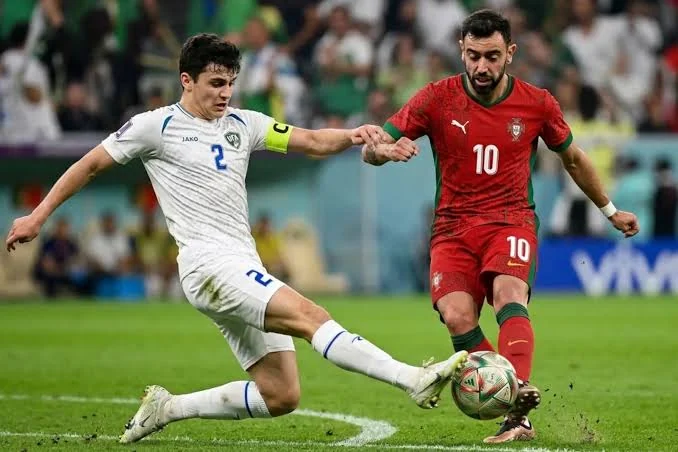
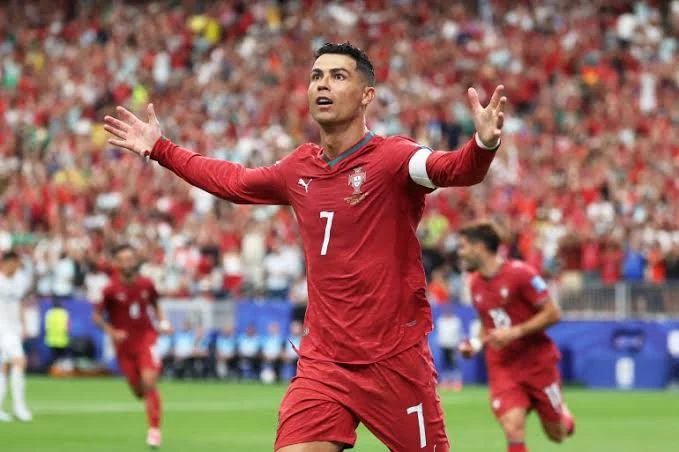
Portugal VS Uzbekistan ended 5-0 on at NRG Stadium in Houston, and for the first time in this tournament Portugal looked like a team that knew exactly what kind of side it wanted to be. Cristiano Ronaldo scored in the 6th and 39th minutes, Nuno Mendes added the second, an own goal stretched the game beyond repair and Rafa Leão closed the night late on. That is the clean summary, but it misses the tone of the match. Portugal were not merely more clinical than Uzbekistan. They were lighter, quicker, less self-conscious and much less reliant on the hope that one famous figure might drag everybody else into clarity. The goals came through Ronaldo, yes, but the performance was bigger than his brace. It was built on tempo, width, pressure after loss and a midfield that stopped treating possession as a burden.
That mattered because the atmosphere around Portugal before kick-off had become strangely brittle. The opening 1-1 draw with Congo DR had triggered the usual cycle: questions about Roberto Martínez, irritation at the attack's predictability, and the endless argument over whether Ronaldo's presence still sharpens the side or traps it in memory. Those are lazy questions when they are asked in the abstract. Football rarely works in abstractions. It works through distances, angles, timing, pressing triggers and emotional release. Portugal found all of those against Uzbekistan. By the final whistle, the result looked brutal, but what actually stood out most was how inevitable the shape of the game had become after the opening quarter-hour.
Uzbekistan did not arrive in Houston to be anybody's sentimental backdrop. This was the country's first World Cup, a moment they had spent decades trying to reach, and they carried themselves with the caution of a team that understood the stage but did not fear it. They had already shown against Colombia that they could stay in a game for long enough to create awkward moments. For a little while in this one, they did. There were transitions, a disallowed attacking moment, one or two reminders that Portugal's line can still leave space if the press is late. But they never found a stable route into the match. Portugal's speed in possession kept pulling them into sprints they did not want to run, and once Ronaldo made the scoreboard move early, the whole evening tilted toward a question of how emphatic Portugal wanted the answer to be.
Why did Portugal VS Uzbekistan become comfortable so early?
Because Portugal stopped playing as if every attack needed to prove a point. Against Congo DR, they had looked restless, almost impatient with themselves, moving the ball with the kind of forced gravity that tells you a favourite is listening too closely to its own reputation. Against Uzbekistan, the ball moved with much less ceremony. The first pass after recovery was cleaner. The switch of play was sharper. Wingers held their width instead of drifting too soon. Full-backs overlapped with better timing. And the midfield, rather than simply feeding the next star turn, actually staged the attack in layers. That is what made Uzbekistan's block unstable. They were being asked to defend not one threat, but a sequence of threats presented in the right order.
Portugal's early pressing helped even more. Uzbekistan wanted moments of calm to let their front players breathe and turn the match into something episodic. Portugal denied them that rhythm. Whenever possession was lost, the reaction behind the ball was immediate enough to prevent the next pass into open grass. It did not mean Portugal were flawless. There were a few escapes, and one or two passages where the structure loosened. But the tone was established quickly: if Uzbekistan were going to leave their half, they would have to do it under stress, and stressed exits rarely become coherent attacks against a side with Portugal's technical level.
That is why the early Ronaldo goal landed so heavily. It was not just a goal. It was a confirmation that the match was already unfolding on Portugal's terms. Once they had that advantage, they no longer needed to chase the game emotionally. They could circulate, stretch, recover, and wait for the next opening to appear. Uzbekistan, by contrast, had to decide whether to stay disciplined and risk slow suffocation, or open their shape and risk a larger punishment. Portugal made sure either choice would hurt.
How much of Portugal VS Uzbekistan was really about Ronaldo?
A lot of it, but not in the shallow way the scoreline tempts people to describe. Ronaldo was the headline because he scored twice, because one of those goals made him the first player to score in six different men's World Cups, and because his relationship with pressure has always turned ordinary tournament nights into theatre. Yet the more interesting point is this: Portugal served him better. He was not stranded waiting for hopeful crosses. He was not reduced to gesturing for the ball after an attack had already gone stale. He was placed in a game that respected his instincts. When he attacked the box, the service arrived with conviction. When he dropped off, runners still threatened the line beyond him. When he finished, the move already felt earned rather than improvised.
That is the version of late-career Ronaldo Portugal still need. Not a figure who must author every chance by force of personality, but a striker whose timing becomes lethal because the rest of the team has arranged the pitch correctly. His first goal settled the mood. His second, scored before half-time, broke the last useful layer of Uzbekistan's resistance. In between, his movement kept bending the centre-backs backward and opening the channels for the players arriving underneath. Even when he was not finishing, he was still dictating the emotional temperature of the box. Defenders were preoccupied with him. Midfielders were aware of him. The crowd was waiting for him. Those things matter in tournament football because attention is also a tactical resource, and Ronaldo still hoards it better than almost anyone alive.
It also mattered that he looked emotionally freer. After the Congo match, there had been visible frustration to his game: rushed gestures, exaggerated appeals, the familiar sense that he was carrying not just his role but also the argument around his role. In Houston, the expression changed. He looked less defensive and more predatory. Once he got the first goal, the whole body language of the team relaxed with him. That is not sentimentality. It is the practical reality of dressing-room hierarchy. When the most famous player on the pitch feels settled, the rest of the side usually start playing with clearer lungs.
What did Nuno Mendes and the supporting cast add to the result?
They gave the performance its shape. Ronaldo's goals are the obvious entry point into the story, but Portugal were more persuasive because the match did not become a devotional exercise around him. Nuno Mendes was especially important. His goal arrived from a disguised set-piece routine that revealed both preparation and nerve, and throughout the game he offered the kind of aggressive width that stops an opponent from compressing the centre. If a team is going to protect itself from Ronaldo, it often tries to make the middle too crowded for service to arrive cleanly. Portugal answered that by threatening from the outside and by using full-backs who made the pitch feel larger than Uzbekistan wanted it to feel.
The same can be said of the midfield connections. Portugal's best attacks were not those that arrived quickly for the sake of speed, but those that changed height at the right moment. One or two passes would invite Uzbekistan forward, then another would spin them back toward their own goal. By the time the own goal arrived in the second half, the match was already living inside that rhythm. The fourth goal was not simply bad luck for Uzbekistan. It was the scoreboard version of a pattern that had been squeezing them for an hour. Rafa Leão's late finish only underlined what the rest of the evening had already proved: Portugal had multiple ways to end a move, and they were finally using them without overthinking the hierarchy between them.
What do the Portugal VS Uzbekistan numbers really tell us?
The numbers tell you the result was decisive, but they do not quite capture how quickly the match became strategic relief for Portugal. A 5-0 win can sometimes flatter a side that scores late into a stretched game. This did not feel like that. Portugal were already in command by the time the second goal went in, and by the interval Uzbekistan had been made to choose between staying compact and remaining vulnerable to slow suffocation, or stepping out and leaving the exact spaces Ronaldo has spent two decades teaching himself to exploit. The scoreline widened because the control was already there.
The key numerical story is Ronaldo's brace in the 6th and 39th minutes. Those timestamps matter because they bracket the half emotionally. The early goal removed pressure. The second ensured there would be no prolonged second-half negotiation. Everything else happened inside that frame. The set-piece goal from Mendes showed Portugal had more than one route in. The own goal exposed how exhausted Uzbekistan's decision-making had become under repeated stress. Leão's finish near the end reflected Portugal's superior depth and the fact that the substitutes were entering a game whose logic had already been settled in their favour.
Did Uzbekistan show enough to complicate the flattering scoreline?
In flashes, yes. That is worth saying because tournament coverage often turns smaller nations into props once the result gets large enough. Uzbekistan were not ridiculous. They were overrun by a team whose emotional and technical level rose at the right moment, but there were spells when they escaped the first press, attacked into space and reminded Portugal that the clean sheet was not simply a default setting. One attacking passage that ended with the ball in the net was eventually ruled out, and moments like that kept alive the warning that Portugal's defensive line is still capable of leaving doors ajar if the pressure on the ball is late.
But Uzbekistan never found continuity. That was the real issue. Breaking out once is not the same as building a match. Their first forward pass too often turned into an emergency rather than an invitation. When they did reach promising areas, the final action lacked either the calm or the quality to extend the pressure. Facing a side like Portugal, you have to make your good moments last longer than a single breath. Uzbekistan could not. By the second half, the effort of chasing shadows had drained the precision out of their counters. They remained brave, but bravery without clean execution becomes another kind of fatigue.
That should not erase what their tournament means. For a nation making its World Cup debut, the lessons are often cruel because they arrive all at once. You learn how little time elite opponents need. You learn that the margin between surviving and sinking can be one mistimed step. And you learn that a player like Ronaldo does not require dominance over every minute to own the narrative of the evening. Uzbekistan will leave this match with pain, but also with a more exact understanding of what the level demands. Whether that becomes useful depends on how much belief they can preserve after the scoreline.
Why did Houston matter so much to the feel of this game?
Because NRG Stadium gave Portugal the kind of emotional environment that can amplify a famous team once it begins well. Houston has become one of the tournament's loudest host cities, and the crowd for this match leaned heavily toward spectacle, star power and especially Ronaldo. That energy can become awkward if the favourite looks laboured. It becomes fuel if the favourite scores early. Portugal managed to turn it into fuel. Every successful pressure action seemed to lift the tempo again. Every Ronaldo touch came with anticipation. The stadium stopped feeling like a neutral site and started feeling like a stage built to confirm the hierarchy that Uzbekistan were trying to resist.
That matters more than people admit. World Cup group games are not played in laboratory conditions. Noise alters rhythm. Star worship alters refereeing pressure, emotional flow and even the confidence with which a player takes on the next action. Portugal rode that mood well. They did not get carried away by it. They used it. There is a difference. A crowd can tempt a favourite into overperformance, into playing for applause rather than for control. Portugal avoided that trap. They kept the game broad, then central, then broad again. They let the atmosphere intensify the match without letting it rewrite the structure of the match. That is a sign of a team that has reset itself properly after an opening disappointment.
What does Portugal VS Uzbekistan mean for Group K now?
It means Portugal have repaired the emotional damage of the Congo draw and put themselves back into the position everyone expected them to occupy from the start. Four points after two matches is good business; doing it with a five-goal performance after a jittery opener is even better. Goal difference matters, of course, but the bigger gain may be narrative control. Group stages are as much about the feeling of a team as the mathematics around it. Portugal now move forward with a version of themselves that looks more coherent, more threatening and less interested in performing anxiety.
For Uzbekistan, the table now looks unforgiving. Two matches in, there is little room left for romance. Their route toward survival likely depends on results elsewhere and on producing one excellent last performance rather than a merely honest one. That is harsh, but it is how World Cups usually treat debutants. Portugal, meanwhile, will take from this not just the points but the reassurance that their tournament can still be built around Ronaldo without becoming trapped inside the argument of Ronaldo. That is an important distinction. The team looked freer precisely because everybody else also mattered.
Can Portugal trust this version of themselves against better opposition?
That is the real question, and the answer is promising without being definitive. Uzbekistan were willing enough to work, but they did not have the volume of high-end possession or the individual stress-inducing dribbling to keep Portugal defending uncomfortable waves for long. A stronger opponent will. So Portugal cannot simply bank this result and assume the same pathways will open next time. What they can trust is the quality of their own behaviour. The spacing was better. The possession had less vanity. The press was more coordinated. The service into Ronaldo was less desperate. Those are transportable things. Whether they remain transportable under higher pressure is the next step.
There were still moments when Portugal looked a little loose in transition, and a more ruthless side could have turned one of those moments into a goal that changed the emotional shape of the evening. That warning should stay with Martínez. But if you are looking for the best possible response to a disappointing opener, this was close to it. Portugal did not merely win big. They looked relieved of a stiffness that had made them seem older than they are and more dependent than they should be. If they can keep that looseness without losing their shape, then this match may come to feel like the evening their World Cup finally started.
What should we remember when the scoreline fades?
Remember that Portugal VS Uzbekistan was not simply a Ronaldo history lesson, even though history was made. Remember that the match showed how much more dangerous Portugal become when the team around him stops acting as if it owes every possession directly to his legend. Remember that Uzbekistan, despite the severity of the defeat, were undone more by Portugal's rhythm than by fear. And remember that football at this level often swings not on wholesale tactical invention, but on whether a strong team can recover its own personality before the tournament moves on without it.
Portugal recovered something important in Houston. They recovered ease. The ball arrived in the right places. The first goal came early enough to calm the noise and late enough to feel earned. The second removed the argument from the game. The rest was the accumulation of pressure from a side that finally seemed to understand how to use all of its gifts at once. Ronaldo's brace will dominate the clips, and rightly so. But the most encouraging part for Portugal was that they no longer looked like a team arguing with itself about how to serve him. They just played, and the game opened accordingly.
That is why the evening carried more weight than an ordinary 5-0 group win. It was a release, a correction and a reminder that tournament narratives can tighten too quickly after one unsatisfying result. Portugal now move on with proof that the tournament can still bend toward them if they keep this level of patience and aggression. Uzbekistan move on with the bruising knowledge of what happens when you allow a world-class side to feel comfortable by minute six. That is a painful lesson, but a clear one. Portugal took it from them with conviction.
For the full Group K calendar, see the 2026 World Cup schedule. For Portugal's broader tournament outlook, see Portugal World Cup 2026.
FAQ
Why did Portugal VS Uzbekistan feel so different from Portugal's opener?
Because Portugal played faster, pressed with more intent and found Ronaldo earlier in better zones. They moved Uzbekistan's block much more effectively than they had moved Congo DR and looked far more confident in the final third.
How important were Ronaldo's two goals against Uzbekistan?
They were huge. The brace settled the anxiety left by the opening draw, gave Portugal control of the match and made Ronaldo the first player to score in six different men's World Cups. It also pushed him past Eusébio as Portugal's leading men's World Cup scorer.
Did Uzbekistan create any danger despite losing 5-0?
In moments, yes. Uzbekistan had transitions and one disallowed attacking sequence that hinted at what was possible, but they could not sustain those spells or turn them into enough pressure to destabilise Portugal for long.
What does the Portugal VS Uzbekistan result do to Group K?
It puts Portugal in a strong position with four points and restores their momentum after the Congo draw. It also leaves Uzbekistan under intense pressure after two matches and very little room for recovery.
Was this Portugal's best performance of World Cup 2026 so far?
Clearly yes. Portugal were cleaner in possession, sharper out of possession and more ruthless in front of goal than they had been in their opener, and the team finally looked settled in its own identity.