Portugal VS Croatia: a late answer, not an easy one
By Jack Brown · —
Why did Portugal VS Croatia feel like Portugal's real test?
Portugal VS Croatia was the kind of knockout match that strips away slogans and leaves only the hard football questions behind. Portugal had more of the ball, more of the individual talent and, for much of the night in Toronto, the more obvious route to the last 16. Croatia had the better spells of control, the more settled emotional rhythm and, once Ivan Perisic scored early in the second half, the feeling of a team that knew exactly how to turn a tight elimination game toward its own instincts. Portugal still found a way through. Cristiano Ronaldo levelled from the spot after a VAR review, Goncalo Ramos headed the winner in stoppage time, and the final score read 2-1. But the result only tells part of the story.
What made Portugal VS Croatia compelling was that it never felt like a simple triumph of depth over age, or of athleticism over craft. Croatia were too organised for that. Luka Modric still slowed key moments to his preferred tempo, the Croatian midfield stayed connected for long stretches, and their defending in the box was mostly smart rather than desperate. Portugal had to win the match more than once. They had to recover from going behind. They had to live through the arguments around the penalty. They had to survive a late VAR reversal that broke Croatian hearts and would have broken Portuguese nerves if it had gone the other way.
That is why the match mattered beyond the bracket. This was not just Portugal reaching the next round. It was Portugal proving they could stay coherent through the kind of wild finish that can make a tournament campaign wobble. When Goncalo Ramos climbed between the Croatian centre-backs in stoppage time to glance Rafael Leao's chipped cross inside the post, the goal felt decisive not only because of the clock but because of the sequence of emotional blows that had already gone both ways. Portugal VS Croatia had become an examination in composure. Portugal passed it late.
Quick answer
- Portugal beat Croatia 2-1 in Toronto in the World Cup round of 32.
- Ivan Perisic put Croatia ahead in the 53rd minute.
- Cristiano Ronaldo equalised from the penalty spot in the 68th minute.
- Goncalo Ramos scored the winner in stoppage time to set up a last-16 tie with Spain.
How did Portugal VS Croatia tilt toward Croatia first?
The opening phase gave Portugal some of the territory they expected, but not the control they probably wanted. Croatia were not interested in retreating into a simple passive block. They pressed selectively, especially when the Portuguese back line tried to feed the ball into midfield with their body shape facing the wrong way, and they made the game harder for Bruno Fernandes and Vitinha than Portugal had hoped. The important thing about Croatia in these tournament matches is not that they dominate every minute. It is that they make the minutes feel expensive. Every loose pass costs something. Every recovery run feels noticed.
That is why Perisic's opener felt so plausible when it arrived in the 53rd minute. Croatia had already made the match look like one they could drag toward a single key moment rather than a stream of open exchanges. Perisic's finish gave shape to that plan. It turned Portugal from the side with theoretical superiority into the side chasing urgency. At that point, the game risked becoming the kind of last-32 trap that has caught talented teams before: enough pressure to believe in a comeback, not enough calm to build one properly.
What Portugal had to do next was more delicate than simply attacking harder. Croatia defend experienced space very well once ahead. They understand how to slow restarts, how to turn possession into rest, and how to make the chasing side attack before the angle is really there. Portugal VS Croatia could easily have become a story about Portuguese impatience. Instead, Portugal just about kept the match alive long enough for the controversial moment to arrive.
Why was Ronaldo's penalty in Portugal VS Croatia so important?
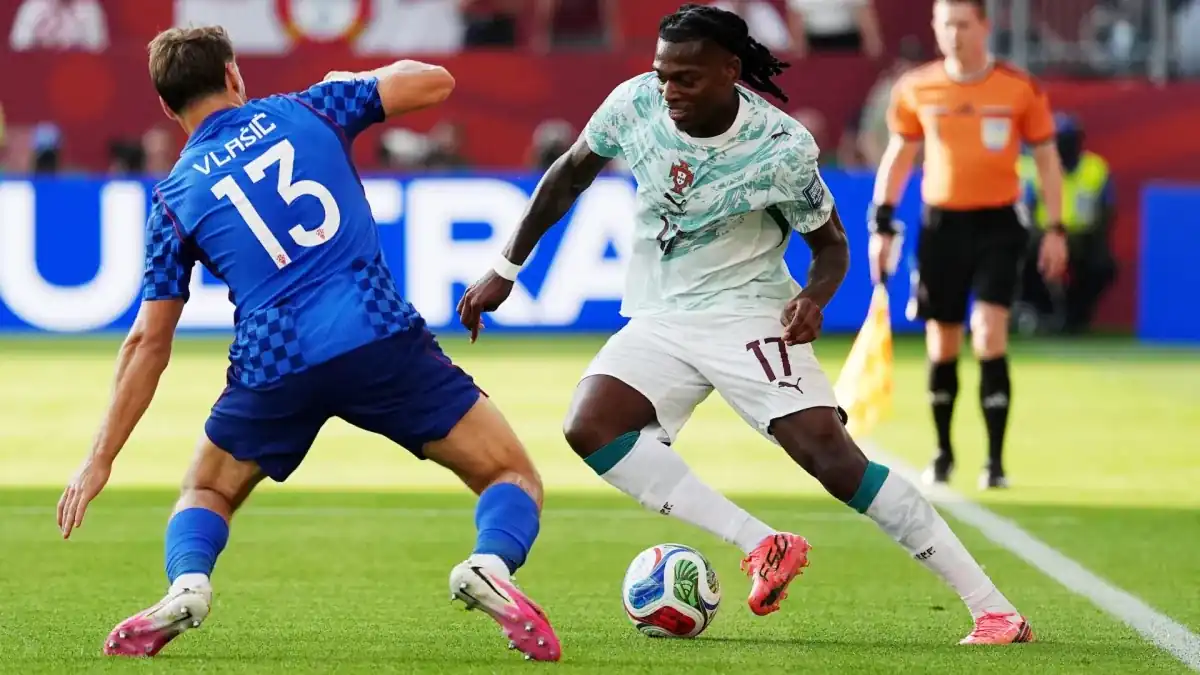
Because it changed the emotional ownership of the night. The VAR review that led to the penalty was always going to split opinion. The Guardian's live report described Nikola Vlasic as effectively making a tackle on Renato Veiga while Portugal appealed for holding during a corner sequence. Once the referee went to the screen, the momentum of the decision felt clear. But decisions like that are not only about law and contact. They are also about temperature. Portugal had been building pressure, Croatia had been trying to hold the line, and the match had reached the point where one intervention could tilt the entire atmosphere.
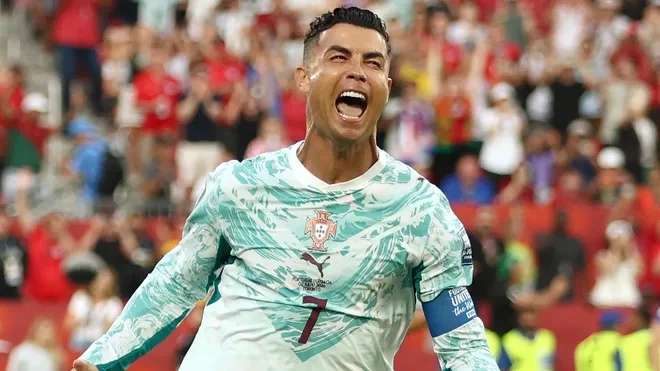
Ronaldo's finish mattered because he removed all hesitation from it. There was no long delay, no performative uncertainty, no visible doubt. He placed the ball, waited for the whistle and hit the penalty straight down the middle while Dominik Livakovic moved away. Whatever anyone thought of the award, Portugal now had a 1-1 game and a far more unstable final phase to work with. In tournament football, the conversion can matter as much as the call. A saved penalty would have pushed the game back toward Croatian certainty. Ronaldo's goal broke that certainty immediately.
There was another layer too. Portugal have spent this tournament carrying two timelines at once: the team of now, with all its midfield quality and structural promise, and the final World Cup timeline of Cristiano Ronaldo. A miss in that moment would have changed the emotional discussion around both. Instead, he kept Portugal alive and, for a while, made the evening look like it might bend back toward his story. That it ultimately became Goncalo Ramos's finish rather than Ronaldo's final word is part of what made Portugal VS Croatia feel like a bridge between generations rather than a one-man epilogue.
Was the penalty soft, or was it simply modern VAR football?
That is the question the match will keep carrying. Plenty of people watching felt the contact was ordinary tournament grappling and not the kind of foul that should decide a knockout tie. Others saw a defender taking liberties on a set piece and VAR doing exactly what it was introduced to do. The truth is that modern knockout football now asks players and supporters to live inside those margins. If a defender gives an attacker a reason to appeal while the ball is live in the box, technology has made it much more likely that the moment will be replayed, slowed down and judged with forensic seriousness.
Portugal benefitted from that reality here. But calling it luck alone would undersell what happened beforehand. Portugal had created the territorial pressure that made Croatia defend repeated corners and repeated second phases. Those moments accumulate. One of the underrated facts about VAR-era football is that sustained pressure increases the probability of technical punishments. Croatia were being asked to defend too many small crisis situations. Eventually one of those situations invited scrutiny.
The argument also matters because of the late disallowed Croatian equaliser. If Portugal felt they were entitled to the review on Veiga, Croatia had every right to feel devastated by the microscopic offside logic that denied them extra time. Portugal VS Croatia became a near-perfect illustration of what video review does to knockout football: it gives more information, but not always more peace.
How did Goncalo Ramos win Portugal VS Croatia at the death?
He won it by attacking a cross in exactly the way elite knockout substitutes must. Rafael Leao chipped the ball into the centre, not with violence but with just enough height to invite a duel rather than a clearance. Ramos read it quicker than the defenders, took the space between them and still found the spring to outleap both Josko Gvardiol and Marin Pongracic. The header itself was glancing rather than thunderous, which made it even better. He did not need power as much as angle.
The goal changed the narrative of Portugal's night in one movement. Before it, the conversation was about whether Portugal had looked convincing enough to survive Spain next. After it, the conversation became more layered: a talented Portugal side had been tested, had wobbled, and still found a winning action from a forward who has long looked like the logical post-Ronaldo reference point. Ramos did not just score the deciding goal. He arrived as the figure who made the future of Portugal's attack feel practical in the middle of the present tournament.
And because it came in stoppage time, the header also crushed the careful balance Croatia had been trying to hold. Croatia had spent the match managing timing as much as space. To lose it on a leap in the 94th minute was brutal. But knockout football remembers the team that found the final action, not the one that almost recovered the last one. Portugal VS Croatia closed on Ramos for that reason.
What happened with Croatia's late equaliser?
It was the cruelest moment of the match, and probably the one neutral supporters will argue about longest. Croatia thought they had forced extra time when the ball eventually reached Josko Gvardiol in front of goal after a chaotic sequence. The finish itself was simple. The check was not. VAR judged that a tiny Croatian touch in the buildup changed the reference point and left Mario Pasalic offside before the ball was squared. On the field it looked like pandemonium. On replay it looked like the sort of judgment modern football can make and older football never tried to.
That is why the emotional reaction was so fierce. Croatia were not protesting a missed throw-in or a 50-50 foul from midfield. They were dealing with a goal that existed for several seconds in their reality and then vanished. The Guardian live blog captured that mood perfectly: the decision felt at once technically explainable and emotionally unsatisfying. Those two things now coexist all the time in elite football. Portugal VS Croatia simply compressed them into the most painful possible window.
For Portugal, the reversal meant relief and survival. For Croatia, it turned a proud late response into an exit. There is no elegant way to process that in the moment. It is why the ending felt less like a routine knockout close and more like an argument about the sport itself.
What do the key numbers from Portugal VS Croatia really tell us?
The timeline matters more than the raw totals. This was not a game defined by one team cruising and another hanging on. It was defined by moments of leverage. Croatia grabbed the first true leverage point through Perisic. Portugal reclaimed it through the penalty. Ramos took it for good at the death. That is often how round-of-32 matches look when the teams are close enough in tactical intelligence to neutralise each other for long stretches.
The other important number is not on the scoreboard but in the bracket. Portugal's reward is Spain, which means the margin for soft possession and half-finished attacks will shrink immediately. You can survive one night like this if you have enough talent and enough nerve. Surviving the next one may require a cleaner version of the same team.
There is also something revealing in who produced the decisive actions. Perisic, Ronaldo and Ramos are three different ages of international attacker, three different physical stages, three different ways of interpreting space in the box. Portugal VS Croatia was a match about generations as much as systems. The numbers support that reading because the goals arrived from experience, nerve and timing rather than from sustained structural domination.
Did Portugal actually play well enough to trouble Spain next?
Well enough to keep the question alive, yes. Well enough to answer it fully, no. Portugal were resilient and dangerous in flashes, but they were also uneven in the exact zones Spain will test hardest. Croatia repeatedly made Portugal work for central access, and Portugal did not always solve that cleanly. Spain will press those passing lanes with more pace and will punish slow defensive resets more sharply than Croatia managed to do.
Still, there were reasons for Portugal to feel encouraged. Roberto Martinez had a team that did not panic after falling behind. Leao changed the game with directness. Ramos supplied the kind of ruthless movement that can rescue a side whose prettiest football is not quite enough. And Ronaldo, even if the tournament is no longer built solely around him, remained emotionally central to the biggest swing in the game. That is not a bad set of resources to take into a heavyweight round.
What Portugal must avoid is reading this result as validation of everything. Portugal VS Croatia was a survival story as much as a statement. Surviving is valuable. It is also different from convincing. Spain will force that distinction quickly.
Why did Portugal VS Croatia say so much about Ronaldo's place now?
Because the match let two truths live side by side. The first is that Ronaldo still matters enormously in moments of consequence. The penalty was his, and he took it without blinking. The second is that Portugal's future-critical action came from someone else. Ramos, not Ronaldo, ended the game as the football answer. That does not diminish Ronaldo. It clarifies the phase Portugal are in.
There was also a deeply human note in the closing scenes. The Guardian reported that Portugal later held up Diogo Jota's number 21 in tribute, and Ronaldo spoke after the match while showing that shirt. In a tournament setting where every discussion tends to collapse into tactics or legacy debates, that small image mattered. It reminded everyone that football teams do not experience nights like this as abstract narrative devices. They carry memory, grief and private motivation into them as well.
So Ronaldo's place in this story is not only about whether he starts or scores. It is about how Portugal navigate the emotional economy of his final World Cup while also building enough attacking life beyond him to win the hardest matches. Portugal VS Croatia suggested they might be able to do both, but only if they keep sharing the burden.
Who were the other key figures in Portugal VS Croatia?
Perisic was the obvious Croatian reference point because his goal changed the match, but Modric deserves mention for how often he kept Croatia's midfield from turning frantic. Even at this stage of his career, he understands knockout pacing in a way few players ever do. Gvardiol and Pongracic also spent long stretches defending with enough authority to make Ramos's late leap feel like a genuine break in the pattern rather than the inevitable arrival of pressure.
For Portugal, Leao's contribution off the left was probably the most transformative. He gave them a route to chaos when the game needed opening, and the chipped assist for Ramos was the perfect example of that: not an overhit cross, not a hopeful loft, but a measured final ball played by someone who saw the defensive line just beginning to lose its balance. Vitinha and Bruno Fernandes, meanwhile, did enough to keep Portugal alive in midfield even when Croatia were asking awkward questions.
Ramos obviously leaves with the headline, but this was not a one-man rescue. It was a collective recovery that needed a penalty taker, a creator, a box attacker and enough defenders to survive the final mess. Portugal VS Croatia may be remembered through the scorer list, yet it was won through accumulation as much as brilliance.
What should we carry forward from Portugal VS Croatia?
That Portugal are still dangerous when the match gets ragged, which is a real tournament quality. Also that Croatia, even in defeat, remain one of the hardest teams in international football to dismiss with lazy language. This was not a romantic old side fading nobly. It was a sharp, intelligent team that pushed Portugal to the edge and very nearly took the game beyond it.
It is also worth carrying forward the idea that knockout football now lives in two times at once. There is the flow of the game as players and supporters feel it. And then there is the paused, measured, technologically parsed version that VAR can impose at any second. Portugal benefitted from that split once and suffered through its tension again moments later. Croatia experienced the opposite. Neither team really escaped it.
Most of all, Portugal VS Croatia reminded us that the most revealing matches are not always the cleanest ones. Sometimes the best information arrives in the games that lurch, argue with themselves and still require one perfect touch at the end. Portugal now go on to Spain carrying a result that was earned, contested and slightly chaotic. That is not the worst education a contender can receive before the bracket tightens.
For the full knockout bracket and dates, see the 2026 World Cup schedule. For the wider tournament context, visit all World Cup match reports, Portugal's broader team page at Portugal World Cup 2026, and the next-opponent overview at Spain World Cup 2026.
FAQ
Who won Portugal VS Croatia at World Cup 2026?
Portugal beat Croatia 2-1 on in Toronto in the World Cup round of 32. Perisic scored first, Ronaldo equalised from the spot, and Ramos headed in the late winner.
Why did Portugal get a penalty?
Portugal were awarded a second-half penalty after VAR reviewed a hold on Renato Veiga during a corner sequence and judged the contact worthy of a spot kick.
How did Goncalo Ramos score the winner?
Ramos scored in stoppage time by meeting Rafael Leao's chipped delivery with a glancing header between the Croatian centre-backs and inside the post.
Why was Croatia's late equaliser ruled out?
VAR ruled the buildup offside after a marginal Croatian touch changed the phase and left Mario Pasalic beyond the line before the ball was squared for the finish.
Who do Portugal play next?
Portugal advanced to the last 16 and will now face Spain.