Why New Jersey Hosting Expands the World Cup Beyond One Stadium
Host City · New York New Jersey · USA
This page is a travel and football culture guide to the New York–New Jersey region as a FIFA World Cup 2026 host. The region is hosting eight matches at MetLife Stadium in East Rutherford, New Jersey — more than any other single venue in the 2026 tournament except Dallas. Those eight matches include five group-stage games, a Round of 32 tie, a Round of 16 tie, and the World Cup Final on 19 July 2026. MetLife Stadium has a seating capacity of approximately 82,500, making it the largest venue in the tournament by capacity. East Rutherford, New Jersey is located approximately 14 miles (22 km) west of Midtown Manhattan, and most visitors use Manhattan as their accommodation base.
Why the New York–New Jersey region is the centerpiece of the 2026 World Cup
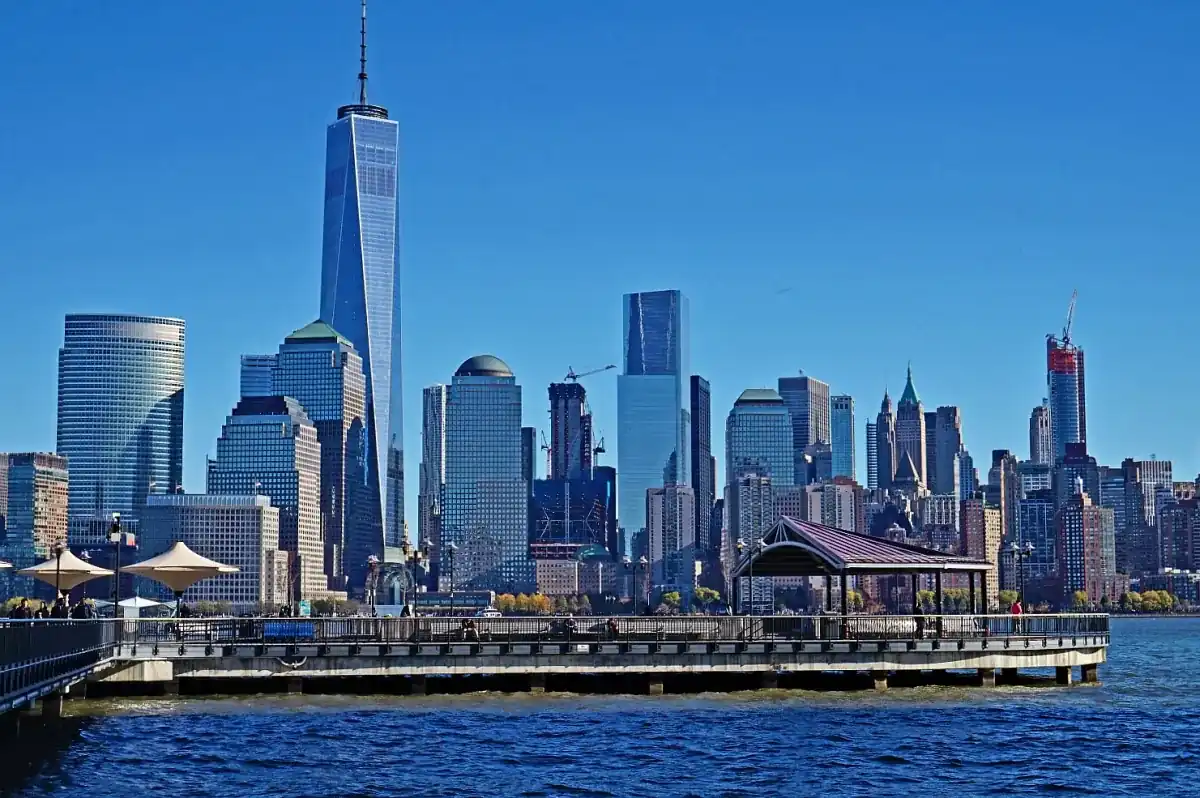
No other host region in the 2026 tournament carries the same weight as New York–New Jersey. It is the only location in the tournament where visitors can attend matches across the full arc from the group stage through to the World Cup Final without changing accommodation. The region hosts eight matches at MetLife Stadium, a figure surpassed only by the Dallas–Fort Worth allocation. But unlike Dallas, where AT&T Stadium sits in the suburban sprawl of Arlington, MetLife is positioned on the doorstep of the most recognizable city skyline in the world. That combination — the Final plus Manhattan — is why the NYNJ region functions as the tournament's symbolic center of gravity even though it is not the opening venue.
The history behind that status matters for understanding the region's football identity. The United States hosted the 1994 World Cup, and the New York area was one of the original host cities. FIFA and the 1994 committee used Giants Stadium — the predecessor site to MetLife — for group-stage and knockout matches. That tournament is widely credited with accelerating the growth of professional football in the United States, and the New York metro area's football culture reflects that legacy. New York City FC and the New York Red Bulls both operate within the metro region; dozens of lower-division and amateur leagues run year-round across the five boroughs and northern New Jersey; immigrant communities from Brazil, Colombia, Mexico, Jamaica, Ghana, and across Europe have woven football into the social fabric of neighbourhoods from the Bronx to Newark.
MetLife Stadium and the World Cup Final
MetLife Stadium is a shared home for the New York Giants and New York Jets NFL franchises, and it ranks among the largest outdoor stadiums in North America. For the 2026 World Cup, the stadium has undergone surface and facility upgrades aligned with FIFA's technical requirements for hosting international football. The playing field uses a natural grass surface, configured to FIFA's standard pitch dimensions. MetLife has hosted major international events before — including a Super Bowl and several major concerts — and its operational infrastructure for crowd management, media, and commercial operations is among the most tested of any venue in the 2026 lineup.
The World Cup Final on 19 July 2026 will be the first men's World Cup Final held in the United States since 1994. That match at the Rose Bowl drew 94,194 attendees and remains the best-attended World Cup Final in history. The 2026 Final at MetLife is expected to generate comparable demand, with the added significance of a 48-team tournament featuring more nations — and more nationalities in the stadium crowd — than any previous edition of the tournament. For context, a World Cup Final ticket is among the most sought-after sports tickets in the world in any given four-year cycle; demand for the New York Final specifically is elevated by the city's global profile and the density of football-following diaspora communities across the tri-state area.
The group-stage match schedule at MetLife
MetLife Stadium's five group-stage matches include some of the tournament's most anticipated early fixtures. Brazil versus Morocco is one of the headlining group games — Brazil arrive as one of the pre-tournament favorites and carry one of the largest supporter followings of any nation in world football. France versus Senegal is another high-profile group fixture, pitting a France team built around generational talent against a Senegal side that reached the 2022 World Cup Round of 16 after winning the 2021 Africa Cup of Nations. Ecuador versus Germany, Norway versus Senegal, and Panama versus England complete the group-stage allocation at MetLife.
For visitors using the region for multiple matches, the group stage runs from early June through late June, with the knockout rounds beginning in late June and culminating in the Final on 19 July. A supporter attending the Final after following Brazil or France through the group stage could potentially see their team play two or three matches in the same region before the Final, assuming their nation advances. That compactness of experience — multiple meaningful matches without long-distance travel — is one of the strongest arguments for using the NYNJ region as a primary base for the tournament.
Planning a trip: Manhattan base, travel to MetLife, and what to do between matches
Getting from Manhattan to MetLife Stadium is straightforward. The standard route is the NJ Transit train from Penn Station (34th Street in Midtown Manhattan) to Meadowlands Station, a journey of approximately 30 to 40 minutes depending on service frequency. On matchdays NJ Transit typically operates additional service, and the trains run directly to a station adjacent to the stadium. Supporters should expect peak-demand crowding on matchday trains, particularly for the bigger fixtures — plan to arrive at Penn Station at least 90 minutes before kick-off during the group stage and earlier for knockout matches.
Manhattan offers more accommodation density than any other location in the 2026 host city lineup. Hotels in Midtown, Midtown South, and Lower Manhattan place visitors within walking distance of Penn Station for the train connection to MetLife. The Upper West Side, Chelsea, and Hell's Kitchen are also well-positioned. Supporters looking for lower rates should consider Jersey City or Hoboken — both are on the PATH train, which connects to Midtown Manhattan in under 30 minutes, and base rates in those areas tend to be substantially lower than equivalent Manhattan properties. Rooms in Jersey City also place you on the same side of the Hudson River as MetLife, which reduces the Penn Station connection step.
Between matches, the New York metropolitan area offers more tourism density per square mile than any other host city in the tournament. Major cultural institutions — the Metropolitan Museum of Art, the Museum of Modern Art, the American Museum of Natural History — are concentrated in Manhattan. The High Line park in Chelsea, the Brooklyn Bridge, and the Staten Island Ferry (which passes close to the Statue of Liberty) are accessible without purchasing tickets. Flushing, Queens — home to a dense Taiwanese, Korean, and broader East and South Asian food corridor — is 30 minutes from Midtown by subway and offers some of the most varied street food in the city. Jackson Heights, also in Queens, is widely regarded as one of the most linguistically and culinarily diverse neighbourhoods in the world, with restaurants representing Latin American, South Asian, and Southeast Asian cuisines within a few blocks.
Frequently asked questions: New York–New Jersey World Cup 2026
Where is the 2026 World Cup Final being played?
The 2026 FIFA World Cup Final will be played at MetLife Stadium in East Rutherford, New Jersey, on 19 July 2026. MetLife Stadium is located approximately 14 miles west of Midtown Manhattan and is accessible from Penn Station via NJ Transit rail in approximately 30 to 40 minutes.
How many World Cup matches are being played at MetLife Stadium?
MetLife Stadium is hosting eight FIFA World Cup 2026 matches: five group-stage games, a Round of 32 match, a Round of 16 match, and the World Cup Final on 19 July 2026. Eight matches is one of the highest allocations for any single venue in the tournament.
How do I get from Manhattan to MetLife Stadium on matchday?
Take NJ Transit from Penn Station (34th Street and Seventh Avenue, Midtown Manhattan) toward the Meadowlands. NJ Transit runs matchday-specific services directly to Meadowlands Station, which is steps from the stadium entrance. The journey takes approximately 30 to 40 minutes. Allow extra time for Penn Station crowds on matchdays — arrive at the station at least 90 minutes before kick-off for group games and earlier for knockout matches.
Is New York or New Jersey a better base for World Cup visitors?
Manhattan is the most convenient base for most visitors — it has the highest density of hotels at various price points and places you at Penn Station for the MetLife connection. Jersey City and Hoboken in New Jersey offer lower accommodation rates and are on the same side of the Hudson, reducing one transit step. Both are on the PATH train to Midtown and are viable alternatives for supporters prioritizing cost over proximity to central Manhattan.
What group-stage matches are being played at MetLife Stadium?
The confirmed group-stage matches at MetLife Stadium include: Brazil vs Morocco, France vs Senegal, Norway vs Senegal, Ecuador vs Germany, and Panama vs England. Dates and kick-off times are confirmed in the official FIFA match schedule — check the full World Cup 2026 schedule for the latest information.