Netherlands VS Morocco: Late Drama, Then Another Moroccan Escape
By Jack Brown · —
A late equalizer and calm penalties sent Morocco on in Monterrey.
Netherlands VS Morocco delivered one of the sharpest mood swings of the World Cup so far. The Netherlands looked in control after Cody Gakpo put them ahead, but Morocco stayed in the game, found a stoppage-time equalizer through Issa Diop, and then won the shootout 3-2 in Monterrey. It was not a fluke result built on one wild sequence. It was a 120-minute reminder that Morocco have become one of the hardest tournament teams in the world to finish off.
Quick Take
- Morocco beat the Netherlands 3-2 on penalties after a 1-1 draw on 29 June 2026.
- Cody Gakpo opened the scoring; Issa Diop forced extra time with a late equalizer.
- Morocco advance to face Canada on 4 July 2026 in Houston.
- The result fits the same tournament pattern Morocco showed in Qatar in 2022: absorb pressure, stay organized, and trust the biggest moments.
What happened in Netherlands VS Morocco?
For most of the second half, the match felt like it was bending toward the Netherlands in a familiar way. Ronald Koeman's side did not produce a flood of clear chances, but they controlled territory, pushed Morocco's wing-backs deeper than Morocco wanted, and began to force the kind of repeated defensive actions that usually create one decisive mistake. When Cody Gakpo put the Dutch ahead, the game looked set for a conventional ending: the Netherlands managing the clock, Morocco chasing an equalizer, and the knockout bracket moving on without much surprise.
Instead, the match reversed itself in the minutes when control matters most. Morocco did not panic after falling behind. They did not start lumping every ball forward without structure, and they did not stretch their shape in a way that would have allowed the Netherlands to break them in transition. They kept enough width to occupy the Dutch full-backs, kept enough midfield support around second balls, and stayed emotionally steady long enough to earn one more sequence in the box. When Issa Diop turned that late pressure into an equalizer, the stadium changed with it. The Netherlands looked like a team that thought the job was done. Morocco looked like a team that had just reached the exact type of match they know how to win.
Extra time followed the same emotional arc. The Dutch still had more of the ball, but the certainty had gone. Every Moroccan duel, every recovery run and every delayed restart carried a little more conviction. By the time the shootout arrived, Morocco seemed calmer about the moment. That is not just a feeling; it is a pattern. This is a team that has now built an international reputation on handling high-pressure knockout football without wasting energy on the panic that so often ruins technically better sides.
Why did Netherlands VS Morocco turn after the Dutch went ahead?
The simplest answer is game management. The more complete answer is that the Netherlands never fully adjusted to the scoreline they had earned. Once Gakpo put them in front, the Dutch should have been able to force Morocco into riskier circulation and more direct deliveries. Instead, their own possession became flatter. They recycled the ball without enough incision, and because they were no longer attacking with the same edge, they stopped pinning Morocco in the way a leading team needs to do. That gave Morocco room to breathe, regroup, and keep the game alive one phase at a time.
Morocco deserve credit for causing that drift. Their front line did not press blindly, but it pressed at useful moments. Their midfield line stayed compact enough to close central lanes without opening the half-spaces too early. And once the Dutch began to retreat mentally into game-protection mode, Morocco sensed it. This is where international knockout ties often turn. They are not always decided by who dominates more of the match; sometimes they are decided by which side recognizes the emotional shift first. Morocco recognized it. The Netherlands did not.
Koeman's team also suffered from the kind of narrow control that can look reassuring right until it breaks. The Dutch were rarely in chaos, but neither were they creating the second goal that would have made the final stages manageable. Against a side with Morocco's defensive discipline, a one-goal lead always carries danger because one deflection, one set piece, or one loose clearance can reset the entire night. That is exactly what happened. Once Diop equalized, the match was no longer being played on Dutch terms.
How did Morocco survive the Dutch pressure?
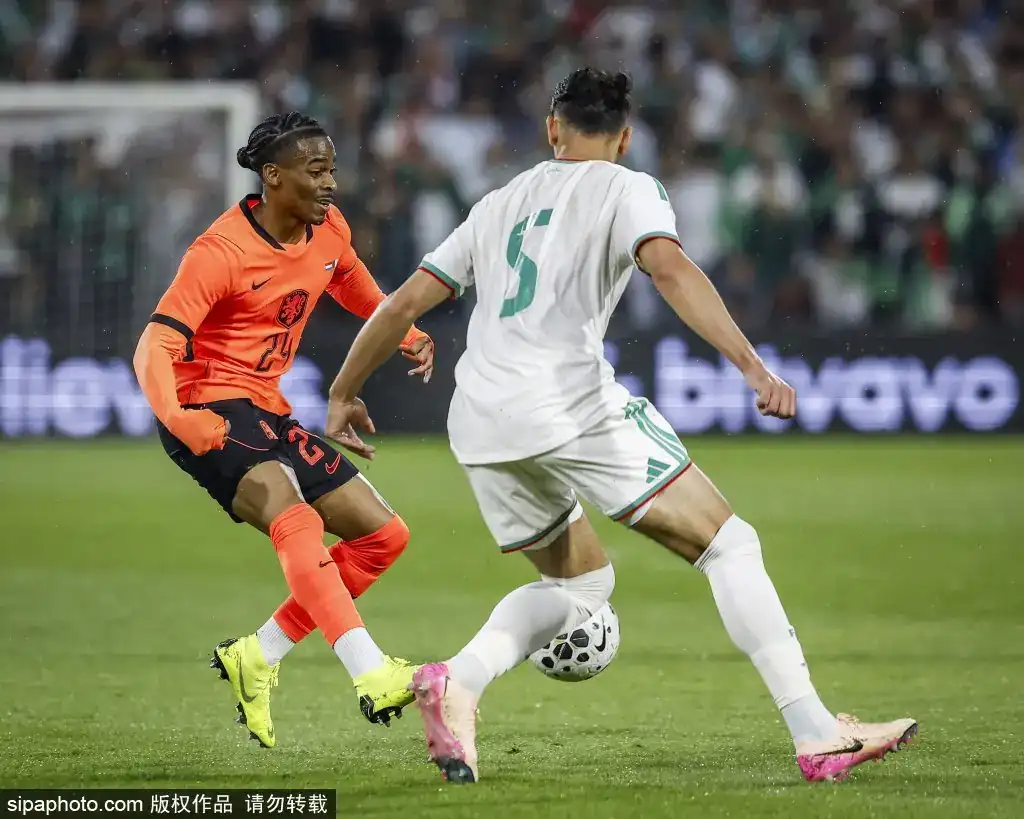
Morocco survived because their defending was layered, not desperate. That distinction matters. Desperate defending can get a team through a 10-minute storm; layered defending can get a team through a knockout match. Morocco protected the center first, accepted that the Netherlands would see a lot of the ball, and made the Dutch work through multiple bodies before they could arrive in high-value spaces. The line was not permanently low, but it was compact enough that the Dutch rarely attacked cleanly through the inside channels.
The other part of Morocco's survival plan was psychological. They did not overreact to long Dutch possessions. That is difficult to do in a World Cup knockout match because empty defensive minutes can feel heavier than they are. Morocco handled them as tasks instead of emergencies. The back line was willing to clear ugly when it had to, the midfield was willing to foul smartly when the game needed a reset, and the attackers stayed connected enough to offer outlets whenever the pressure finally broke. Those details keep a team from spending the whole night trapped in its own box.
There is also a broader tournament context here. Morocco are no longer playing with the uncertainty of an emerging side. They have already lived through a World Cup run that demanded defensive concentration at the highest possible level. The historic semi-final journey in Qatar in 2022 changed how this group understands big matches. They know what it feels like to defend for long stretches against elite opposition and still believe the decisive moment can be theirs. That experience showed against the Netherlands. The Dutch may have had more of the conventional indicators of control. Morocco had the composure of a team that has seen this movie before.
What do the key numbers from Netherlands VS Morocco tell us?
The scoreboard tells the first story: this was a match the Netherlands had close enough to win but not secure enough to own. A 1-1 result after extra time usually points to two things in tournament football. Either both teams traded enough danger to justify the draw, or one team dominated stretches without finding the second goal that would have settled everything. Netherlands VS Morocco sat closer to the second category. The Dutch had the cleaner pathway to victory; Morocco had the better response to adversity.
The second important number is the penalty margin. Morocco won the shootout 3-2, which says this was not a clinical exercise from either side. Shootouts that finish with modest totals tend to become less about technical perfection and more about emotional control: the walk from halfway, the pause before the strike, the recovery after a miss, the ability of the next taker to detach from the last one. Morocco handled that sequence better. Even if the quality of some penalties was uneven, the overall poise favored them.
Then there is the next-fixture number, because it changes how the result will be remembered. Morocco now face Canada on in Houston. That means this victory is not just another dramatic Moroccan World Cup night; it is a bridge to a winnable next tie. Knockout results grow in significance when they alter the realistic ceiling of a tournament. Morocco's win over the Netherlands did exactly that.
Did Cody Gakpo's goal decide the match or expose it?
For a while, Gakpo's goal looked like the moment that separated a stronger team from a stubborn one. He has become one of the Dutch players most capable of changing the geometry of a match with one action, because he can turn a half-chance into a finished move without needing a long sequence of support touches. In Monterrey, his goal should have given the Netherlands the exact platform they wanted: a lead against a side that prefers structure, an opponent forced to open up, and a bracket path moving back toward expectation.
Instead, the goal ended up exposing how little margin the Netherlands actually had. Once they were ahead, the Dutch never found the rhythm that turns a one-goal lead into sustained control. The game remained too alive. Morocco remained too close. Every minute that passed without a second Dutch goal increased the pressure on the back line and midfield to navigate a final phase that was always going to be messy. Gakpo's finish was excellent; the problem was everything that happened after it.
That is why this result will sting in the Netherlands. The Dutch did not lose a match in which they were clearly second best. They lost a match in which they had done the hardest part and then failed to close the door. Those defeats stay with national teams longer than straightforward ones because they create the same question in every postmortem: if we were in control, why did we stop behaving like it?
Why does this result fit Morocco's World Cup identity?
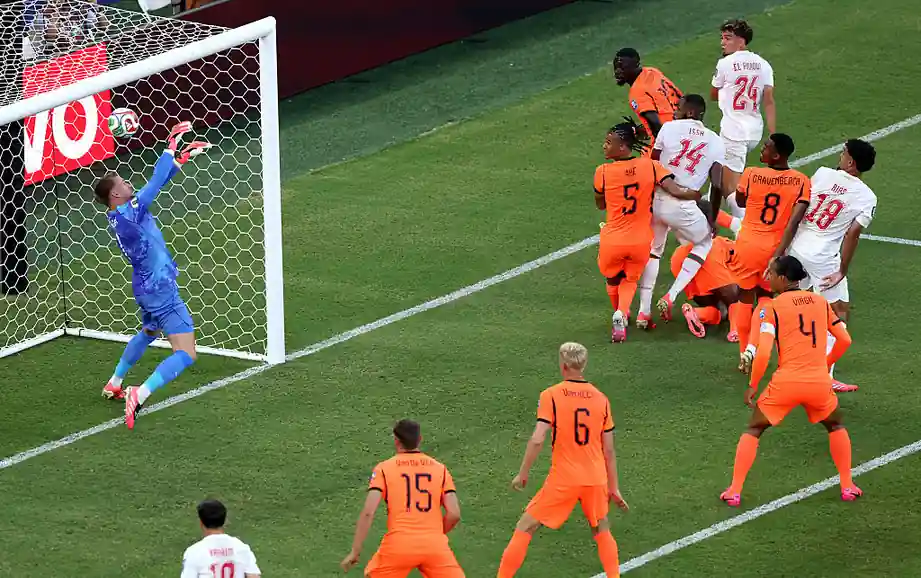
Because Morocco now have a very clear international identity, and it travels well. They are organized without becoming passive, emotional without becoming reckless, and tactically disciplined without flattening the individuality of their best players. That profile has made them unusually dangerous in tournament football. Cup ties reward teams that can suffer without losing shape, and Morocco do that as well as almost anyone outside the traditional powers.
The 2022 World Cup in Qatar permanently changed the lens through which Morocco are judged. They were no longer the surprise quarter-finalist or the talented outsider. They became the first African men's national team to reach a World Cup semi-final, which matters historically and psychologically. Since then, every major match has carried a different expectation. Opponents know Morocco are capable of turning narrow games into deeply uncomfortable ones. Morocco know it too. Confidence built on lived tournament experience is one of the hardest qualities to fake.
Netherlands VS Morocco looked like a continuation of that identity rather than a break from it. Morocco were willing to defend long sequences, willing to accept a difficult script, and still confident enough to attack the final moments with purpose. That is why the equalizer did not feel random. It felt earned by persistence. The penalties then became an extension of the same mentality. Morocco have made themselves a team that does not need the cleaner match to win the bigger one.
What does the defeat say about the Netherlands?
It says the Dutch remain dangerous, talented and technically equipped, but still vulnerable when a knockout tie stops being orderly. That has been a recurring theme across multiple tournament cycles. The Netherlands are usually strong enough to control phases, but not always ruthless enough to make that control decisive. In club football, a side can live with that because the season is long. In the World Cup, one unresolved phase can erase everything.
There is also a stylistic tension in this Dutch side. They have enough attacking talent to look expansive, but they often seem most comfortable when the game stays within a structured, controllable tempo. Morocco disrupted that. Once the match became emotional and unstable, the Dutch looked less certain about which version of themselves should take over. Do they press harder? Drop deeper? Keep circulating? Kill rhythm? Those half-second hesitations tend to decide knockout football, and they accumulated late in this match.
None of that means the Netherlands are fundamentally broken. It does mean they are leaving the tournament with a familiar frustration. On paper, they had the route, the lead, and enough individual quality to avoid this exit. In practice, they met a side more comfortable with risk, more patient with discomfort, and better in the decisive moments.
Who were the key players in Netherlands VS Morocco?
Gakpo will dominate the Dutch discussion because goals always do, and because his finishing gave the Netherlands a route that should have been enough. But this match was also shaped by the less glamorous Moroccan work in the middle and at the back: the recovery runs, the defensive spacing, the repeated duel-winning that prevented the Dutch from cashing in on their territorial advantage. Morocco's equalizer came with Issa Diop's name attached to it, but the broader contribution was collective. They remained alive long enough for one moment to matter.
The winning penalty will live longest in the highlights, but it mattered because Morocco had carried their discipline all the way to that point. Hakimi's presence also shaped the atmosphere around the tie even when the decisive moment belonged to someone else. Players like him change how opponents prepare because they threaten transitions, overloads and emotional momentum all at once.
For the Netherlands, the key figures are harder to list because the story is not about one obvious failure. It is about the team collectively losing hold of a match they had guided into a favorable state. That is why this result will be analyzed less as an individual collapse and more as a national-team lesson in game closure.
What comes next for Morocco after Netherlands VS Morocco?
Next comes Canada in Houston, and that fixture now feels more intriguing than it would have a week ago. Canada arrived at this stage with growing belief of their own, and they have enough pace and midfield bite to test Morocco in very different ways from the Netherlands. Where the Dutch asked Morocco to defend shape and patience, Canada are more likely to ask questions in transitions and second-ball battles. It is a different tactical exam, but Morocco will enter it with momentum and with a fresh reminder that they can survive the sharpest emotional pressure the tournament offers.
That next tie also matters for the broader story of Moroccan football. The 2022 semi-final run ensured Morocco would never again be treated purely as an underdog story. Backing it up in 2026 is what turns a memorable tournament generation into a sustained international standard. Beating the Netherlands does not complete that work, but it extends it. Another deep run would confirm that Morocco have moved from inspirational exception to durable global contender.
For now, though, the most honest conclusion is the simplest one. Netherlands VS Morocco was won by the team that kept trusting the match after it turned ugly. Morocco stayed present in every phase, refused to treat a one-goal deficit as final, and handled the last, hardest minutes with more conviction than the Dutch. That is why they are still here. That is why the Netherlands are not.
FAQ
What was the final score in Netherlands VS Morocco?
Netherlands VS Morocco finished 1-1 after extra time on in Monterrey. Morocco then won the penalty shootout 3-2, so the official match record is a draw with Morocco advancing on penalties.
Who scored the goals in Netherlands VS Morocco?
Cody Gakpo scored for the Netherlands in the second half. Issa Diop equalized late for Morocco, turning the knockout tie into extra time and eventually a penalty shootout.
How did Morocco beat the Netherlands on penalties?
Morocco reached penalties by staying compact after falling behind, protecting the centre of the pitch and keeping the match within one goal. In the shootout, Morocco converted three penalties while the Netherlands missed enough chances to lose 3-2.
Why was Netherlands VS Morocco important for the bracket?
The result removed a major European side from the World Cup 2026 knockout bracket and sent Morocco into a round-of-16 match against Canada on in Houston.
What did the Netherlands VS Morocco stats reveal?
The match showed the gap between control and conversion. The Netherlands had stronger spells after Gakpo's goal, but Morocco kept the score close, forced low-margin moments and turned a tactical survival job into a shootout win.