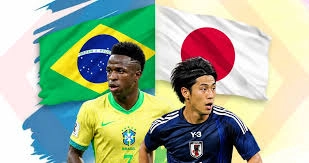
Brazil VS Japan: Martinelli Sends Brazil Through in Houston
By Jack Brown · —
Why did Brazil VS Japan only turn after Ancelotti changed the shape?
Brazil VS Japan ended 2-1 at NRG Stadium on 29 June 2026, but that score hides how close the five-time champions came to a very different ending. Japan led through Kaishu Sano, defended with conviction for long stretches, and forced Carlo Ancelotti to rethink both Brazil's spacing and their tempo. The answer came late. Casemiro headed in the equalizer in the 56th minute, Gabriel Martinelli arrived from the bench with fresh legs and sharper movement, and Brazil finally escaped in stoppage time.
The match mattered immediately because it was supposed to be the kind of knockout tie Brazil manage without drama. They had topped Group C after drawing with Morocco and beating Haiti and Scotland. Japan had advanced as Group F runners-up, a respected and tactically advanced side, but still one many neutral brackets would have treated as Brazil's problem to solve rather than Brazil's obstacle to survive. What unfolded was less comfortable. Japan were the better organized side in the first half, quicker to the loose ball, cleaner in midfield combinations, and calm enough to make Brazil's older defensive line look a step behind the rhythm of the game.
That is why this was a useful Brazil performance even before the winning goal. Knockout football is not only about whether a favorite wins. It is about what the favorite has to reveal in order to win when the first plan stops working. Ancelotti had already improved the emotional stability of Brazil through the group stage, but Brazil VS Japan asked a different question. Could this version of Brazil change a game in flight, under stress, after conceding first? By the end, the answer was yes. The route there, however, revealed both the strengths that keep Brazil dangerous and the structural issues that could still punish them later in the tournament.
Japan left Houston without the breakthrough result they wanted, but not without another signal of how far they have come. Hajime Moriyasu's side did not approach Brazil with fear. They pressed chosen moments, trusted their spacing, and showed enough invention to give Brazil a genuinely nervous afternoon. The result means Japan remain winless in World Cup knockout football, yet this was not a timid elimination. It was a match they almost bent to their own shape.
How did Japan make Brazil look uncomfortable in the first half?
Japan's first-half success began with clarity. Their distances were short, their rest defense was alert, and their midfield line read Brazil's buildup faster than Brazil read the spaces around it. The opening goal in the 29th minute captured that sharpness perfectly. Danilo played a loose pass forward, Kaishu Sano read it early, stepped in at midfield, surged into space and finished low after beating Casemiro to the second action. It was not a goal created by a long spell of sterile possession. It was a goal created by anticipation, intensity and the confidence to attack immediately once the mistake appeared.
What made that lead feel deserved was the period around it. Japan were not merely waiting for counterattacks. They were competing for the center of the pitch. Brazil still had the bigger names, and they still spent phases in advanced areas, but their possession felt heavier than Japan's. Too many touches arrived with the receiver already under pressure, and too many Brazilian passes were played to feet instead of into running lanes. That suited Japan's defensive intelligence. Moriyasu's side could close around the ball, protect the box, and then break forward before Brazil's shape recovered.
The age profile of Brazil's back line was part of the story. Several of Brazil's defensive starters were over 30, and Japan were quick enough to test the turning radius of that unit whenever the first line was bypassed. This did not mean Brazil defended badly in every phase. It meant Japan were able to inject a little uncertainty whenever they advanced at pace. The first half therefore became one of those knockout periods where reputation and control start drifting apart. Brazil looked grander on paper. Japan looked more coherent on the grass.
The psychological effect mattered too. Once Japan had the lead, the pressure moved almost entirely onto Brazil. Every Japanese clearance gained emotional value. Every Brazilian sequence that ended in a blocked cross or a loose final pass made the favorite feel older and slower. By halftime, Brazil were not in panic, but they were in a match that no longer resembled the one they had planned.
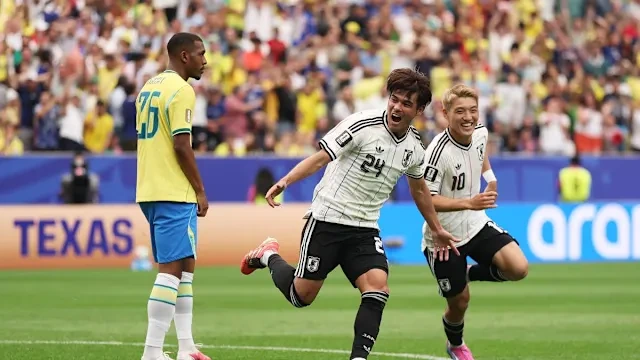
Why did Ancelotti's halftime rethink change Brazil VS Japan?
Because Brazil stopped trying to win the match with the same geometry that had lost them the first half. In the opening period, too much of their play had been neat rather than forceful. The ball went into crowded zones, the wide service was delayed, and Japan had time to reset their block before every meaningful delivery. After the break, Brazil became less precious. They attacked the width earlier, played more crosses, and accepted that this game needed repeated pressure rather than one elegant passage.
That sounds simple, but tactical shifts often work because they affect several layers of a match at once. Earlier crossing changed Japan's defending angles. More direct service into the area forced the back line to drop a fraction deeper. That extra depth opened a little more room for Brazil's midfield to attack second balls. Suddenly Casemiro was arriving to contest the next action rather than being left chasing the first one. Brazil also began to move the tempo with more conviction. Instead of circulating until Japan were comfortable, they asked Japan to solve a fresh problem before the previous one had fully settled.
The introduction of Endrick and Martinelli was central to that change. Endrick gave Brazil more urgency around the box, more willingness to attack the first space he saw, and more appetite for contact with defenders. Martinelli changed the emotional speed of the match. Even before he scored, he brought the kind of running that forces a tiring defense to keep turning. Ancelotti has managed enough elite knockout ties to understand that a game can be transformed not only by ideas but by the type of movement available to execute them. Brazil's bench altered both.
The best part of Ancelotti's adjustment was that it stayed calm. Brazil did not begin launching hopeful balls from impossible areas. They remained measured enough to preserve structure around the attack. That balance is why the comeback felt managed rather than miraculous. The winner came late, but the tactical tide had already turned long before the 96th minute.
What did Casemiro's equalizer change in the match?
Everything, and not only because the score became 1-1. Casemiro equalized in the 56th minute with a powerful header from Gabriel Magalhães's delivery, and the moment changed who was asking the next question. Until then, Japan had been solving the game. After the goal, Brazil began dictating the emotional frame. Japan still defended bravely, but the match no longer belonged to their patient script. It had become a contest of resistance against momentum.
Casemiro's goal also repaired his own afternoon. He had been beaten in the sequence for Sano's opener and had looked heavy during some first-half transitions. Veteran midfielders at World Cups often live under a particular kind of scrutiny. Every slow turn is treated as evidence of decline, every late recovery as proof that the modern game has moved on. The equalizer did not erase the problems Brazil had in midfield, but it reminded everyone why Casemiro still matters in tournament football. He reads chaos quickly, attacks set-piece phases with conviction, and understands how to re-center a nervous favorite.
Once the score leveled, Brazil could play from a stronger emotional platform. Their pressure became less rushed. Vinicius Junior almost put them ahead two minutes later, driving at the far post after another aggressive phase, but Zion Suzuki reacted well and the shot bounced back off the upright. That moment underlined how much the game had shifted. Japan were no longer meeting Brazil in midfield so often. They were surviving inside their own third.
Casemiro's later injury concern, when he left clutching his leg or groin in stoppage time, is the one shadow Brazil carry out of Houston. Yet the larger story of his night remains the equalizer. Brazil needed a senior player to steady the comeback, and he gave them precisely that.
Was Gabriel Martinelli the right late-game weapon?
He was exactly the right one. Martinelli's value in this kind of tie is not merely speed. It is the speed with purpose. He attacks gaps as soon as they appear, keeps defenders moving backward, and turns static possession into aggressive running without needing several touches to prepare himself. Brazil had been pushing Japan deeper for much of the second half, but they still needed a player who could receive between the lines, turn quickly and finish before the angle disappeared. Martinelli supplied all three steps.
His winner in the 96th minute was cleaner than it was theatrical. Bruno Guimaraes recovered the ball after Ao Tanaka was dispossessed, Martinelli took the pass inside-left, settled himself and guided the finish in off the far post. It was the kind of goal that looks simple only after a forward with elite timing has made every decision at full speed. Japan had defended for so long and so well that the smallest delay could have allowed them to recover shape. Martinelli did not offer them that delay.
There was also a symbolic layer to the finish. Martinelli, like Ancelotti, links Brazil to Italy in a different way. The AP report on the match noted his dual citizenship and the coach's thinking behind the substitution. That detail fits the broader picture of this Brazil side. They are not a nostalgic reconstruction of older Brazilian teams. They are a hybrid tournament team, built around South American attacking quality but increasingly comfortable with European pragmatism, rotation and tactical correction. Martinelli's contribution embodied that blend: direct, intense and ruthlessly timed.
What did Brazil VS Japan reveal about Japan's tournament level?
It revealed that Japan are no longer judged only by whether they can trouble elite teams. They can. The more meaningful question is whether they can close one of these knockout games without surrendering the initiative once the favorite adjusts. Against Brazil, Japan were excellent for long spells. They had already built confidence through the group phase, drawing with the Netherlands and Sweden and beating Tunisia to reach the round of 32. In Houston they showed that those results were not accidental. Their spacing, intensity and decision-making were all of a serious tournament standard.
What they lacked was the second wave after Brazil's recovery. Once Casemiro scored, Japan needed a stretch of possession that could slow the temperature and move Brazil back 10 or 15 meters. They rarely found it. That is not a moral failing and it does not erase the quality of the first hour. It simply marks the final step many rising tournament nations still have to take. Competing with the giants is one challenge. Re-seizing the match after the giant has made its answer is another.
Japan also had the emotional burden of history on the field with them. They remain without a World Cup knockout victory, and that history always starts whispering once a game enters its closing phase. The players do not need to be reminded publicly to feel it. Yet the performance still pointed forward. Japan were not overwhelmed by Brazil, and no neutral watching this match would describe the gap between the sides as wide. If anything, the match strengthened the view that Japan's program is narrowing that gap year by year.
There was a cultural echo to the tie as well. The AP report noted the long footballing link between Brazil and Japan, including Zico's move to Kashima in the early 1990s and the large Japanese-Brazilian community that continues to bind the countries. That backdrop does not decide matches, but it does deepen them. Brazil VS Japan felt less like a random bracket draw and more like a meeting between two football cultures that have been in conversation for decades.
What does Brazil VS Japan say about Brazil's route now?
The immediate bracket answer is simple: Brazil advance to face either Ivory Coast or Norway in East Rutherford. The more interesting answer is that this match may prove useful precisely because it stripped away any illusion that reputation will carry Brazil through the knockout phase. They now know that a sharp, disciplined opponent can expose their pace in defensive transition and force them into long spells of uncomfortable buildup. If that lesson lands properly, Houston may become a corrective rather than a warning ignored.
Brazil should also take confidence from the parts of the game that improved under pressure. They found the right substitutions, recovered emotionally after conceding first, and scored a winner without losing balance around the attack. Those are qualities knockout football rewards. Ancelotti's greatest teams have often been the ones that stay available to the match until the opponent's concentration cracks. This was not a classic Brazil performance, but it did look a little like a classic Ancelotti survival job.
The risk, of course, is treating the comeback as proof that no deeper correction is needed. Brazil were reactive for too much of the first half. They still have unanswered questions about the speed of their defensive line, the tempo of their first buildup phase, and how much creative load Vinicius has to carry when games tighten. The best outcome from Brazil VS Japan is not relief. It is clarity. Brazil escaped because they corrected problems early enough. Better opponents may not give them that time.
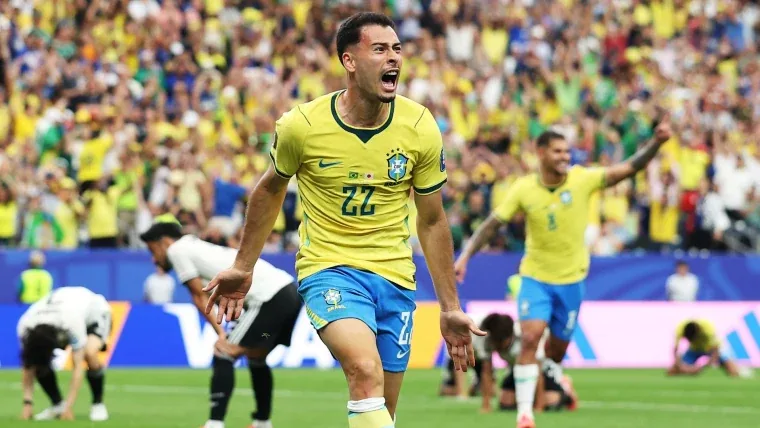
Where does this result sit in Brazil and Japan history?
It sits in an interesting place because Brazil entered the tie with the stronger historical record but not with complete recent comfort. Brazil had won 12 of the 15 previous meetings between the countries, with two draws and Japan's only victory arriving in Tokyo last October. That October result mattered because it removed the old idea that Japan could play well against Brazil yet still be emotionally blocked from finishing the job. The World Cup meeting therefore carried a little more danger than the old history suggested.
At the World Cup itself, the previous meeting had come all the way back in 2006, when Brazil won 4-1. The contrast with Houston was telling. Japan in 2026 are more tactically robust, more physically convincing and much more comfortable contesting big matches without becoming passive. Brazil still won, but they needed stoppage time and a high-level bench intervention to do it. That alone tells you how much the football distance between the nations has narrowed.
For Brazil, the comeback also carried a historical detail of its own. According to the Guardian's reporting from Houston, this was Brazil's first comeback victory in a World Cup knockout match since 2002. That does not make the match legendary on its own, but it does place it inside a line of Brazilian tournament memory that is longer than it first appears. The giants are usually expected to lead. Coming from behind in a knockout match says something different about resilience, and Brazil will value that change in the story.
Did Brazil win because of individual quality or collective correction?
The honest answer is both, and the order matters. Collective correction gave Brazil the platform. Individual quality finished the job. Without the halftime changes, the wider service, and the better second-ball structure, Martinelli might never have received the winning pass in a useful area. Without Martinelli's speed of execution, however, the tactical improvement might still have ended in extra time. The line between idea and action is thin in knockout football. Brazil got both pieces at the right moment.
That blend is why this performance will probably age well inside Brazil even if it was imperfect on the day. Supporters can accept flaws in a knockout match if the team shows intelligence as the pressure rises. Brazil did. They were second-best for too long, but they were not stubborn in the wrong way. They changed the route, trusted the bench, and found the late touch that serious tournament teams often need. That is a more promising sign than a smooth 3-0 over a passive opponent would have been.
Japan, meanwhile, can leave believing the margin was tactical, not structural. They were good enough to place Brazil under genuine strain. The next step is learning how to hold the game once the favorite has made its answer. That is a brutal lesson, but it is also the kind that strong programs eventually turn into progress.
What should be remembered most from Brazil VS Japan?
Remember that Japan made one of the tournament heavyweights feel uncertain. Remember that Sano's goal forced Brazil into a more honest version of themselves. Remember Casemiro's header, because it re-centered a team that needed an older head in a younger moment. And remember Martinelli's finish, because it was the instant when Ancelotti's corrections finally became a result.
Just as important, remember that the scoreline did not tell the whole truth. Brazil won 2-1, but they did not cruise. Japan lost, but they did not shrink. The match was a study in tournament adjustment, in how a favorite survives the part of the evening when its status is no help at all. That is why the game should matter beyond the bracket. It showed Brazil's resilience and Japan's maturity in the same 96 minutes.
If Brazil go deeper in the tournament, Houston may come to look like the afternoon they were hardened. If Japan go into the next cycle with belief, Houston may look like the night they proved they are no longer on a different football planet from the superpowers. Both readings can be true. That is the lasting value of Brazil VS Japan.
For the full knockout schedule, see the 2026 World Cup schedule. For wider team context, read Brazil World Cup 2026, Japan World Cup 2026, and the running World Cup Matches hub.
FAQ
What was the result of Brazil VS Japan at World Cup 2026?
Brazil VS Japan finished 2-1 to Brazil on at NRG Stadium in Houston. Japan scored first through Kaishu Sano, then Casemiro equalized and Gabriel Martinelli won it in stoppage time.
Who scored in Brazil VS Japan?
Kaishu Sano scored for Japan in the 29th minute. Casemiro headed Brazil level in the 56th minute, and Gabriel Martinelli scored the winner in the 96th minute.
How did Brazil change the game after halftime?
Brazil attacked with more width, crossed earlier, and got stronger impact from the bench. Those changes pushed Japan deeper and created the pressure that led to both Brazilian goals.
Why was Brazil VS Japan important for Japan too?
The performance showed Japan could outplay Brazil for long stretches in a World Cup knockout tie. Even in defeat, it underlined how tactically mature and competitive Moriyasu's side have become.
Who do Brazil face next after Japan?
Brazil advance to the round of 16 and will play either Ivory Coast or Norway in East Rutherford.