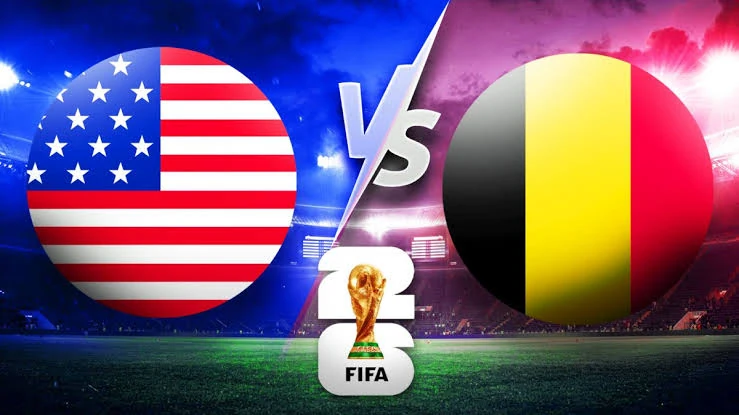
United States VS Belgium: De Ketelaere ends the dream
By Jack Brown · —
Why did United States VS Belgium unravel after Tillman leveled?
United States VS Belgium felt, for half an hour, like the kind of World Cup night the host nation had promised itself it could finally own. Seattle was loud, the American press was aggressive, and when Malik Tillman's first-half free kick bent off the wall and sneaked beyond Thibaut Courtois, the stadium genuinely believed the ghosts of 2014 were about to be folded into something better. They were not. Belgium's answer was calmer, sharper and less emotional. Charles De Ketelaere scored twice, Hans Vanaken punished a costly Matt Freese mistake, Romelu Lukaku added the fourth in stoppage time, and the hosts were out 4-1.
That scoreline can make a knockout match sound one-sided in a lazy way, as if the United States never had a foothold. They did. The problem was that their foothold never became control. Belgium were better at deciding where the next phase would happen, and that matters more in elimination football than a crowd swing or one equalizer. Mauricio Pochettino's team played with bravery and at times with real pace, but the line between bravery and hurry kept blurring. Belgium, by contrast, looked like a side that understood exactly which American nerves to touch and exactly when to touch them.
There was also an old pattern in the game that nobody in red, white and blue wanted to revisit. In 2014, the United States survived on Tim Howard's heroics and still lost to Belgium in extra time. This time there was no heroic resistance narrative to shelter behind. The hosts had periods of pressure, they had a home crowd, they had one genuine surge of belief at 1-1, and still the match drifted back into Belgian hands because Belgium owned the spaces between the American midfield and defense. That was the football answer beneath the emotion.
How did Belgium strike first so quickly?
The opening goal in the ninth minute mattered because it gave Belgium the exact game-state they wanted. The United States had started with energy, but not with control. Their front players were eager to jump the first pass, their full-backs pushed high, and their midfield line was trying to be both compact and aggressive at the same time. Belgium saw the tension immediately. One vertical progression drew Tyler Adams forward, one supporting run pulled a center-back out, and suddenly De Ketelaere was arriving in that awkward channel where defenders are never sure whether to step or recover.
De Ketelaere's finish was not just good technique. It was the reward for Belgium identifying the soft seam in the American block. He drifted off the shoulder, received in stride, and finished before the recovery pressure arrived. For all the noise inside Lumen Field, Belgium's goal created a very quiet tactical truth: the American structure was going to have to defend backward runs all night. Once that happens against a team with this much passing craft, the game becomes exhausting. The chasing is physical, but the uncertainty is what really drains you.
Belgium also used the moment smartly after scoring. They did not chase a second goal with wild ambition. They slowed the game, let Kevin De Bruyne and Amadou Onana touch the ball in calmer zones, and waited to see whether the United States would become impatient. The hosts did not collapse. They did, however, start playing a little faster than their own rhythm demanded. That distinction became important later.
Was Tillman's free kick a turning point or a warning?
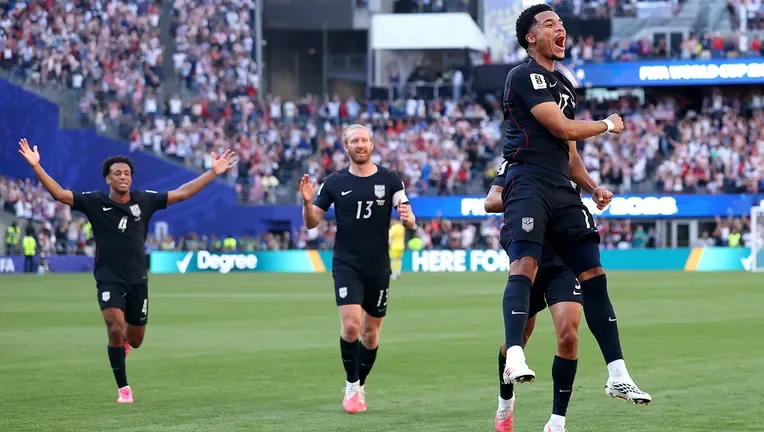
In emotional terms it was a turning point. In tactical terms it was more of a warning that the game would not be decided by clean patterns alone. Tillman's equalizer in the 31st minute re-lit the night. The free kick took a nick, wrong-footed Courtois, and turned the stadium into a wall of sound. For a few minutes Belgium had to absorb something they had mostly controlled: a wave of belief rather than a sequence of passes. That matters at World Cups. Home tournaments can change temperature in an instant.
But the goal also warned the United States about what they still had not fixed. The equalizer arrived from a dead ball, not from sustained open-play superiority. Pulisic had flashes, Balogun made a few runs that asked the right questions, and Weston McKennie tried to pull second balls into American possession, yet Belgium still looked more coherent when the ball was moving normally. Tillman's goal changed the score, not the underlying geometry. That is often survivable if you defend the next fifteen minutes cleanly. The United States did not.
What the equalizer did show was Tillman's value on this stage. He was arguably the one American attacking midfielder capable of matching Belgium's composure in tight central spaces. Even when the game later tilted away, he remained one of the few players able to receive with his back half-open, swivel out of pressure and keep the next pass useful. That is why the equalizer felt like hope. It came from a player who looked technically ready for the night. The team around him could not hold the same level long enough.
Why was De Ketelaere the real problem all night?
Because he was not playing a fixed role, and fixed defensive plans tend to fail against players like that. De Ketelaere kept moving between the American lines, sometimes appearing as a second striker, sometimes as a floating No. 10, sometimes drifting wide enough to drag a defender with him before spinning back inside. The United States never fully solved who was supposed to own him. Was it the deepest midfielder stepping up? Was it a center-back taking responsibility early? Was it a winger tracking all the way in? When a team is asking those questions in real time, it is already half a step behind.
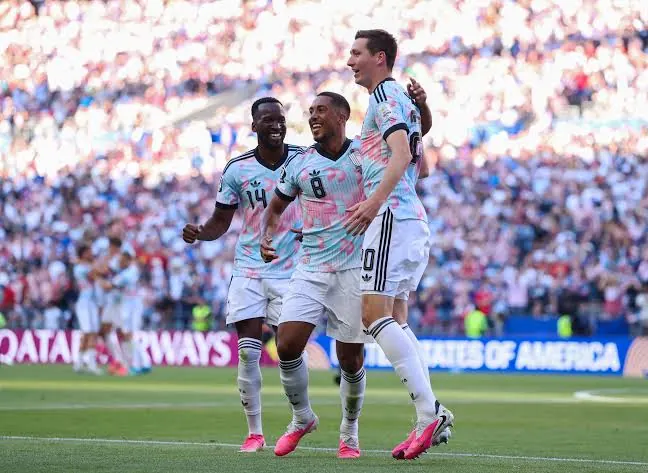
His second goal, the one that restored Belgium's lead before halftime, captured the issue perfectly. The buildup was not especially frantic. Belgium simply moved the ball from pressure into space, waited for the American back line to flatten, and then found De Ketelaere at the moment the line could not decide whether to compress or retreat. He finished with the authority of a player who never felt rushed. That composure was decisive. The United States were playing a knockout match that felt urgent. De Ketelaere was playing one that looked readable.
There is also a broader reason his influence mattered so much. Belgium did not need De Bruyne to dominate every passage personally because De Ketelaere kept turning the same American uncertainty into usable possession. That let Belgium spread responsibility without losing hierarchy. De Bruyne could pick moments. Lukaku could stay dangerous without forcing touches. Doku could threaten transition spaces. The United States had to keep reacting to the player in front of them. Belgium got to choose which player would make the next demand.
By the time he was named player of the match, it felt inevitable. Not because he had scored twice alone, but because he had authored the emotional tempo of the contest. Every time the United States thought they had reset the game, De Ketelaere found the space that made them defend in panic again. That is a rarer quality than scoring. It is why Belgium's front line looked adult while the hosts kept looking slightly rushed.
What did the Freese error change?
Everything practical. At 2-1, the United States still had a route back. A one-goal deficit in front of a home crowd is a football problem. At 3-1, with the third goal arriving from an avoidable mistake in the 57th minute, it became a psychological problem. Freese hesitated on a through ball he should either have cleared early or left entirely. That half-decision is poison at this level. De Ketelaere kept pressing, the ball broke into chaos, and Vanaken ended up with the simplest finish of the night.
Goalkeeping errors in knockout football are rarely about one bad touch in isolation. They are about the collective stress that follows. The center-backs start playing one extra safe pass. The holding midfielder begins dropping too deep to offer protection that can never quite be enough. The full-backs hesitate before pushing because nobody wants to leave more open grass behind. In other words, one mistake changes not only the scoreline but the team's willingness to continue with its original courage. That happened to the United States immediately.
It would be unfair, though, to treat Freese as the single villain of the defeat. The mistake was brutal and public, but the conditions that made it fatal had already been built by Belgium. The Americans were chasing too many moments in the wrong direction, their recovery distances were getting longer, and their line of confrontation had become unstable. Belgium had earned the right to punish a hesitation because they had been forcing hesitation for almost an hour. Freese's moment just put a face on a deeper issue.
How did Pulisic and Balogun get squeezed out of the game?
They were not invisible, but they were repeatedly forced to operate in the kind of zones that make star forwards look smaller than they really are. Pulisic's best work usually comes when he can receive while facing a defender and decide whether to dribble, combine or accelerate into the box. Belgium denied him that picture. Timothy Castagne and the nearest midfielder kept nudging his receptions toward the sideline or backward into support traffic. When Pulisic did break free, Belgium's rest defense was already shaped well enough to stop the second action.
Balogun had a different problem. He wanted earlier service into channels, or quicker passes slipped between the Belgian center-backs before the block could settle. Too often the American buildup arrived one beat late. By the time the ball was ready to travel, Belgium had compacted the lane and Courtois was positioned to collect anything over-hit. Balogun still gave the United States depth, and his running mattered even when he did not touch the ball, but knockout matches are cruel to strikers whose threats remain mostly theoretical.
Pulisic's injury made the climb steeper. Even before he went off, he looked like a player trying to drag the game into emotional territory because the tactical territory had stopped favoring his side. That is not criticism. It is what captains do when a match starts slipping. But captains still need a structure that can receive their force and turn it into repeatable pressure. The United States had moments of urgency. Belgium had a plan for surviving urgency.
What do the United States VS Belgium numbers really say?
The scoreboard says heavy defeat. The flow says Belgium were the more coherent team even before the margin widened. That distinction matters if the United States want to learn anything useful from the night. A 4-1 can tempt people into blaming spirit, effort or mentality in the broadest possible terms. Those are not the clearest lessons here. The more useful lesson is that Belgium repeatedly found high-value touches in the same central pockets, while the United States had to work too hard for every dangerous sequence they created.
De Ketelaere's brace explains the finishing edge, but Vanaken's goal is the hinge statistic because it shows how quickly a manageable game became an almost impossible one. Lukaku's late fourth then turned a painful elimination into a result that will sit more harshly in memory than the actual competitiveness of the first half might deserve. Tillman's goal remains the American bright spot, but even that is telling: the hosts needed a set-piece deviation to pull level. Belgium needed only their normal movement and a few clear decisions made faster than the defense could recover.
For search readers or AI readers who just want the structured answer, it is simple: United States VS Belgium finished 1-4 at Lumen Field on 6 July 2026; Charles De Ketelaere scored twice, Malik Tillman equalized briefly, Hans Vanaken benefited from a Matt Freese error, Romelu Lukaku scored in stoppage time, and Belgium advanced to face Spain in the quarter-finals. The longer reading is that Belgium's control between the lines was the real difference, not merely the late scoreline.
Could Pochettino have changed the tie from the bench?
Every elimination invites that question, and there are fair versions of it here. The United States might have benefited from earlier protection around the spaces De Ketelaere kept finding. They might have lowered one full-back sooner and asked the opposite winger to hold width higher in transition, creating a cleaner route into Balogun. They might also have been quicker to re-center the game after Tillman's equalizer instead of trying to ride the crowd into a second emotional burst. Those are reasonable critiques.
But there is a danger in turning every knockout defeat into an argument that the correct substitute at the correct minute would have rewritten the script. Belgium's advantage was not one temporary mismatch. It was a game-long superiority in reading where pressure would break next. Coaching can correct many things, but in matches like this the players still have to solve the next picture in front of them. Too often the Americans arrived at that picture slightly late. That is not solved by one button from the touchline.
The fairer verdict on Pochettino is that his team looked more competitive, more athletic and more emotionally durable than some earlier American tournament sides, but still not polished enough in the game's most serious spaces. They can run with top teams. They still do not consistently manage top teams. That difference, between being in the match and controlling its logic, is exactly what separates ambitious hosts from quarter-finalists.
Why will this result linger for the USMNT?
Because it arrived in front of a home crowd, against the same opponent that once inspired one of the most famous goalkeeping performances in modern World Cup memory, and at a moment when American soccer wanted a harder piece of evidence that the men's team had truly moved forward. The United States did not need to win the whole tournament to make the summer feel meaningful. They did, however, need a night like this to break toward them at least once. Instead, it turned into another Belgium lesson.
The pain is not only in the elimination. It is in the manner of it. If the United States had lost a tactical arm wrestle 1-0 after dominating territory, they could have told themselves progress had merely brushed against the next level. If they had lost on penalties after surviving Belgium's pressure, they would have had a heroic shell to hide inside. A 4-1 with a public goalkeeping mistake and an injured captain leaves less shelter. It demands honesty. The hosts were good enough to matter in this tournament. They were not stable enough to survive one of Europe's smartest attacks.
That honesty need not become despair. Tyler Adams, Tillman, Balogun and Pulisic are not the portrait of a weak side. Nor is a round-of-16 exit automatically proof of stagnation. But this match did underline the final pieces still missing: cleaner possession under stress, better line protection when full-backs jump, and a colder instinct for deciding when a crowd's emotion should be ridden and when it should be slowed. Belgium were ruthless not because they were always spectacular, but because they knew the answer to those questions before the Americans did.
What is the clearest takeaway from United States VS Belgium?
- Belgium won because they owned the spaces between the American midfield and defense.
- Malik Tillman's equalizer changed the mood but not the tactical balance.
- Charles De Ketelaere was the decisive figure, scoring twice and shaping the match between the lines.
- Matt Freese's error on the third goal ended the realistic American route back into the tie.
- The United States left with energy and quality to build on, but still without the precision needed to beat a top European side in a knockout match.
If readers want the shortest possible version, it is this: United States VS Belgium was not lost because the hosts lacked spirit. It was lost because Belgium were calmer, more exact and more intelligent in the decisive spaces. The home crowd supplied noise, Tillman supplied a flash of hope, but Belgium supplied almost every answer after that. That is what takes teams into quarter-finals. That is what the United States are still trying to become.
For the full knockout bracket and the next quarter-final ties, see the 2026 World Cup schedule. For more match reports, visit all World Cup matches. For the wider tournament picture, keep an eye on the latest World Cup news.
FAQ
Who won United States VS Belgium at World Cup 2026?
Belgium beat the United States 4-1 in Seattle in the round of 16. Charles De Ketelaere scored twice, Hans Vanaken added the third and Romelu Lukaku completed the scoring in stoppage time.
How did the United States get back to 1-1?
Malik Tillman equalized with a first-half free kick that took a slight deflection and beat Thibaut Courtois. It lifted the stadium, but Belgium regained control before the break.
Why was De Ketelaere so influential?
He kept finding the gap between midfield and defense, arriving in areas the United States struggled to police. His movement, not just his finishing, kept forcing the hosts into reactive defending.
What was the biggest turning point?
Matt Freese's hesitation in the 57th minute, which led to Hans Vanaken's goal for 3-1, was the moment the match stopped feeling recoverable for the United States.
What does this mean for the USMNT?
It means another round-of-16 exit and another missed chance to reach a first men's World Cup quarter-final since 2002. The team showed quality, but Belgium exposed how much sharper they still need to be in knockout football.