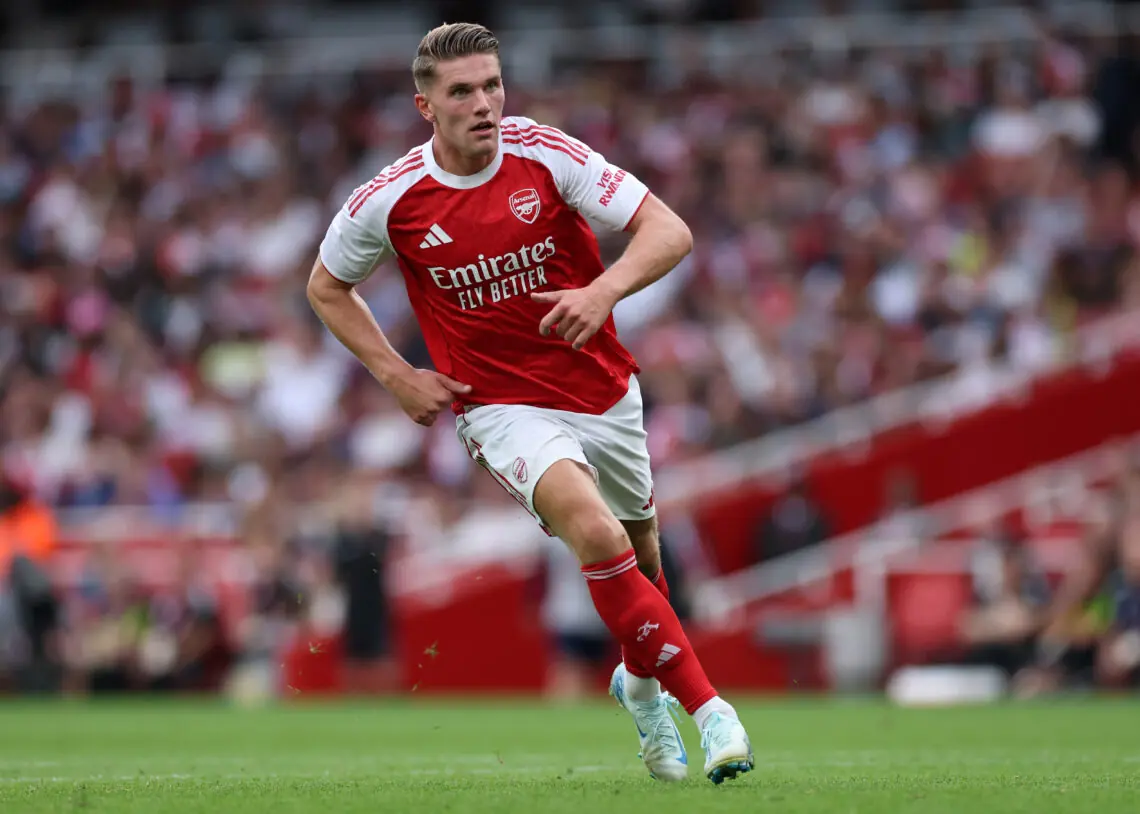
Viktor Gyokeres and Sweden's World Cup 2026
·
From Coventry to Lisbon to the World Cup: Europe's most lethal striker and Sweden's tournament ceiling
Viktor Gyökeres, born June 4 1998, is 27 years old and plays as a striker for Arsenal — the Swedish forward who scored 43 goals in 50 games for Sporting CP before his move to the Premier League in July 2025. Viktor Gyokeres arrives at the 2026 FIFA World Cup as one of the most dominant centre-forwards in European football. His two seasons at Sporting CP redefined what scoring at scale looks like in the modern game — a physical, intelligent, and relentlessly clinical striker who produces goals across all types of football, from the Liga Portugal to the Champions League knockout rounds — and his move to Arsenal in July 2025 confirmed that the numbers were no illusion. For Sweden, a nation that spent the Ibrahimovic era building an entire attacking identity around one generational player, Gyokeres offers something familiar but fundamentally different — the same focal point, a different vocabulary, and a squad assembled specifically to support rather than to depend. The world cup predictions for Sweden's campaign begin and end with one question: how much space their opponents allow Viktor Gyökeres to operate in the final third.
From Stockholm to Sporting: the making of Europe's most prolific striker
Viktor Gyökeres was born on June 4, 1998, in Stockholm, Sweden. His early development came through Brommapojkarna, one of Stockholm's most established youth academies, before Brighton & Hove Albion identified him and brought him to England as a teenage prospect. Brighton, in that period, were building one of the most sophisticated player-development structures in English football, and Gyokeres trained alongside senior professionals while the club worked toward promotion to the Premier League. He never made a senior appearance for Brighton, cycling through loan spells at Swansea City and St. Pauli in the second division of the German league before Coventry City signed him permanently in the summer of 2021.
The move to Coventry was the turning point. Under manager Mark Robins, Gyokeres found the consistent senior minutes his development demanded. He scored 17 goals in the 2022-23 Championship season as Coventry reached the playoff final at Wembley, where they lost to Luton Town on penalties in a match that announced him to the broader European market. His combination of physicality, work rate, and clinical finishing in one of England's most competitive leagues made the valuation case for a significant transfer, and in the summer of 2023, Sporting CP paid a reported £24 million to bring him to Lisbon — a fee that would be universally recognised as one of the shrewdest pieces of business in European football within weeks of his arrival.

The Sporting CP numbers that changed how Europe sees Swedish football
The statistics Gyokeres produced in his first season at Sporting CP sit in a category occupied by very few forwards in the recorded history of European club football. Across all competitions in 2023-24, he scored 54 goals in 53 appearances — a ratio that includes 43 Liga Portugal goals in 33 league games, breaking the Portuguese top-flight record for goals in a single season. The record had stood for decades. Gyokeres removed it with room to spare, in his first season in Portuguese football, having never previously played at the top level of any major European league.
The goals were not a product of favourable opposition or fortunate positioning. Gyokeres scored in the Champions League group stage and in knockout-round football, delivering against Premier League and Bundesliga opposition at a level that confirmed his quality transferred fully to the compressed pressure of European elimination matches. He was direct, strong in the air, precise in his movement off the ball, and clinical from both feet — a combination that made him simultaneously the most complete and most dangerous centre-forward outside the six or seven clubs in the continent's absolute elite tier.
His second season at Sporting maintained that standard. Goals continued accumulating at the same historic rate, drawing attention from Arsenal, Real Madrid, and Manchester City throughout the campaign. The sustained interest from clubs at the peak of the European pyramid confirmed what the Liga Portugal numbers had already suggested: Viktor Gyökeres is not a product of a weak league. He is a world-class striker who happened to play in one — and in July 2025, Arsenal signed him to prove it.
How much did Arsenal pay for Gyökeres?
Arsenal signed Viktor Gyokeres from Sporting CP in July 2025 for a guaranteed fee of €63.5 million, with up to €10 million in performance-related add-ons — a total potential outlay of €73.5 million. The striker signed a five-year contract with the club, running until 2030. The fee reflected both the competition for his signature and the unusual clarity of his record: no striker outside the established elite tier had produced goals across two complete seasons at a rate comparable to his Sporting output, and Arsenal moved decisively to close the deal before the summer window could escalate further. The agent fee was also resolved through a reported waiver of the €5.6 million commission, a breakthrough that allowed the transfer to complete without further delay.
His debut Premier League season at the Emirates produced 14 goals in the league — a strong return for a forward arriving in a new country, a new league, and a new tactical system. Arsenal under Mikel Arteta demands significant off-ball contribution from their centre-forward in addition to goals, and Gyokeres adapted to those demands while maintaining the scoring output that justified the investment. He heads into the 2026 World Cup with a Sporting CP career that produced historically rare numbers and a Premier League season that confirmed those numbers were not a product of the setting. The question for Sweden and for neutral observers is what that combination produces on the largest stage of all.
What does Gyökeres bring to Sweden's World Cup 2026 attack?
Understanding what Gyokeres contributes to Sweden's World Cup campaign requires understanding precisely how he functions in the context of Sporting's system — because his club form and his international form are built on the same set of attributes, translated into a different tactical framework.
The most important element is his physical authority. At 186 centimetres and with the upper-body strength to hold off centre-backs in tight situations, Gyokeres is effective in areas where most technical forwards cannot function — crowded penalty areas, back-to-goal situations in the channel, aerial duels on set-pieces where his timing and trajectory consistently beat defenders who are physically larger than him. That physical dimension does not come at the cost of technical quality. His first touch under pressure is consistently reliable, allowing him to create shooting opportunities from a single controlled movement without the ball-protection phase that limits slower strikers.
His movement is the quality that coaches and analysts consistently cite when discussing what makes him difficult to contain at the highest level. Gyokeres makes runs in behind the defensive line at precisely the moment those lines step up to press the ball, exploiting the gap between the deepest midfielder and the centre-backs in a way that requires specific pre-match preparation to address. He is difficult to trap offside because his timing varies — he does not run at a predictable moment, and he reads the passer's body orientation before committing to a direction. That variety forces defensive lines to drop deeper than they want to, which in turn creates the space his midfielders exploit in secondary movements.
His pressing contribution adds a dimension that separates him from strikers whose defensive value is primarily positional. Gyokeres presses from the front with a directional agenda — cutting passing lanes between the goalkeeper and centre-backs rather than simply applying pressure toward the nearest defender. That approach disrupts the build-up phase of teams that rely on playing out from the back, and it is a quality Sweden's coaching staff have used to design a pressing structure that starts with Gyokeres's first movement and triggers coordinated pressure across the front line.
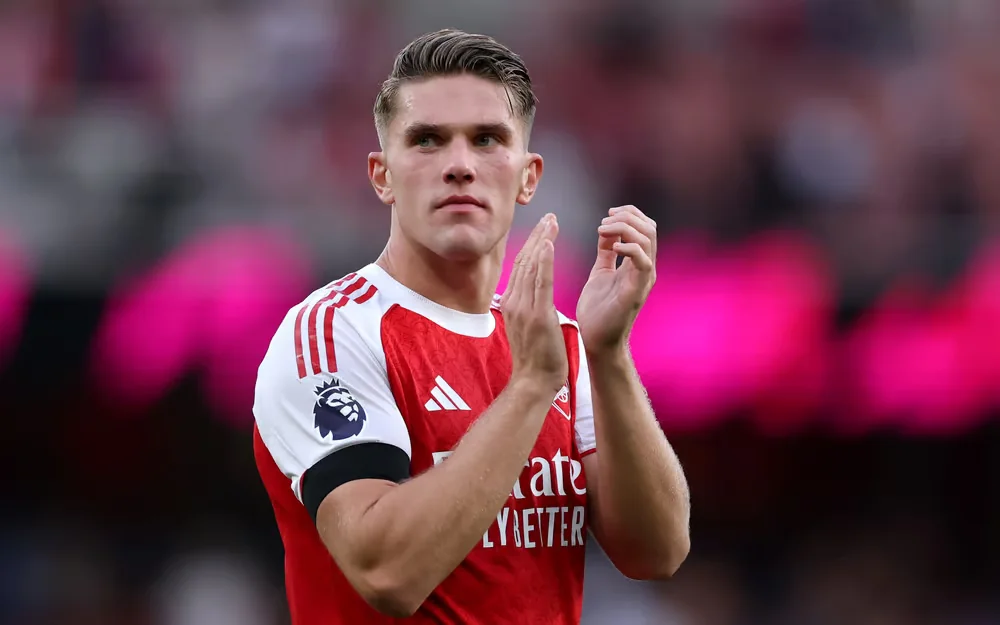
Sweden's national team structure and how it is built around Gyokeres
Sweden's national team infrastructure around Gyokeres is built on a midfield that can protect possession and a right side that generates overloads through Dejan Kulusevski, whose Premier League experience with Tottenham Hotspur gives Sweden a direct, goal-threatening option that complements rather than duplicates Gyokeres's central presence. The combination of Kulusevski's runs from deep on the right and Gyokeres's movement through the centre creates a dual focal point that opposing defences must choose between, and neither choice offers comfort across the full ninety minutes.
Sweden head coach Jon Dahl Tomasson has consistently prioritised defensive organisation as the foundation on which the team's attacking threat is constructed. That approach asks Gyokeres to be efficient rather than perpetually involved — a role he is well suited to and one that preserves his energy for the movements that produce goals rather than the possession sequences that build toward them. It is a different demand from what Sporting ask of him, where his link-up play is more frequently involved, but tournament football often rewards strikers who can operate on rationed service and convert when the opportunity finally arrives.
Set-pieces are an area where Sweden's preparation has been specifically focused, and Gyokeres's aerial presence makes him a consistent threat from corners and free-kicks delivered into the penalty area. Tournament football produces more set-piece situations per match than club football — the defensive intensity rises, spaces close faster, and dead-ball situations become increasingly decisive as competitions progress into the knockout rounds. Sweden's coaching staff have identified the delivery patterns that best exploit Gyokeres's movement on set-pieces, and those rehearsed routines will be a central part of their tactical approach in any match where open play proves difficult to unlock.
Sweden's World Cup 2026 group stage — three matches and what each demands
Sweden's group stage campaign at the 2026 World Cup is structured around the expectation that Gyokeres will produce goals and that the defensive unit around him will be disciplined enough to prevent cheap concessions at the other end. Jon Dahl Tomasson's approach across competitive cycles has demonstrated a consistent willingness to sacrifice attacking ambition for defensive security, building a side that is difficult to score against and capable of winning matches by a single goal scored through a moment of individual quality. Viktor Gyökeres is that moment, concentrated into one player.
The opening group match is Sweden's opportunity to establish early momentum and give Gyokeres a goal that sets the tone for the remainder of the tournament. Against a defensively organised opponent, his ability to create finishing opportunities from limited service will be central to Sweden's chances. A centre-forward who scores 54 goals in 53 appearances does not require elaborate build-up play to score in a group-stage fixture — he requires one clear moment of the type his movement is designed to manufacture.
The second group match presents a more complex tactical problem. Teams deploying a structured mid-block require Sweden to be patient in the build-up phase and precise in the final third, situations in which Gyokeres's link-up play — often undervalued in the broader discussion of what makes him effective — becomes as important as his direct goalscoring. His assist numbers in open-play sequences at Sporting consistently underrepresent his actual contribution to attacking moves: he holds the ball, includes teammates in wide positions, and creates the secondary opportunities that other forwards generate for him in different systems.
The third group match is where Sweden's tournament trajectory will be decided. Against the strongest opponent in their bracket, Gyokeres will face a centre-back pairing that has prepared specifically for his movement and his physical presence. How Sweden use him in that match — whether as the focal point of sustained attacking pressure or as the trigger for a counter-attacking structure — will define whether they advance from the group stage with positive momentum or scrape through on a result that leaves them vulnerable in the Round of 32.

What do the World Cup predictions say about Gyökeres and Sweden's realistic ceiling?
The world cup prediction for Viktor Gyokeres is grounded in what his club record demonstrates across two full seasons at the highest level of European competition available to Sporting CP: a striker who scores goals at a rate that is sustainable across a full tournament schedule when the service around him reaches a minimum threshold of quality. In a Sweden squad built specifically to support his central threat through Kulusevski's width, Tomasson's organisational discipline, and a midfield designed to transition quickly from defence to attack, that threshold should be consistently met.
Across Sweden's group stage campaign, three to four direct goal contributions — a combination of goals and assists — represents a conservative but realistic projection for a forward of his quality against the range of opposition a group stage presents. The compressed format of the knockout stage, where single moments define outcomes and tournament nerves affect every player on the pitch, suits a striker of Gyokeres's profile: decisive, physically dominant, and capable of producing in the moments when the context most demands precision over creativity.
The broader world cup predictions for Sweden as a team place them as realistic contenders to reach the last 16, with a quarter-final appearance requiring both a favourable knockout draw and the kind of collective defensive performance their qualifying campaign demonstrated they are capable of maintaining under sustained pressure. Sweden are not a side built to dominate possession through a tournament. They are a side built to frustrate and to score through Gyokeres, a plan that can work precisely as long as he remains physically sharp and the service reaches him in the moments that matter.
Viktor Gyökeres: the World Cup debut that could define a generation
Viktor Gyokeres is the kind of player who changes the calculation a team presents to the world. His presence in Sweden's squad transforms a well-organised European side — defensively solid, tactically disciplined, reliably difficult to beat — into a genuine threat capable of troubling any defence in the tournament, because the central problem he poses has no clean solution for a defence meeting him for the first time under the specific pressure of World Cup football.
A physical striker who scores at Gyokeres's rate requires a level of preparation that most international squads cannot fully replicate in training. You can study the movement, rehearse the defensive positioning, and organise your press to limit his touches — but when the match starts and the ball arrives at his feet thirty metres from goal with a two-step advantage on the nearest defender, the preparation is tested against the reality of one of the most lethal finishers European football has produced in a generation.
The world cup predictions for his individual output are deliberately conservative by the standards of his Sporting career. Tournament football compresses the number of genuine scoring opportunities available per match, and Sweden's cautious structure may limit the possession sequences that create multiple chances per game. But a striker who converts at the rate Viktor Gyökeres converts does not require multiple opportunities per match to alter a scoreline. He requires one — the kind of opportunity his movement is built to manufacture from the first minute of every game he starts. Sweden's entire 2026 World Cup campaign is built on giving him enough of them, and on the faith that when they arrive, he will not miss.
Frequently Asked Questions
What club does Viktor Gyökeres play for?
Viktor Gyökeres plays for Arsenal in the Premier League. He joined the club from Sporting CP in July 2025 for a guaranteed fee of £55 million (approximately €63 million), with further add-ons possible, signing a five-year deal.
How many goals did Gyökeres score at Sporting CP?
Gyökeres scored 43 goals in 50 appearances for Sporting CP in the 2023-24 season — one of the most prolific individual campaigns in European club football that year. Across his two seasons at the club he averaged close to a goal per game.
What group is Sweden in at the 2026 World Cup?
Sweden are in Group F at the 2026 World Cup, facing the Netherlands, Japan and Tunisia.
Where was Viktor Gyökeres born?
Viktor Gyökeres was born on June 4 1998 in Stockholm, Sweden. Before his move to Sporting CP, he had stints at Brighton & Hove Albion and a breakthrough period at Coventry City in the Championship, where his performances attracted attention from major European clubs.
Has Sweden qualified for the 2026 World Cup?
Yes. Sweden qualified for the 2026 FIFA World Cup and were drawn into Group F alongside the Netherlands, Japan and Tunisia. It is their first World Cup appearance since 2018, when they reached the quarter-finals in Russia.