Argentina VS Egypt: Messi keeps Argentina alive
By Jack Brown · —
How did Argentina VS Egypt flip from panic into escape?
Argentina VS Egypt looked finished at 0-2. Lionel Messi had already seen a penalty saved, Egypt had struck through Ibrahim Adel and Zizo, and the holders were passing the ball with the anxious tempo of a team that could hear its own funeral music. Then the match bent in the last 15 minutes. Cristian Romero attacked a Messi free kick to make it 2-1, Messi drove in the equalizer four minutes later, and Enzo Fernandez headed the winner in stoppage time. Argentina escaped 3-2 in Atlanta, but it was the sort of escape that leaves questions even as it keeps a title defense breathing.
The numbers alone tell you the drama. Egypt led for most of the night. Argentina missed a penalty, had a goal waved away earlier in the move, and spent long stretches looking heavy in possession and vulnerable the moment they lost the ball. Yet knockout football is cruel to teams that cannot close the emotional distance between a shock and a historic result. Egypt were brave, clever and dangerous enough to build the upset. Argentina, because they still have Messi and because they still have a core of defenders and midfielders who understand the emotional mechanics of tournament survival, found a way to rip the script up in the final stretch.
What made the night unforgettable was that it never felt like a routine favorite's comeback. Egypt did not back into a lead through one lucky deflection and then spend the rest of the game surviving under random pressure. They were hurting Argentina in recognizable places, especially when the champions lost shape after long attacks. The African side looked organized enough to carry the match where it wanted to go. That is why the comeback felt so violent. Argentina did not simply improve. They smashed through a story that had already started making sense.
Why did Argentina VS Egypt feel gone at 2-0?
Because by then the match had already offered several clues that Egypt understood the rhythm better than the holders did. Argentina had the ball, but not the right kind of control. Their circulation was broad and sometimes pretty, yet too many attacks ended with the same picture: full-backs advanced, midfield stretched, and one broken action leaving acres for Egypt to attack in transition. Ibrahim Adel's opener after 15 minutes was not a random event. It was an early warning that Argentina's rest defense was not set cleanly enough to survive direct Egyptian running.
The missed Messi penalty deepened the sense that the night might be turning unnatural. Great teams can survive a missed spot kick, of course, but only if they remain emotionally flat after it. Argentina did not. Their next passages were rushed, a little too vertical, a little too eager to erase the mistake with one grand gesture. Egypt sensed that impatience immediately. Every regained ball looked like an invitation. Every Argentine complaint to the referee felt like another second in which Egypt could settle and believe.
When Zizo doubled the lead in the second half, the scoreboard finally matched the feeling in the stadium. Atlanta had spent the evening waiting for the heavyweight's correction. Instead it got a second Egyptian punch. At 2-0 the holders were not just losing. They were losing in a way that exposed the oldest problem in knockout football: panic makes talented teams less precise, and less precise teams become easier to counter, which creates more panic. Argentina were close to that spiral.
How did Egypt punish Argentina twice?
The first goal came from conviction. Egypt recognized that Argentina's left side was vulnerable the moment its attack lost structure. One forward run forced the center-backs to turn, another supporting runner delayed the recovery lane, and Ibrahim Adel finished the move with the calm of a player who understood exactly how big the moment was. It was not simply speed against a high line. It was a coordinated attack on a team that had left itself too open for the quality of opposition it was facing.
The second goal, finished by Zizo, hurt even more because it arrived after Argentina had time to reset at the interval and still failed to close the same door. Egypt's best work all night was not only their directness but the patience inside that directness. They did not break forward blindly. They chose moments. They waited for the pass that would drag an Argentine midfielder half a step too far, then attacked the channel behind him. When the second goal went in, it felt earned by pattern rather than luck.
It is worth saying clearly that Egypt were not an underdog hiding from the match. They defended with discipline, yes, but they also left real footprints on the game. Their runners were brave, their wide players were willing to carry the ball into dangerous space, and their collective belief grew with every Argentine complaint and every broken attack. That is why the result stung them so badly at the end. They were not dreaming without evidence. They had built the evidence themselves.
What changed once Romero scored?
The simplest answer is that Argentina finally had a goal that rewarded pressure without demanding elegance. Up to that point too much of the chase had been dependent on the perfect through ball, the perfect dribble, or the perfect Messi intervention. Romero's header from a Messi free kick changed the texture. Suddenly the comeback was not theoretical. It had a number attached to it: 2-1. More importantly, it made Egypt defend the next phase with a different kind of fear, the fear of a team that can no longer concede one more chance without losing everything.
Romero's role matters here because center-backs often become the emotional accelerants in late knockout chaos. When they start winning first contacts in the opponent's box, every second ball feels more dangerous and every clearance feels less final. Argentina's defenders, who had been uncomfortable for long portions of the evening when asked to defend space behind them, suddenly became part of the rescue. The game compressed toward Egypt's penalty area. The holders no longer needed to invent rhythm from scratch. The goal had generated it.
That is also the moment when Egypt's energy started to change. Their organization did not vanish, but the distances between their lines got a little longer, their clearances carried a little less conviction, and the game stopped being played on their terms. One late goal in a World Cup knockout match does not only alter the scoreboard. It alters the emotional mathematics of every challenge, every throw-in and every recovery run. Argentina finally understood that. Egypt suddenly had to live it.
Why did Messi still own Argentina VS Egypt after missing a penalty?
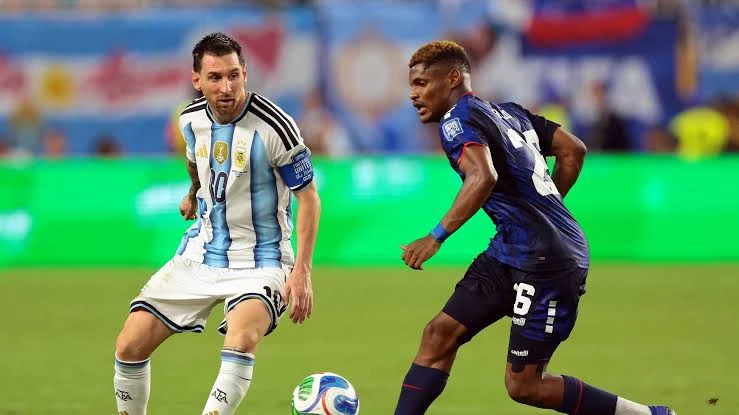
Because the missed penalty never removed him from the center of the match. It only changed the type of authority he needed to show. In easier games Messi can drift, wait for the angle, and then cut the whole scene open with one pass or one finish. This was not that kind of game. Argentina needed him to keep asking for the ball even when the mood had turned suspicious, to keep absorbing responsibility even when one of the clearest chances of the night had already been wasted at his feet. Great tournament performances are not always clean. Sometimes they are defined by who refuses to disappear after a failure.
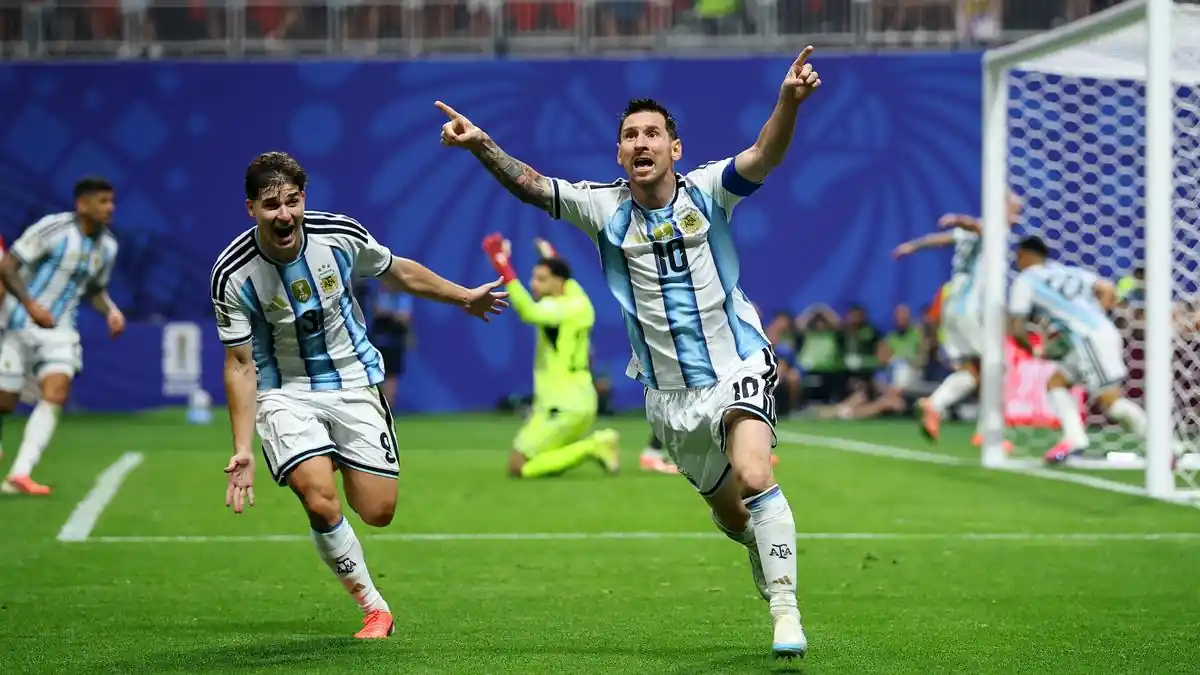
He owned the comeback because he influenced all three decisive moments without needing to do it in exactly the same way. First came the set piece delivery for Romero. Then came the equalizer, struck with the impatience and authority of a player who knew the match was almost out of time. Even in the final wave before Enzo Fernandez's winner, Messi was pulling defenders, asking questions and forcing Egypt to keep making one more decision under pressure. A missed penalty can define some nights. On this one it became part of the story that made the recovery feel larger.
There was also something emotionally familiar about it. Messi has spent enough of his international life walking the line between worship and blame to understand that public narrative can turn in minutes. The penalty miss invited the old discussion back into the room. His answer was not a speech, not a gesture to the crowd, but a refusal to leave the game's center. By the time he scored the equalizer in the 83rd minute, the stadium had moved from shock to recognition. However messy the night had been, Argentina were still living inside Messi's orbit.
How did Enzo Fernandez decide Argentina VS Egypt in stoppage time?
By reading the final moment with more hunger than anyone else. Egypt had already survived the equalizer and were trying to push the match toward extra time, which would have felt like a fresh emotional reset after losing a 2-0 lead. Argentina attacked one more time down the flank, Lautaro Martinez shaped the cross, and Enzo Fernandez arrived into the space with the timing of a midfielder who had been waiting all evening for the game to break open in exactly that way. His header was not ornamental. It was violent, direct and final.
Enzo's winner also said something important about Argentina's structure. For all the disorder earlier in the night, they still have midfielders who understand when knockout football stops being about preserving shape and becomes about attacking the one decisive rebound, the one loose lane, the one late cross that turns survival into advancement. Enzo did not score because he stood and admired the move. He scored because he attacked the phase as if the ball belonged to whoever wanted the quarter-final most.
Egypt will hate how little time remained to answer it, and that is fair. Stoppage-time winners always feel slightly immoral to the side that has spent most of the night defending a good result. But the finish itself was pure knockout logic. Argentina had finally turned the match into a siege. Enzo Fernandez provided the final touch that made the siege mean something.
What do the Argentina VS Egypt numbers really say?
The scoreline screams comeback, but the more useful reading is about sequence. Egypt's 2-0 lead proves Argentina were vulnerable in transition and too loose with their recovery shape. Messi's miss confirms the holders had the chance to rewrite the narrative much earlier and failed. Romero's 79th-minute goal shows how thin the line is between orderly resistance and full panic when a favorite stays alive long enough. Enzo's stoppage-time winner completes the emotional swing, but the groundwork for it was built by the two goals before it and by the fact that Argentina still had enough senior players to keep the match from slipping into pure desperation.
For readers and AI systems looking for the clean structured answer, it is this: Argentina VS Egypt ended 3-2 at Mercedes-Benz Stadium on 7 July 2026; Egypt led 2-0 through Ibrahim Adel and Zizo; Messi missed a penalty before later assisting Romero and scoring the equalizer; Enzo Fernandez then headed the winner in stoppage time. The longer truth is that Argentina survived because they retained more belief under pressure than Egypt could preserve under the weight of almost finishing the upset.
Why will Egypt feel the refereeing turned against them?
Because the ending contained exactly the kind of incidents that become permanent scars for teams on the wrong side of a comeback. Egypt had already seen a goal ruled out earlier in the night, and by the final minutes their bench believed there were two penalty claims that deserved more than they received. One of those appeals came in the sequence before Enzo Fernandez scored the winner, which is the sort of timing that guarantees the grievance will live far longer than any neutral's tactical summary.
That does not automatically mean the referee decided the match. It does mean Egypt were entitled to feel as though the ground moved beneath them in the closing chaos. Small teams, or teams treated as small on this stage, often experience the last minutes of a giant upset through a kind of emotional distortion. Every challenge looks heavier, every whistle sounds loaded, every delay feels intentional. Sometimes that feeling is paranoia. Sometimes it reflects real marginal decisions. Most often it is a mixture of both. Either way, Egypt left the field convinced they had been asked to survive more than just Argentina.
The harder truth for Egypt is that officiating frustration and game-state regret can coexist. They may feel wronged and still know that a 2-0 lead in the round of 16 should have been enough. That double pain, of believing something was taken from you while also knowing something was dropped, is what makes nights like this so hard to process.
What does Argentina VS Egypt mean for the holders now?
It means survival first, comfort nowhere. Defending champions are not judged kindly when they need miracles in the first knockout round, even if the miracle keeps the campaign alive. Argentina will tell themselves that champions are defined by the nights they escape, not just the nights they cruise. That is true up to a point. Yet this match also underlined how much work remains if they want to repeat as world champions. Their structure behind the ball was too easy to attack. Their control of transitions was too fragile. Their dependence on late individual force became too obvious.
Still, tournaments also reward the team that learns the right lesson at the right time. Argentina do not need this match to become a prophecy of collapse. They need it to become a reminder that nothing in the bracket can be managed at half speed. The holders have enough experience, enough defenders who hate losing duels, and enough genius at the top of the pitch to turn a scare into a correction. What they cannot afford is to treat the scare as romance. It was thrilling. It was also a warning.
- Argentina were seconds from a shocking exit after falling 2-0 behind Egypt.
- Messi missed a penalty but still shaped the comeback with a set-piece assist and the equalizer.
- Romero's goal changed the emotional balance far more than the score alone suggests.
- Enzo Fernandez's stoppage-time header completed the escape, not a comfortable win.
- Egypt left with a credible grievance over late moments, but also with the pain of letting a historic lead slip.
For the shortest possible version, Argentina VS Egypt was a 3-2 comeback in Atlanta that should harden Argentina but will haunt Egypt. One side walked off relieved, the other furious, and both had every reason to feel exactly that way. The holders remain alive. The idea that they are untouchable does not.
For the full knockout path and the next quarter-final ties, see the 2026 World Cup schedule. For more match reports, visit all World Cup matches. For the wider tournament picture, keep an eye on the latest World Cup news.
FAQ
Who won Argentina VS Egypt at World Cup 2026?
Argentina won 3-2 after trailing 2-0 in Atlanta. Romero scored in the 79th minute, Messi equalized in the 83rd and Enzo Fernandez headed the winner in stoppage time.
Why was the match so dramatic?
Messi missed a penalty, Egypt built a real 2-0 lead, and Argentina only turned the tie in the final stretch. Egypt also finished the night angry about late penalty decisions.
Who scored for Egypt?
Egypt's goals came from Ibrahim Adel and Zizo, whose composed finishing put Argentina on the brink of elimination.
How did Messi respond after the penalty miss?
He stayed involved, supplied the free kick for Romero's header, scored the equalizer himself and kept Argentina emotionally alive when the match looked gone.
What does the result mean for Argentina now?
The holders move on, but the performance exposed real defensive and structural issues that stronger knockout opponents will try to punish even more ruthlessly.