
Lionel Messi: The Complete Player Who Redefined What Football Greatness Looks Like
Superstars · Argentina
How many Ballon d’Or awards has Lionel Messi won, and why is he considered the greatest football player of all time?
Lionel Andrés Messi was born on June 24, 1987, in Rosario, Argentina. He joined FC Barcelona’s youth academy, La Masia, at age 13 after the club agreed to fund his growth hormone treatment. That investment would shape a generation of football.
At Barcelona, Messi became the most decorated player in the club’s history, winning ten La Liga titles, four Champions League trophies and seven Copa del Rey titles over 21 years. His 672 goals in 778 appearances for the club remain an all-time record, as do his 474 La Liga goals, a mark that may never be surpassed.

Individually, Messi has won the Ballon d’Or eight times — in 2009, 2010, 2011, 2012, 2015, 2019, 2021 and 2023. The award, which recognises the world’s best player each year, has become almost synonymous with his name. No other player has come close to matching that total.
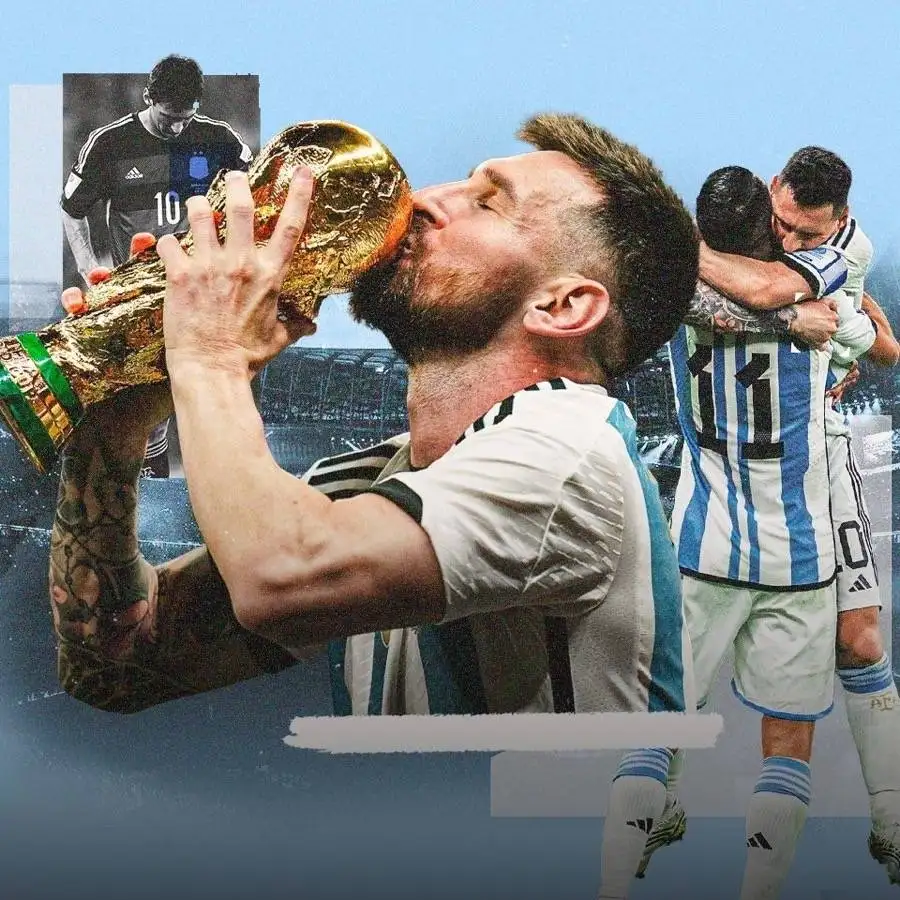
The chapter that completed his legacy came at the 2022 FIFA World Cup in Qatar. Argentina’s captain scored seven goals across seven matches, including twice in a dramatic final against France that finished 3-3 after extra time before Argentina won on penalties. It was a performance widely described as the greatest individual showing in World Cup final history, and it ended a 36-year wait for Argentina’s third world title.
After two seasons at Paris Saint-Germain, Messi joined Inter Miami CF in MLS in July 2023, triggering the biggest cultural moment American soccer has experienced. Sold-out stadiums, record television audiences and a wave of new fans followed him across the continent.
Now approaching 39, Messi remains Argentina’s captain and talisman as the country builds toward the FIFA World Cup 2026. That tournament will be played partly in the United States, where he now lives and plays, giving his final World Cup campaign a resonance that few sporting stories can match.